Actresses

Ukrainian actresses, biographies, careers, filmography, notable projects

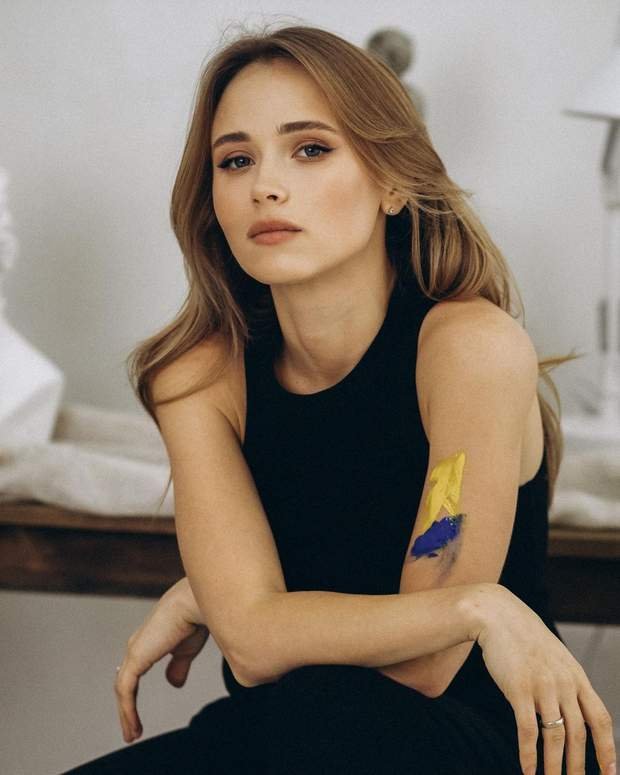
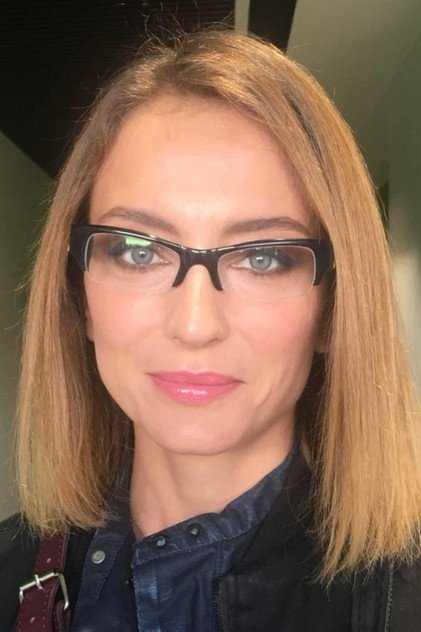
Marianna Novikova, portrait
Actresses

Marianna Novikova: For Victory! Actress Sofia Role

Who Is Marianna Novikova? Marianna Novikova is a Ukrainian actress whose name reached a wide international audience through her role as Sofia in Valentyn Vasyanovych’s film To the Victory!, known in Ukrainian as Za peremohu! and presented in English as For Victory!. In the film she plays the wife of the central character, a filmmaker named Valyk, and her performance sits at the emotional centre of a story about family separation, artistic ambition and life imagined after war. The public record on Novikova in English-language sources is dominated by this one major film role; a birth date, childhood story or long list of earlier credits is not published for her in the same way as for longer-established stars. Novikova is an actress whose breakthrough has arrived through serious arthouse cinema rather than television fame, and whose most visible work so far is a performance in a film that won one of the major prizes at the Toronto International Film Festival. For audiences discovering Ukrainian cinema through its newest films, she is a name to learn now, at the point where a career is becoming more visible, rather than a name to look back on through decades of credits. The images in this article are AI-generated illustrations, labelled as such. For Victory!: The Film in Brief To the Victory! is a Ukrainian-Lithuanian comedy-drama written and directed by Valentyn Vasyanovych, who also plays the central character, Valyk, and serves as one of the film’s cinematographers. The film is set in a near-future Ukraine after the end of the war, and it follows Valyk, a filmmaker who is facing unemployment, isolation and estrangement from his family. He lives in Kyiv with his teenage son Yaroslav, played by Hryhoriy Naumov, while his wife and young daughter have started a new life in Vienna, having escaped there when Russia invaded Ukraine. Valyk clings to the fragile hope that normal life will return, that he will be able to make films again, and that his family will be reunited, even as the everyday evidence around him makes that hope look uncertain. The film’s tone blends comedy and drama, and its humour is often self-reflective: Valyk is shown making his own film, directing actors, talking to camera and appearing at a European film festival, where a scene in which he speaks passionately in Ukrainian and is asked to speak in English instead becomes a pointed comment on how Ukrainian artists are heard abroad. The production companies are ForeFilms, M-Films and Arsenal Films, and the film is spoken in Ukrainian with a runtime of about one hour and forty-five minutes. It is not a war film in the conventional sense of battle scenes. It is a film about what comes after, about the long, unglamorous work of living with what war has changed, and about an artist trying to keep working when the industry and the audience he knew have been scattered. Marianna Novikova as Sofia In To the Victory!, Marianna Novikova plays Sofia, Valyk’s wife. The casting is listed consistently across festival coverage, cast listings and reviews: Valentyn Vasyanovych as Valyk, Vladlen Odudeko as Vlad, Marianna Novikova as Sofia, Hryhoriy Naumov as Yaroslav, and Volodymyr Yatsenko as Tato, with further cast including Mykhailo Liubarskyi and Serhii Stepanskyi. Sofia’s place in the story is defined first by absence and then by meaning. She is not living with Valyk in Kyiv. She and the couple’s young daughter, played by Maria Odudenko, have built a new life in Vienna, while Valyk remains at home with their son. That separation is the film’s central family fact, and it gives Novikova’s role a particular weight. Sofia is not a villain for leaving, and she is not a symbol waiting to be rescued. In the logic of the film, she is a woman who made a decision for her child’s safety during an invasion, and who has since had to build an ordinary life in a foreign city while her husband holds on to a home and a career that war has interrupted. When Sofia appears, the audience feels the distance between the couple not only as geography but as different kinds of survival: one partner adapting abroad, the other waiting at home. Reviews of the film have noted that it ends not with a grand epiphany or a rousing call to arms but with a longed-for moment of quiet, everyday contentment, and Sofia’s presence is essential to that ending working at all. A film about reunion, or about its impossibility, needs the absent partner to feel real, and Novikova’s performance is what makes Sofia feel like a person rather than an idea. Valentyn Vasyanovych and His Cinema To understand Novikova’s role, it helps to understand the director she was working with, because Vasyanovych’s cinema has a distinctive method. He is known for earlier films including Atlantis and Reflection, both of which deal with how war affects Ukrainians, and To the Victory! continues that theme while shifting the timeline forward into an imagined post-war future. Vasyanovych works with long, locked-off takes, a restrained camera and a blend of fact and fiction that can make his films feel almost documentary even when the story is invented. In To the Victory! he again served as his own cinematographer, this time alongside Mykhailo Lubarsky, and the film’s visual calm is part of its argument: ordinary rooms, ordinary streets and ordinary conversations carry the weight that other films would give to dramatic incidents. He also cast the film from a circle of close collaborators and friends, with a tiny team of only six or seven people who helped each other by acting in the film and working behind the camera. That method matters for an actress in Novikova’s position. In a small, close-knit production, there is nowhere to hide behind spectacle, and a performance must work in long takes and quiet scenes. The fact that Vasyanovych trusted Novikova with the role of Sofia, the wife whose absence shapes the whole film, says something about the quality […]

Marianna Novikova: For Victory! Actress Sofia Role Read Post »
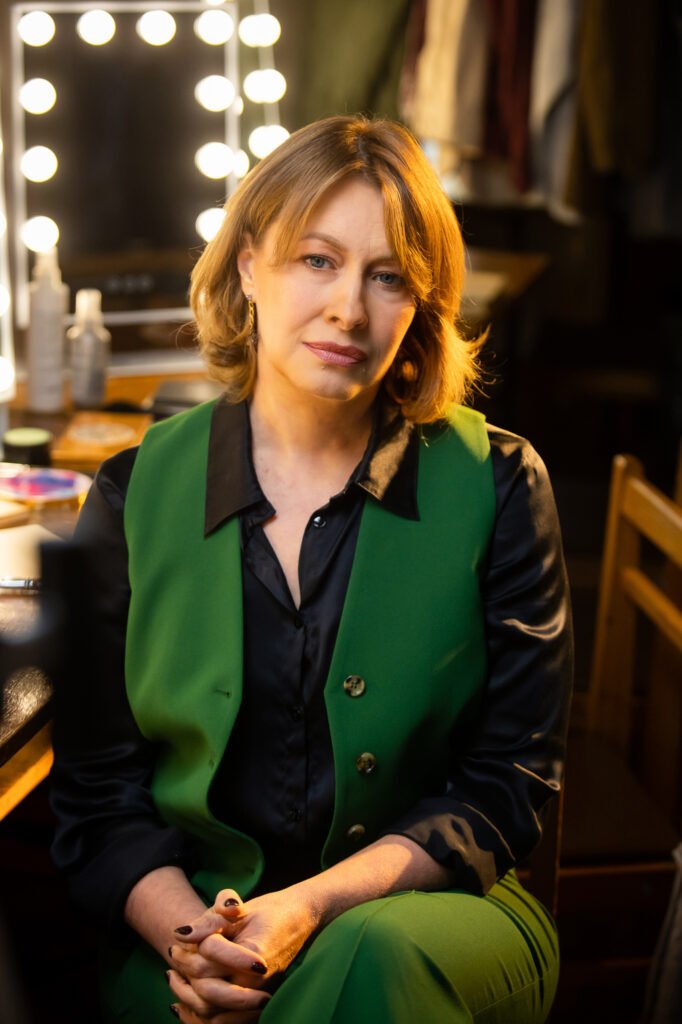
Olena Kravets, dressing-room portrait (2023)
Actresses

Olena Kravets Biography: Kvartal 95 Star and TV Host

Who Is Olena Kravets? Olena Yuriivna Kravets is a Ukrainian actress, producer and television host whose career traces the recent history of Ukrainian popular comedy almost step for step. Born Olena Maliashenko on 1 January 1977 in Kryvyi Rih, in Dnipropetrovsk Oblast, she is best known internationally as the executive director of Kvartal 95 Studio, a role she held from 2000, and as the only woman in the core performing company for most of its history. For more than two decades, Ukrainian television audiences knew her face before they knew her name in credits: the quick-witted woman in the sketch who could play a housewife, an official, a politician or a neighbour with equal ease, and who held her own in a troupe built around strong male comics. Later, a much wider international audience met her as Olha Mishchenko in Servant of the People, the political satire in which she played the ex-wife of the accidental president played by Volodymyr Zelenskyy. That role, running from 2015 to 2019, showed a different side of her talent: comedy with a dramatic undertow, a character who could be funny, frustrated, competent and vulnerable in the same episode. In late 2022, after 25 years with Kvartal 95, she left the studio to focus on other projects, and began a new chapter as a solo host and producer. Her story is therefore not only a personal biography but a map of how Ukrainian entertainment changed: from student comedy competitions in the 1990s, through the television boom of the 2000s, to the politically charged satire of the 2010s and the wartime reinvention of the 2020s. Early Life and Education in Kryvyi Rih Kravets was born in Kryvyi Rih, a large industrial city in central Ukraine known for its iron ore and steel, and she grew up as the only daughter of Yurii Viktorovych Maliashenko, a metallurgist, and Nadiia Fedorivna Maliashenko, an economist who held a managerial position in a savings bank. That family background is worth noting because it shaped the performer she became. She did not come from a theatre family or an artistic dynasty; she came from a working professional household in an industrial city, and her comedy has always carried that grounding. At school she took part in extracurricular activities, including theatrical performances, but her formal education pointed elsewhere. She enrolled at the Kryvyi Rih Institute of Economics, part of the Kyiv National Economic University system, and earned a degree in finance and economics. The economics training turned out to be unexpectedly useful. In the early years of Kvartal 95, when the troupe was turning a student comedy team into a professional studio, Kravets took on administrative and organisational work alongside performing, channelling the practical skills of her degree into contracts, planning and production. It is a detail that explains her later title of executive director: she was never only the performer on stage, but also one of the people making the show happen behind it. Her early working life, during and after her studies, included a range of ordinary jobs that later fed her character work, including work as a radio presenter, an accountant at a bank, a cashier, and even managing a McDonald’s branch in Kryvyi Rih. Those experiences gave her a gallery of workplaces, bosses, customers and everyday frustrations to draw on, and they help explain why her sketch characters have often felt recognisable rather than invented. KVN and the Birth of Kvartal 95 Kravets’s route into entertainment ran through KVN, the Club of the Funny and Inventive, the long-running comedy competition that was a training ground for generations of performers across the former Soviet Union. While still a student she played in KVN as part of the Zaporizhzhia–Kryvyi Rih–Transit team, where her impressions and quick retorts stood out in a largely male line-up. KVN mattered because it taught a particular discipline: short scenes, topical jokes, musical numbers and team timing, all performed live and judged by an audience. It was competitive, fast and unforgiving, and it rewarded performers who could think on their feet. In 1998 she was invited to join the 95 Kvartal team, then still a KVN team, and that invitation changed her life. The team that would become Studio Kvartal 95 was built around a group of friends and collaborators from Kryvyi Rih, and Kravets became its only woman performer, a position she held for years. Being the only woman in such a company shaped her stage identity in two ways. On stage, she often played the woman against a room full of men, which gave her characters a particular sharpness: she was the wife who saw through the scheme, the official who refused to be charmed, the neighbour who said what everyone else was thinking. Off stage, she took on the administrative director’s role, helping to run a growing enterprise. In 2000 she moved to Kyiv with the studio, a move that marked the transition from a regional comedy team to a national television force. The Kyiv years would bring the fame, but the KVN years explain the craft: timing learned in competition, characters learned from ordinary work, and a toughness learned from holding a stage as the only woman in the team. Evening Quarter and Television Stardom The launch of Evening Quarter in 2005 turned Kvartal 95 from a successful comedy troupe into a national television institution, and it made Kravets one of the most recognisable performers in Ukraine. Evening Quarter was a variety and sketch show built around political satire, everyday humour and musical numbers, performed before a live audience and broadcast to millions. Kravets became a permanent actress of the show, playing a wide range of characters, from sassy housewives to deadpan officials, and her versatility became one of the show’s strengths. Where some sketch performers rely on a single catchphrase or persona, Kravets moved between types, and that range kept her fresh across years of weekly shows. She also became known for portraying well-known political figures, including Yulia Tymoshenko and […]

Olena Kravets Biography: Kvartal 95 Star and TV Host Read Post »

Actresses

Anna Koshmal Biography: Life, Roles and Svaty Fame

Anna Koshmal is a Ukrainian television actress whose name is closely tied to two of the most talked-about Ukrainian series of the past fifteen years. For many viewers, she will always be Zhenya, the teenage granddaughter at the centre of the family comedy Svaty. For others, she is Natasha Sakhno, the president’s niece in the political satire Servant of the People. Between those two landmarks sits a long run of television work in which Koshmal moved from a surprise teenage casting to a steady, working screen actress, taking title roles, family dramas, mini-series and comedy parts in quick succession. Her career is interesting precisely because it did not follow the usual route. She was not a child star groomed for the screen from an early age, and she did not arrive in television through a drama school acting degree. She came from dance, music and variety training, was spotted almost by chance, and then had to learn screen acting in front of a large audience, in one of the region’s most popular series. That beginning shaped everything that followed: a performer who is comfortable in ensemble comedy, who can carry a leading role in a melodrama, and who has kept working across Ukrainian television even as the industry around her changed completely. Early Life in Kyiv Anna Sergeevna Koshmal was born on 22 October 1994 in Kyiv, Ukraine. Her family background was outside the entertainment world. Her father, Sergei Koshmal, was a military officer, and her mother, Tamara Koshmal, worked as a teacher. She grew up with an older brother, also named Sergei. That ordinary, non-theatrical household matters to her story, because nothing in her family background pointed directly toward a screen career. The artistic impulse came from Koshmal herself, and from the classes her parents supported when she was still a child. From the age of six, she was involved in dance, including ballet and ballroom dancing, and later took part in sports training as well. A little later, her parents enrolled her in a music school, where she studied vocals. The combination is worth noting: dance gave her physical discipline and stage presence, music gave her voice training and timing, and together they gave her a performer’s foundation long before she ever faced a camera. Many screen actors arrive with only one of those skills. Koshmal arrived with several, and that breadth would later help her in roles that asked for singing as well as acting. Her Ukrainian name is rendered in several forms in different sources, including Hanna Koshmal, reflecting the Ukrainian form of her first name. In English-language coverage she is most consistently known as Anna Koshmal, and that is the name used throughout this article. Her height is listed in reference sources as 1.67 metres. Those basic biographical details are consistent across the main English-language profiles of her career, which is useful in a field where minor details about television actors are often reported differently from one site to another. Training in Dance, Music and Variety Arts After finishing school in 2010, Koshmal continued her education at the Kyiv Municipal Academy of Variety and Circus Arts, an institution founded in 1961 that trains performers in singing, dancing, acting, directing and circus arts. She studied directing there. That choice is revealing. A directing course does not only teach a student how to perform; it teaches how a scene is built, how timing works, how a performer fits into an ensemble, and how a director sees a performance from the other side of the camera. For a young performer who would soon be working with experienced comic actors, that broader view of the craft was a genuine advantage. Accounts of her student years describe a young woman who had still not settled on a single artistic direction. Music and dance both came naturally to her, and a stage career of some kind seemed likely, but a screen acting career was not yet the plan. She was, by several accounts, a student at a creativity centre when the casting process that changed her life reached her. The story of that casting has been told in more than one version, but the core facts are consistent: a casting director visited the centre where she was studying, she was placed among a small group of contenders, and the director of Svaty, Andrey Yakovlev, approved her for the role. She did not arrive at that audition as an established actress with a showreel. She arrived as a trained young performer who had never carried a major screen role. That background also explains a detail that fans of Svaty often remember: Koshmal sang in the series. She performed the song “Moy Kalendar” (“My Calendar”) as a duet with Fedor Dobronravov, one of the series’ leading actors. The song was composed by A. Udovenko, with lyrics by Dm. Kozlov and A. Yakovlev. For an actress whose training included vocals, a singing moment inside a comedy series was a natural fit rather than a stretch, and it showed audiences early on that her skills went beyond spoken dialogue. The Svaty Breakthrough: Playing Zhenya Svaty, also translated as The In-Laws or Matchmakers, is a family comedy built around grandparents and their extended family, and by its fifth season it was already a well-loved series with an established audience. The challenge for the new season was a familiar one in long-running television: the granddaughter at the heart of the family story had grown up. The sweet small child of the earlier seasons had become a teenager, and the series needed a performer who could play that older Zhenya convincingly. Koshmal was seventeen when she took on the role of Zhenya, full name Evgenia Kovaleva in most English-language references, sometimes written as Zhenya Kovaleva. The character as written for season five was a rebellious, goth-leaning teenager who clashed with her grandparents and reacted sharply to their remarks. To play her, Koshmal dyed her hair black, a visible break from her own appearance that helped audiences accept […]

Anna Koshmal Biography: Life, Roles and Svaty Fame Read Post »

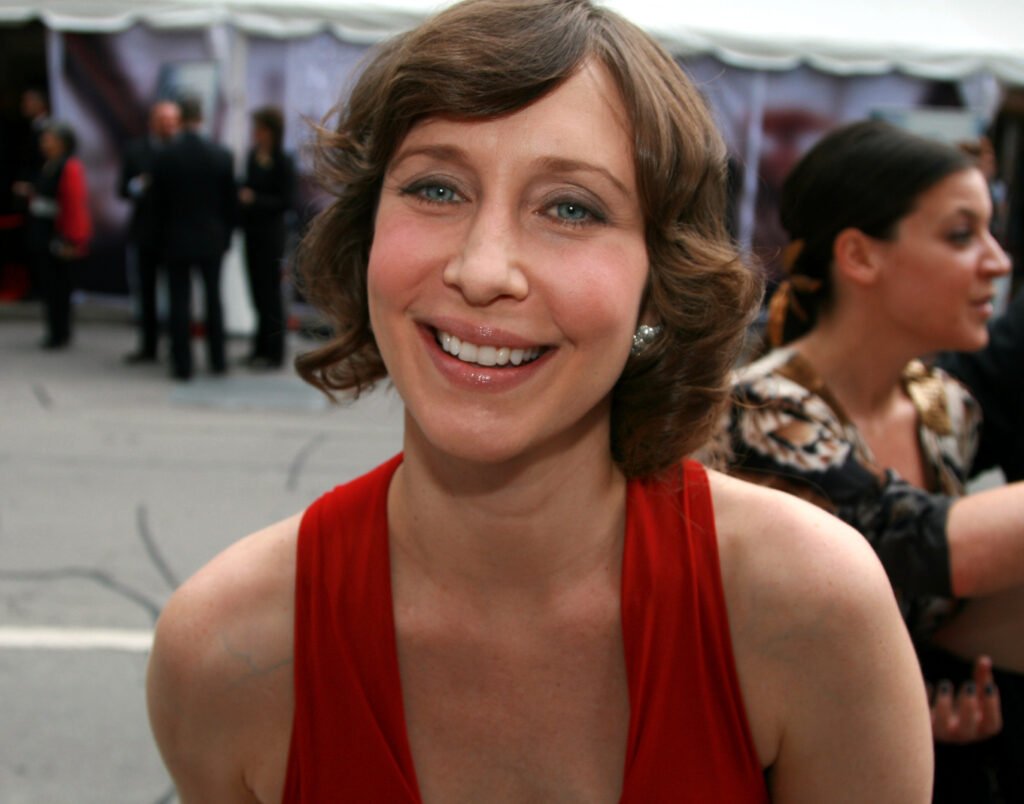
Vera Farmiga biography
Actresses

Vera Farmiga Biography: Ukrainian-American Actress’s Life and Films

Farmiga’s career has moved, without losing its centre, from an insular Ukrainian-American childhood in New Jersey to independent film, major studio drama, prestige television and one of modern horror’s most durable franchises. Vera Ann Farmiga was born on August 6, 1973, in Clifton, New Jersey, in the United States. She was not born in Ukraine, and that distinction matters to her story: her Ukrainian identity was formed at home, in language, church, dance and family life, before it ever became a line in a press biography. She has described herself as “100% Ukrainian-American,” a phrase that captures both halves of that formation rather than choosing between them. The work that followed — the breakthrough in a small addiction drama, the Academy Award nomination for a polished studio comedy-drama, the long run as a television mother of extraordinary complexity, and the decade-long portrayal of a real paranormal investigator — is best understood as the work of a performer trained for the stage, drawn to morally complicated women, and unusually willing to stay with a character for years rather than for a single film. The images in this article are AI-generated illustrations, labelled as such. Wikipedia records her birth on 6 August 1973 in Clifton, New Jersey, her breakthrough in Down to the Bone (2004), her Academy Award nomination for Up in the Air (2009) and her role as Lorraine Warren in The Conjuring films. Vera Farmiga Biography: Ukrainian Roots and Childhood in New Jersey Farmiga was the second of seven children. Her parents were Ukrainians: her father, Mykhailo Farmiga, was a systems analyst who later worked as a landscaper, and her mother, Lubomyra “Luba” Farmiga, née Spas, was a schoolteacher. She had an older brother, Victor, and five younger siblings: Stephan, Nadia, Alexander, Laryssa and Taissa. Her youngest sister, Taissa Farmiga, would later become an actress herself. Her maternal grandparents, Nadia and Theodor Spas, had met at a displaced persons camp in Karlsfeld during World War II, a family history that placed the upheavals of twentieth-century Europe close to the centre of the household’s memory, even as the children grew up in New Jersey. The family lived first in an insular Ukrainian-American community in Irvington, where Ukrainian was Farmiga’s first language. She did not learn English until she started kindergarten, at the age of six. When she was twelve, the family moved from Irvington to Whitehouse Station. She attended St. John the Baptist Ukrainian Catholic School in Newark, and during her teenage years she toured with a Ukrainian folk-dancing ensemble named Syzokryli. She was also a member of Plast, the Ukrainian scouting organisation, and she trained as a classical pianist. As a child, she converted with her family from the Ukrainian Greek Catholic Church to Pentecostalism, and questions of faith, belonging and conscience — first encountered in that household and that community — would later return, in very different form, in the film she directed as an adult. That upbringing gave her two things that shaped her acting. The first was discipline of a particular kind: folk dance, piano practice and a household in which a heritage language was the language of daily life all reward repetition, attention and control. The second was a lived sense of being both inside and outside American culture at once — fluent in the community around her, yet formed by a home that kept its own language, food, faith and stories. It is a useful background for an actress whose best roles so often turn on women who are watching a room carefully, deciding how much of themselves to reveal, and holding two loyalties at the same time. Finding Acting at School and Training at Syracuse University Farmiga graduated from Hunterdon Central Regional High School in 1991. She found acting during her junior year there, after being sidelined during a varsity soccer game. A friend persuaded her to audition for the school production of The Vampire, and she won the lead role of Lady Margaret. The accident of that substitution — an athlete kept off the field, trying a stage instead — became the hinge of her working life. Acting, in her account of those years, offered an emotional release that sport had not, and the school stage gave her a place to test a talent that had previously expressed itself mainly through dance and music. She went on to study theatre at Syracuse University, graduating in 1995. In her final year there, she portrayed Nina Zarechnaya in The Seagull at the Kennedy Center American College Theater Festival, and the production won the top prize. Her drama professor later credited Farmiga’s performance in the fourth act as decisive to that win. The detail is worth recording because it already shows the pattern of her later career: not the loudest performance in the room, but the one on which a whole production’s ending depends. Syracuse gave her formal training in a tradition that valued text, character and sustained attention, and she left it ready for the stage rather than for instant screen fame. Stage Beginnings and First Screen Roles Farmiga began her professional acting career on stage in the original Broadway production of Taking Sides in 1996, where she served as an understudy. The same year, she played Miranda in an American Conservatory Theater production of The Tempest. In 1997, she appeared in the off-Broadway production Second-Hand Smoke, a well-reviewed featured turn that confirmed her as a stage actress to watch. Stage work, with its nightly repetition and its demand for a complete arc in real time, remained the foundation of her screen technique: her film and television performances rarely rely on a single striking moment, and instead build through accumulation. Television came in the same period. In 1997, she had a supporting role in the CBS television film Rose Hill, and she starred opposite a then-unknown Heath Ledger in the Fox adventure series Roar, playing Catlin, a former slave turned battler, in a short-lived medieval fantasy series. The series did not last, but it […]

Vera Farmiga Biography: Ukrainian-American Actress’s Life and Films Read Post »

Milla Jovovich biography
Actresses

Milla Jovovich Biography: Kyiv-Born Actress and Her Hollywood Career

Milla Jovovich’s career is a story of two starting points that never quite leave her screen work. She was born in Kyiv, then part of the Ukrainian SSR in the Soviet Union, and she was raised in Los Angeles after her family emigrated when she was five. That combination — a Kyiv birthplace, a childhood shaped by migration, and a working life spent almost entirely in front of cameras — helps explain why her career has moved so easily between fashion photography, European art-house cinema, and long-running Hollywood genre franchises. She is best known internationally as Leeloo in The Fifth Element (1997) and as Alice in the Resident Evil film series (2002–2017), but those two roles alone do not account for a career that has also included modelling, music, fashion design, comedy, historical drama, and independent film. The images in this article are AI-generated illustrations, labelled as such. Wikipedia records that Jovovich was born in Kyiv on 17 December 1975, began modelling at eleven, made her screen debut in The Night Train to Kathmandu (1988), and played Leeloo in The Fifth Element (1997) and Alice in the Resident Evil series (2002–2017). Born in Kyiv, Raised in Los Angeles Milica Bogdanovna Jovovich was born on 17 December 1975 in Kyiv, in what was then the Ukrainian SSR. Her father, Bogdan Jovovich, was a Serbian doctor in Kyiv, and her mother, Galina Loginova, was a Russian actress. The family left the Soviet Union when Milla was five, in 1981, travelling first to London and then to the United States, where they lived briefly in Sacramento, California, before settling in Los Angeles. In Los Angeles, her mother, who had been an actress in her own country, faced the familiar immigrant problem of rebuilding a professional life in a new language and a new industry. Young Milla was coached by her mother from childhood, studied music, ballet, and acting in Los Angeles, and grew up around auditions, rehearsals, and photo shoots. Sources describing her school years also note that she was sometimes treated as an outsider by classmates because she had emigrated from the Soviet Union during the Cold War. She also grew up multilingual. In addition to English, she speaks Russian, and her background includes Ukrainian. A Modelling Career That Started at Eleven Jovovich began modelling at eleven, when photographer Herb Ritts photographed her for the cover of the Italian magazine Lei in 1987. Photographer Richard Avedon also featured her in Revlon’s “Most Unforgettable Women in the World” advertisements. She soon appeared on the covers of magazines including The Face, Vogue, and Cosmopolitan, and reference sources describe her as having appeared on more than one hundred magazine covers over the course of her modelling career. By 2004, Forbes had determined that she was the highest-paid model in the world. That assessment, widely cited in biographical sources, marks the commercial peak of her modelling career rather than its beginning. By then she was already established as a film actress, and the modelling work and the film work were reinforcing each other: fashion campaigns kept her image in circulation between films, while film roles gave the campaigns a recognisable face. First Screen Roles and an Early Leading Part Jovovich made her screen debut in the television film The Night Train to Kathmandu in 1988, playing Lily McLeod, and appeared in her first feature film, Two Moon Junction, in the same year. Small television appearances followed, including an episode of Married… with Children in 1989 and an episode of Parker Lewis Can’t Lose in 1990. Her first widely noticed film role came in 1991, when she played Lilli in Return to the Blue Lagoon, a romance film that followed the earlier Blue Lagoon. The film was not a commercial success, and it drew negative reviews, but it gave her a leading role at fifteen and made her visible to a much larger audience than her modelling work alone had reached. The next few years were a period of supporting work rather than stardom: she appeared in Kuffs (1992), played Mildred Harris in Chaplin (1992), and played Michelle in Dazed and Confused (1993). The Fifth Element and a Breakthrough The turning point came in 1997 with The Fifth Element, the French science-fiction action film written and directed by Luc Besson, in which Jovovich played Leeloo, opposite Bruce Willis. Leeloo is a character who arrives in a futuristic New York with almost no language, no context, and no allies, and who must learn the world around her while also becoming its most important protector. The performance therefore depends less on dialogue than on movement, expression, and physical presence — exactly the qualities Jovovich had developed through modelling and dance training. She and Besson married in 1997, the year of the film’s release, and divorced in 1999. In that same period she starred as Joan of Arc in Besson’s The Messenger: The Story of Joan of Arc (1999). Alice and the Resident Evil Years From 2002 to 2017, Jovovich portrayed Alice in the action horror film franchise Resident Evil, based on the video game series. The six films were Resident Evil (2002), Resident Evil: Apocalypse (2004), Resident Evil: Extinction (2007), Resident Evil: Afterlife (2010), Resident Evil: Retribution (2012), and Resident Evil: The Final Chapter (2016, released in some markets in 2017). The series became the highest-grossing film series based on video games, according to biographical sources summarising its commercial record. Alice is an original character created for the films rather than a direct copy of a game protagonist, which gave the filmmakers freedom to reshape her story from film to film. She worked repeatedly with director Paul W. S. Anderson, who directed most of the Resident Evil films and wrote all of them, and with whom she later married in 2009. In 2006, the music channel VH1 deemed her the “reigning queen of kick-butt,” a label that captures the public image of the period. Beyond Alice: Genre Work, Comedy, and Independent Film Outside the Resident Evil series, Jovovich’s […]

Milla Jovovich Biography: Kyiv-Born Actress and Her Hollywood Career Read Post »

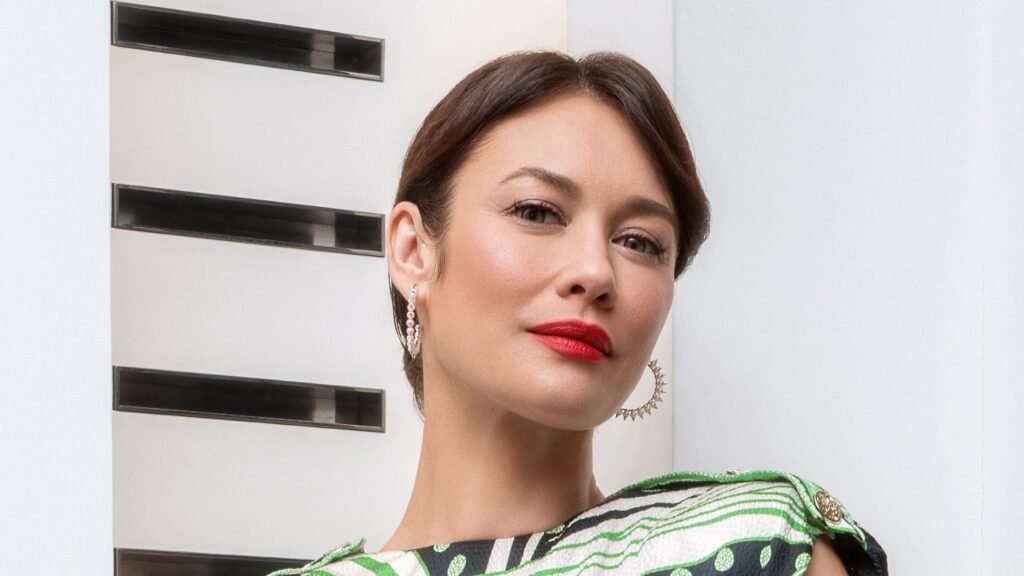
Olga Kurylenko biography
Actresses

Olga Kurylenko Biography: Ukrainian Actress from Bond to Hollywood

Olga Kurylenko biography begins in a port city on the Sea of Azov and reaches, within two decades, the largest film franchises in the world. Born Olga Kostyantynivna Kurylenko on 14 November 1979 in Berdyansk, then part of the Ukrainian SSR in the Soviet Union, she first became known internationally as a model in Paris. Her acting career then carried her through French cinema, a video-game adaptation, a James Bond film, European art-house drama, American science fiction, political satire, television, and the Marvel Cinematic Universe. That range is the most useful way to understand her: she has rarely stayed in one genre, one language, or one industry for long. Berdyansk: a childhood shaped by family and scarcity Kurylenko’s father, Konstantin Kurylenko, is Ukrainian. Her mother, Marina Alyabusheva, teaches art and is an exhibited artist; Marina’s father was a Russian factory worker and her mother, Raisa, was a Belarusian doctor. Kurylenko’s parents divorced when she was three years old. She grew up poor, living in a small house with her maternal grandparents and their relatives, and she rarely had contact with her father after the split, meeting him for the first time after the divorce at the age of eight and again at thirteen. Those early years also included sustained artistic training. She studied art and languages, spent seven years studying piano at a local school of music in Berdyansk, and attended a ballet studio until she was thirteen. Her mother, working as an art teacher, supported the household, and Kurylenko later supported her mother financially from her modelling earnings in Paris. A chance meeting in Moscow, then a move to Paris At thirteen, while on holiday in Moscow with her mother, Kurylenko was spotted by a female model scout, in some accounts at a Moscow Metro station. Her mother was initially suspicious, checked the agent’s credentials, and then allowed her to accept modelling training in Moscow. At fifteen she moved to Moscow, and at sixteen she moved to Paris. She learned French within about six months, according to biographical accounts, and in 1996 she signed a contract with the Paris-based Madison modelling agency, where she met her publicist Valérie Rosen. By eighteen she had appeared on the covers of Vogue and Elle, and she also appeared on the covers of Madame Figaro and Marie Claire. She became the face of brands including Bebe, Clarins, and Helena Rubinstein, modelled for Roberto Cavalli and Kenzo, and appeared in the Victoria’s Secret catalogue. In 1998 she appeared in the music video for French raï singer Faudel’s “Tellement Je T’aime”. She worked in modelling for more than ten years before leaving it in 2006. French citizenship and the first screen work Kurylenko acquired French citizenship in 2001, which she has described as a practical decision because travelling on a French passport was easier, without a visa, than travelling on a Ukrainian passport. She moved to London in 2009. Her earliest screen credits were small. She appeared in one episode of the television series Largo Winch in 2001, as Carole, and in Seal’s music video “Love’s Divine” in 2003. Her film career truly began in France when she shot her first feature, The Ring Finger (L’Annulaire), in 2004; the film was released in France in 2005, with Kurylenko as Iris. For that performance she received the certificate of excellence award at the 2006 Brooklyn International Film Festival, listed in award records as Best Actress for The Ring Finger. She next appeared in the Paris, je t’aime segment “Quartier de la Madeleine” opposite Elijah Wood in 2006, and in the same year she was selected to be the face of Kenzo’s new fragrance, Kenzo Amour. Hitman and the breakthrough that was not yet Bond Kurylenko’s breakthrough role came in the action thriller Hitman (2007), the film adaptation of the video-game series, in which she played Nika Boronina opposite Timothy Olyphant. The role placed her in an English-language action film with international distribution, after a start in French cinema, and established a pattern that would recur: a character who is not merely decorative in an action story, but who has her own danger, motive, and screen presence. Hitman was followed in 2008 by a minor role as Natasha in Max Payne, and by Tyranny, a television series in which she played Mina Harud. Quantum of Solace: Camille Montes and what the role changed In 2008 Kurylenko played Camille Montes in Quantum of Solace, the 22nd James Bond film and the second with Daniel Craig as James Bond, directed by Marc Forster. Camille is a Bolivian Secret Service agent who teams up with Bond to avenge the death of her family. The role brought her mainstream prominence and award attention. She was nominated for Best Supporting Actress at the Saturn Awards in 2008 and for Best Actress at the Empire Awards in 2009, both for Quantum of Solace. She also voiced Camille Montes in the 2008 video game 007: Quantum of Solace. In Ukraine, the then-mayor of Berdyansk suggested naming a street after her in early 2008, and Kurylenko and her mother met Ukraine’s First Lady Kateryna Yushchenko at President Yushchenko’s family country house. It gave her global recognition and access to larger productions, but it did not fix her in one type. In the years that followed she deliberately took roles that pulled in different directions. The post-Bond years: drama, ensemble, and European cinema The Assassin Next Door (2009) cast her as Galia, and Centurion (2010), directed by Neil Marshall, cast her as Etain. There Be Dragons (2011) and Land of Oblivion (2011), in which she played Anya and also served as executive producer, preceded a particularly busy 2012. That year she appeared in Erased as Anna Brandt, in Terrence Malick’s romantic drama To the Wonder as Marina, and in Martin McDonagh’s crime comedy Seven Psychopaths as Angela. For Seven Psychopaths she shared the Boston Society of Film Critics Award for Best Cast in 2012, and the film’s ensemble was also nominated by the San Diego […]

Olga Kurylenko Biography: Ukrainian Actress from Bond to Hollywood Read Post »

Scroll to Top