TV and Reality Stars

Ukrainian television personalities, presenters, reality-show contestants, TV celebrities

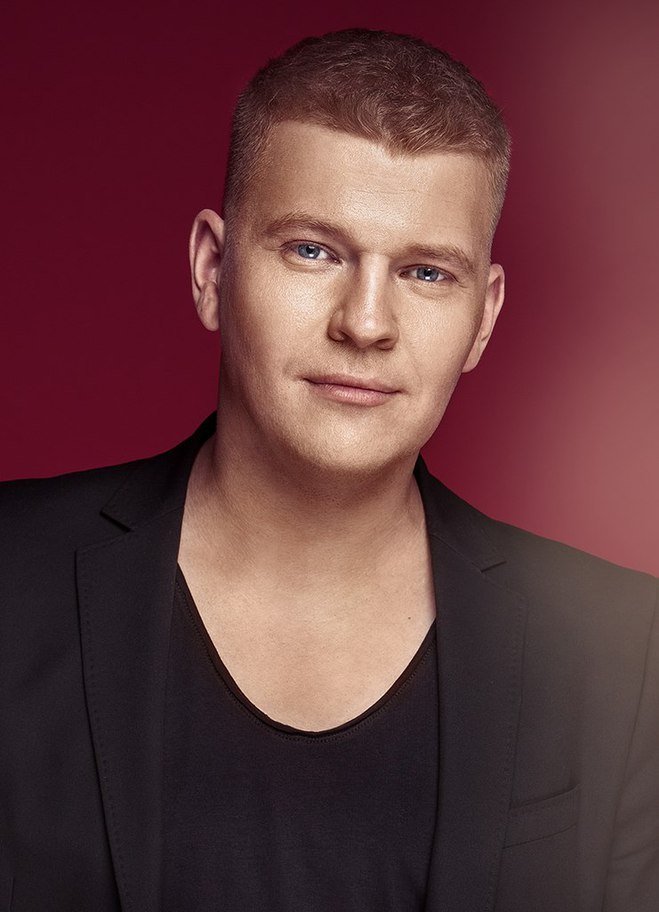
Anton Kopityn, studio portrait (red background).
TV and Reality Stars

Anton Kopityn: The Holos Krainy Season 5 Winner Who Started Again in Kyiv

Anton Kopityn’s win on Holos Krainy is remembered not only because he sang well, but because of where he came from when he sang. He was a singer from Donetsk who had moved to Kyiv with his family after war reached eastern Ukraine, and who was working manual jobs to support that family when the show called him. He did not arrive on the programme as a polished industry act. He arrived as a man rebuilding a life, who happened to have a voice strong enough to turn chairs, win a team place, survive every round, and then win a national final. That background is why season 5 of Holos Krainy still gets discussed years later. Talent shows often present a contestant’s story as a short introduction before a performance. In Kopityn’s case, the story was not decoration. It explained his determination, his choice of coach, and the public reaction to his victory. The images in this article are AI-generated illustrations, labelled as such. Source: Wikipedia lists Anton Kopityn (spelled Kopytin) as the winner of season 5 of Holos Krainy, which aired from 8 March to 7 June 2015 with Tina Karol as his coach. A note on spelling helps readers first. This article spells the surname Kopityn, while several Ukrainian and English sources spell it Kopytin. They refer to the same singer, the winner of Holos Krainy season 5. This article uses Kopityn in headings and the main text, and notes the variant so readers searching either spelling can recognise the same person. 1. The Verified Win: Season 5, 2015, Coach Tina Karol The core facts of the win are clear and can be stated without qualification. Anton Kopityn won season 5 of Holos Krainy. The season first aired on 8 March 2015 and last aired on 7 June 2015. His winning coach was Tina Karol. The other finalists listed for that season were Tetiana Reshetniak, Andrii Luchanko and Yevhen Tolochnyi. The presenters for the season were Olha Freymut and Yuriy Horbunov. That placement matters because it puts Kopityn in a specific line of winners. Season 4, immediately before him, was won by Ihor Hrokhotskyy with coach Svyatoslav Vakarchuk. Season 6, immediately after him, was won by Vitalina Musienko, also with Vakarchuk. Kopityn’s season therefore sits between two Vakarchuk-coached wins, and his own win belongs to Karol’s coaching record. It was Karol’s second season-5 success in a broader sense: she had coached earlier seasons and would coach and win again later, but season 5 is the season in which her contestant Kopityn took the title. The show itself, Holos Krainy, is the Ukrainian version of The Voice, premiered on 1+1 on 22 May 2011. By season 5, the format was well established in Ukraine: blind auditions, battles, knockouts and live finals decided by viewer votes. Winning therefore required more than one good performance. It required surviving a sequence of formats, each testing a different skill, and then winning a live vote against other finalists who had survived the same sequence. 2. Donetsk Roots and a Beginning in a Church Choir Kopityn was born in Donetsk, and his earliest musical formation, as reported in a profile published after his win, began in a church choir. That detail is often mentioned briefly, but it deserves a little more attention because it explains a particular kind of vocal training. A church choir teaches a singer to blend, to listen, to hold a line without forcing it, and to sing as part of a larger sound rather than always as a soloist. Those skills do not automatically make a pop contestant, but they do build breath control, pitch steadiness and an ear for harmony. The same profile described him travelling across Ukraine with a choir and getting to know the country without stereotypes, a phrase that, in context, referred to the experience of performing in many places and meeting audiences beyond his home city. It also described his family life at the time of the win: he and his wife were raising young children, a point that later reporting also noted when describing the family’s move. The point that matters for the season story is that Kopityn was not a teenager entering a contest for exposure. He was an adult with responsibilities, for whom the contest arrived at a moment of practical pressure. 3. Leaving Donetsk and Starting Again in Kyiv The most widely reported part of Kopityn’s pre-show life is the family’s move from Donetsk to Kyiv after war began in eastern Ukraine. Reporting after the win described the family gathering only essentials, travelling with their dog, and arriving in Kyiv needing to start again. In Kyiv, Kopityn took whatever work he could find to support his family. One account lists work as a janitor, electrician and plumber, while another, in his own reported words, describes working on a construction site and carrying tools he had used in his own house, including a welding machine and a perforator. Those two descriptions are compatible rather than contradictory: both describe manual, practical work taken out of necessity. The construction-site detail is particularly vivid because it is where the show found him. According to his own account as reported, he received a call from Holos Krainy while he was working on a construction site, and colleagues nearby were surprised to learn that he sang. That moment captures why his story resonated. The call did not arrive in a rehearsal studio. It arrived in the middle of a working day, for a man who had not built his life around the expectation of television fame. It is important to describe this move accurately and without exaggeration. The move was a displacement caused by war, not a career relocation. The family left a home they had built and worked on, and they rebuilt daily life in a new city. That context helps a reader understand why the final, and what Tina Karol did in it, carried emotional weight beyond a normal talent-show prize. 4. The Blind […]

Anton Kopityn: The Holos Krainy Season 5 Winner Who Started Again in Kyiv Read Post »
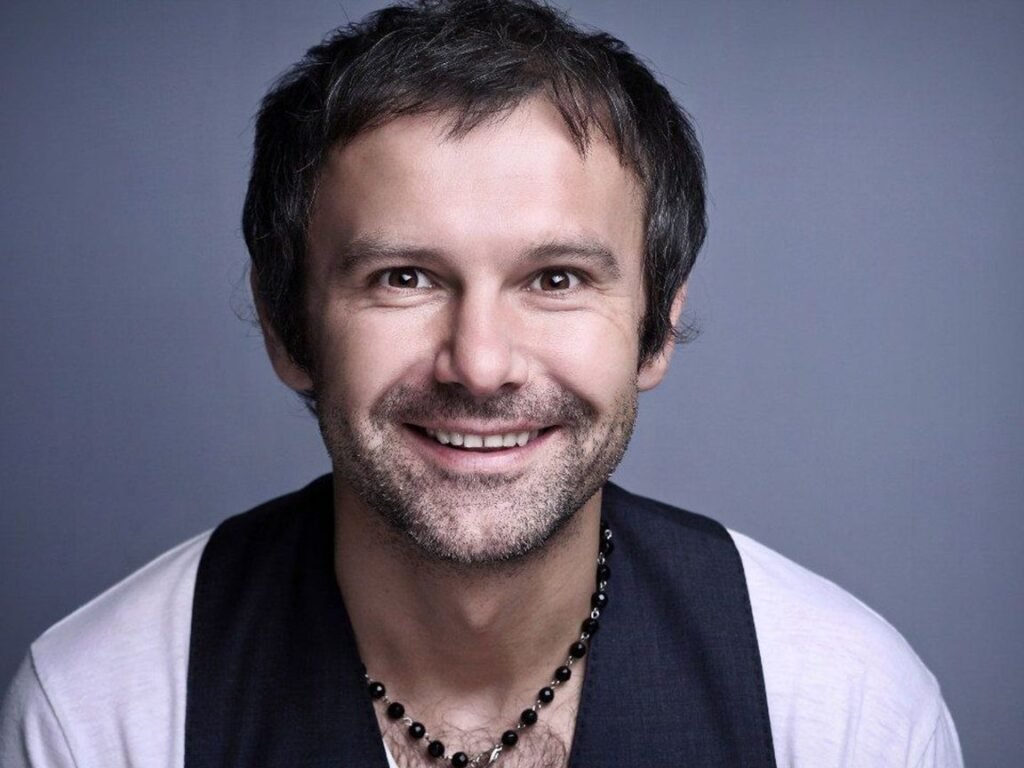
Svyatoslav Vakarchuk, studio portrait.
TV and Reality Stars

Svyatoslav Vakarchuk: The Holos Krainy Coach Who Listened First

When Svyatoslav Vakarchuk turned his red chair on Holos Krainy, the moment carried a different weight from most coaching turns on the show. He was not arriving as a television personality looking for a new format. He was arriving as the lead singer of Okean Elzy, one of Ukraine’s most widely known rock bands, a songwriter whose words were already part of public life, and a trained physicist who had spent years thinking in systems, patterns and precise language. That combination shaped his coaching in a particular way. He spoke quietly, he asked about meaning before technique, and he treated a contestant’s song choice as a decision about identity, not only about vocal display. Holos Krainy is the Ukrainian version of The Voice, a format created by Dutch producer John de Mol and first adapted in Ukraine on the 1+1 channel, where it premiered on 22 May 2011. In the format, coaches listen with their backs turned during blind auditions, press a button to claim a singer, and then guide that singer through battles, knockouts and live shows until viewers vote for a winner. A coach therefore does two jobs at once. The coach must be entertaining enough for prime-time television, and credible enough that a young singer trusts the advice. Vakarchuk’s long first run on the show, followed by a return years later, gives viewers a useful way to understand both jobs. His singing career is included only where it explains why he coached the way he did. The key questions for anyone searching for his coaching story are: what did Vakarchuk actually do in the chair, whom did he help to win, and why did his return in season 12 matter? The images in this article are AI-generated illustrations, labelled as such. Source: Wikipedia records that Holos Krainy premiered on 1+1 on 22 May 2011 and that Vakarchuk coached in seasons 3 to 6 and returned for season 12. 1. Who Vakarchuk Was Before the Red Chair Svyatoslav Ivanovych Vakarchuk, often called Slava Vakarchuk, was born on 14 May 1975 in Mukachevo, in Zakarpattia Oblast, and spent his childhood and youth largely in Lviv. His father, Ivan Vakarchuk, was a physicist, a professor at Lviv University and later Ukraine’s Minister of Education and Science. His mother was also connected to academic life. That background matters for the coaching story because Vakarchuk did not enter music through a television contest. He entered it while studying theoretical physics at Lviv University, and he later completed a doctorate in physical and mathematical sciences, with a thesis on the supersymmetry of an electron in a magnetic field. In 1994, while still a student, he became the lead vocalist of Okean Elzy, the band that would become central to Ukrainian rock. The band’s first album appeared in 1998, and its live audience grew steadily over the following years, including large stadium concerts in Kyiv. By the time Vakarchuk first sat in the Holos Krainy chair, he was therefore not a newcomer seeking exposure. He was an established frontman who had already learned how to hold a large room, how to choose material that could survive repeated performance, and how to keep a band together across years of touring and recording. That experience translated into a coaching style that was less about spectacle and more about durability. A rock frontman knows that a singer who impresses once but cannot repeat the performance, protect the voice, or connect a lyric to a lived feeling will struggle in later rounds. Vakarchuk’s television comments often returned to that test: can this singer do it again, under pressure, in a different arrangement, and still sound like themselves? 2. How Holos Krainy Works, and Where a Coach Matters Most To understand Vakarchuk’s coaching, it helps to separate the parts of Holos Krainy where a coach has real influence from the parts where the coach has almost none. In blind auditions, the coach hears only a voice. There is no staging, no biography on screen and no visual cue to influence the decision. The button press is therefore a judgment about tone, control, phrasing and potential. After that, the coach chooses songs, shapes arrangements, decides who sings what in battles, and helps a singer manage nerves and stamina. In later live rounds, viewers vote, and the coach’s role changes again. The coach can no longer carry a singer through on taste alone. The coach must help the singer choose material that a broad audience can understand quickly, while still protecting the singer’s individual sound. That tension is the heart of The Voice format in every country, and it is where Vakarchuk’s approach becomes distinctive. He often favoured songs with clear emotional language and strong melodic lines over songs chosen mainly to show range. Range, in his coaching logic, was a tool. Meaning was the reason to use it. The show’s presenters and fellow coaches also shape this work. Across his seasons, Vakarchuk worked alongside coaches such as Tina Karol, Potap, Oleksandr Ponomaryov and others, depending on the season, and the panel’s chemistry became part of the programme’s appeal. A coach who argued loudly for every singer would quickly lose credibility. A coach who stayed silent would disappear. Vakarchuk tended to occupy a middle position: direct when he disagreed, calm when he praised, and specific when he gave advice. 3. The First Coaching Run: Seasons 3 to 6 Vakarchuk served as a coach on Holos Krainy in seasons 3 through 6, a run that places him at the centre of the show’s early development. Season 3 aired in 2013, season 4 in 2014, season 5 in 2015 and season 6 in 2016. Contemporary reporting at the time described him as a judge and coach of the show from 2013 to 2016, which matches that four-season span. During those years, the programme was still establishing how Ukrainian audiences would respond to the international format, and coaches were not only mentors. They were also interpreters of what Ukrainian popular singing could sound […]

Svyatoslav Vakarchuk: The Holos Krainy Coach Who Listened First Read Post »

TV and Reality Stars

Dorofeeva: Holos Krainy Coach, Seasons and Teams

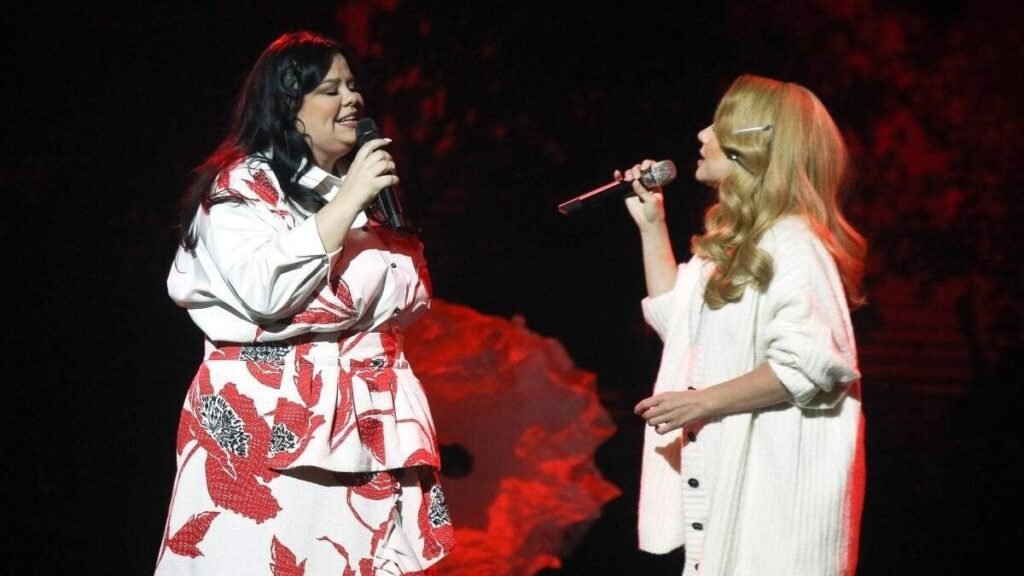
Nadia Dorofeeva, known on stage as DOROFEEVA, is best known to many television viewers not for a single song but for a red chair. Since 2021 she has been a coach on Holos Krainy, the Ukrainian version of The Voice, and before that she coached the children’s version of the show as part of a duo. Her coaching record is unusually clear: a win in her first adult season, a disrupted second season shaped by war, and a runner-up finish in a third season staged outside Ukraine. Holos Krainy, whose Ukrainian title means The Voice of the Country, premiered on the 1+1 network on 22 May 2011. It is part of the international The Voice format created by Dutch television producer John de Mol Jr., and it was the second international adaptation of the programme after the American version. Coaches listen to blind auditions with their backs turned, press a button to turn for a singer they want, build a team, and then guide those singers through battles, knockouts and live shows decided, in the end, by the public. A coach’s job, therefore, is not only to choose voices but to choose songs, to shape performances week after week, and to keep a team together under the pressure of elimination. Dorofeeva’s three adult seasons show different sides of that job, and they are best understood season by season. Some images in this article are AI-generated illustrations, not photographs of Dorofeeva; they are labelled as such. Source: Wikipedia records that Holos Krainy premiered on 1+1 on 22 May 2011 and that Dorofeeva coached in seasons 11, 12 and 13. Why a Pop Star Was Put in the Chair Nadiia Volodymyrivna Dorofieieva was born on 21 April 1990 in Simferopol. Before Holos Krainy, she had spent a decade as one half of the pop duo Vremya i Steklo, formed in Kyiv in 2010 by producer Oleksii Potapenko, known as Potap, and producer Iryna Horova, alongside Oleksii Zavhorodnii, known as Positiff. The duo’s best-known songs included “Imya 505”, “Pesnya 404”, “Navernoepotomuchto”, “Na Stile”, “Troll”, “TOP”, “E, Boy” and “Dim”. The project ended in 2020, after which Dorofeeva and Positiff began solo careers. Dorofeeva’s first solo song under the name DOROFEEVA, “gorit”, was released on 20 November 2020. That background matters for her coaching for two reasons. First, she arrived at Holos Krainy as a working performer who had spent years in a duo, which meant she understood harmony, stage partnership and the discipline of performing as part of a group, not only as a solo singer. Second, she had already coached on television before her adult Holos Krainy debut, on the children’s version of the show. She was therefore not a first-time television coach in 2021, even though season 11 was her first season in the adult chair. Her early career also included singing and dance competitions in her youth, a finalist place on the television project Chance, and several years performing in the group M.Ch.S. before Vremya i Steklo. Those experiences gave her a performer’s view of auditions, which is different from a purely technical view: she had been the person auditioning, as well as the person later choosing. Her solo work after 2020, including the EP “dofamin” in spring 2021 and the album “Sensi” in 2022, and her switch to performing in Ukrainian after the Russian invasion of Ukraine began, are background here, not the focus. They explain why, by the time she returned for season 13 in 2023, she was coaching in a changed musical landscape, in which Ukrainian-language repertoire and songs about home, endurance and identity carried a different weight than they had in 2021. First Steps as a Coach: Holos Dity Dorofeeva’s first coaching role on a Voice show was not on Holos Krainy but on Holos Dity, The Voice Kids. In autumn 2017, after taking part in the Ukrainian version of Dancing with the Stars on 1+1, she became a coach on Holos Dity together with Positiff, as the duo Vremya i Steklo. The children’s show used three coaches rather than four, and the duo occupied one chair together, which meant that Dorofeeva’s early coaching was collaborative: decisions about repertoire, staging and advice were shared with her duo partner, and the team was a joint team. The duo coached Holos Dity in season 4 in 2017 and season 5 in 2019. In season 4, the coaches were Natalia Mohylevska, Vremya i Steklo and Monatik, and the winner was Daneliya Tuleshova from Monatik’s team. Vremya i Steklo’s finalists that season included Alexander Minyonok and Yana Gornaya. In season 5, the coaches were Jamala, Vremya i Steklo and Dzidzio, and the winner was Oleksandr Zazarashvili from the Vremya i Steklo team, with Karina Stolaba and Maksym Komisarchuk also listed among that team’s finalists. That win is the earliest coaching victory in Dorofeeva’s television record, and it predates her adult Holos Krainy win by two years. The children’s coaching experience is relevant to the adult show because it taught a different kind of coaching. With younger singers, the emphasis is on protection, confidence and age-appropriate repertoire, rather than on the competitive tactics of battles and steals that dominate the adult format. Dorofeeva’s later adult coaching, with its attention to song choice and to singers’ confidence on stage, can be seen as building on that earlier work, even though the formats are different. It also meant that, when she took the adult chair in 2021, viewers already knew her as a coach, not only as a singer, and the transition felt like a promotion within the same television family rather than a new departure. Joining Holos Krainy: Season 11 in 2021 Dorofeeva joined Holos Krainy as a coach in season 11, which ran from 24 January to 25 April 2021. The other coaches that season were Tina Karol, Oleh Vynnyk and Monatik. The show was presented, as in later seasons, within the 1+1 stable, and it aired on Sunday evenings. Dorofeeva was the only coach in that line-up who had […]

Dorofeeva: Holos Krainy Coach, Seasons and Teams Read Post »

Yuriy Horbunov biography: Horbunov in a light-blue suit over a white T-shirt
TV and Reality Stars

Yuriy Horbunov: Holos Krainy Host and Ukrainian TV Presenter

This Yuriy Horbunov biography follows a Ukrainian television presenter, actor and producer whose name has become closely linked with the 1+1 channel and with Holos Krainy, the Ukrainian version of The Voice. Born on 24 August 1970 in Novyi Rozdil, Ukraine, Horbunov first trained as a stage actor before moving into television, where he built a long career as a live-show host. He is best known today as one of the main presenters of Holos Krainy, a role he has held since the show’s fifth season, and as the long-serving host of the Ukrainian version of Dancing with the Stars. Alongside presenting, he has worked as a film producer and screen actor, most notably in the popular Crazy Wedding comedy films, in which he also plays the master of ceremonies Nazariy Zapukhlyak. Those different parts of his career fit together through presenting, acting and producing, and he remains one of the most recognisable faces on Ukrainian television. The images in this article are AI-generated illustrations, labelled as such. The biographical details are drawn from Wikipedia, which records Horbunov’s birth on 24 August 1970 in Novyi Rozdil, his graduation from the Karpenko-Kary Kyiv Theater Institute in 1992, and his move to the 1+1 channel in June 2006. Yuriy Horbunov Biography: Early Life and Theatre Training Yuriy Horbunov was born on 24 August 1970 in Novyi Rozdil, in what was then the Ukrainian SSR. He grew up in western Ukraine and was educated in Ivano-Frankivsk, a city that shaped his early interests before he left for Kyiv to study acting. In his own account of his education, given in an interview about 1+1 presenters and their training, he said he graduated from the acting department of the Karpenko-Kary Kyiv Theater Institute. That detail matters because it explains much of his later screen manner: he did not begin as a journalist or a newsreader, but as a trained actor who learned timing, voice and stage presence before he ever faced a television camera. Horbunov has described his route into acting as accidental rather than planned. He has said that he had not dreamed of becoming an artist, had not performed on stage at school, and had not taken part in drama clubs before applying. His mother, he recalled, read a newspaper announcement that a drama theatre was inviting young people to audition for admission to the theatre institute. At that point he had not entered the Ivano-Frankivsk Pedagogical Institute, and he had trained for work as a driver, including as a fuel and oil tanker driver. The theatre audition therefore opened a door he had not been looking for, and it changed the direction of his working life. After his theatre training, Horbunov worked as a stage actor. That stage background gave him two skills that later proved central to live television: the ability to hold an audience’s attention without a break, and the ability to recover smoothly when something unexpected happens. Live talent shows depend on both. A presenter must fill a pause, calm a nervous contestant, hand over to a coach or a judge, and keep the broadcast moving, often without a script for every second. Horbunov’s early career gave him practice in exactly that kind of unscripted, in-the-moment performance, even though the setting was a theatre rather than a studio. Yuriy Horbunov Biography: The Move Into Television Horbunov moved into television in the late 1990s, a period when Ukrainian commercial television was expanding and looking for presenters who could carry entertainment formats. His early television work included hosting on UT-1 and on Novyi Kanal, where he presented entertainment programmes. Those early jobs were important because they moved him from acting in a scripted role to presenting as himself. A presenter, unlike an actor, is judged on personality, warmth and reliability week after week, and Horbunov began to build a public identity in that role. In June 2006 he joined the 1+1 channel, a move that became the turning point of his career. At 1+1 he became a host of the morning show Breakfast with 1+1, known in Ukrainian as Snidanok z 1+1, alongside Marichka Padalko. Morning television is a demanding format: it requires energy at the start of the day, the ability to switch between light items and serious news, and a steady, reassuring presence for viewers who watch while preparing for work or school. Horbunov’s work on the morning show made him a daily presence in Ukrainian homes and established him as a 1+1 presenter rather than a guest or occasional host. The same year, 2006, also brought him to the show that would define his early 1+1 career. Tantsi z zirkamy, the Ukrainian version of Dancing with the Stars, premiered on 1+1 on 7 October 2006. Horbunov was one of its first hosts, presenting alongside singer Tina Karol. The pairing of an experienced television presenter with a popular singer gave the show both structure and star appeal, and it set a pattern Horbunov would repeat on Holos Krainy: working alongside a well-known singer or presenter while keeping the live broadcast on track. Becoming the Face of Holos Krainy Holos Krainy, whose name translates as The Voice of the Country, premiered on 1+1 on 22 May 2011. It is part of the international The Voice franchise, created by Dutch television producer John de Mol and based on the singing competition first launched in the Netherlands as The Voice of Holland. The Ukrainian version was the second international adaptation of the format, after the American version. In the format, coaches listen to singers without seeing them in the blind auditions, then work with their teams through later rounds towards live finals. The presenter sits at the centre of that process, introducing singers, talking to coaches, and guiding viewers through results. Horbunov joined Holos Krainy as a presenter in its fifth season, which ran from 8 March to 7 June 2015. In that season he presented alongside Olha Freymut, and the winning coach was Tina Karol, with Anton Kopityn winning […]

Yuriy Horbunov: Holos Krainy Host and Ukrainian TV Presenter Read Post »

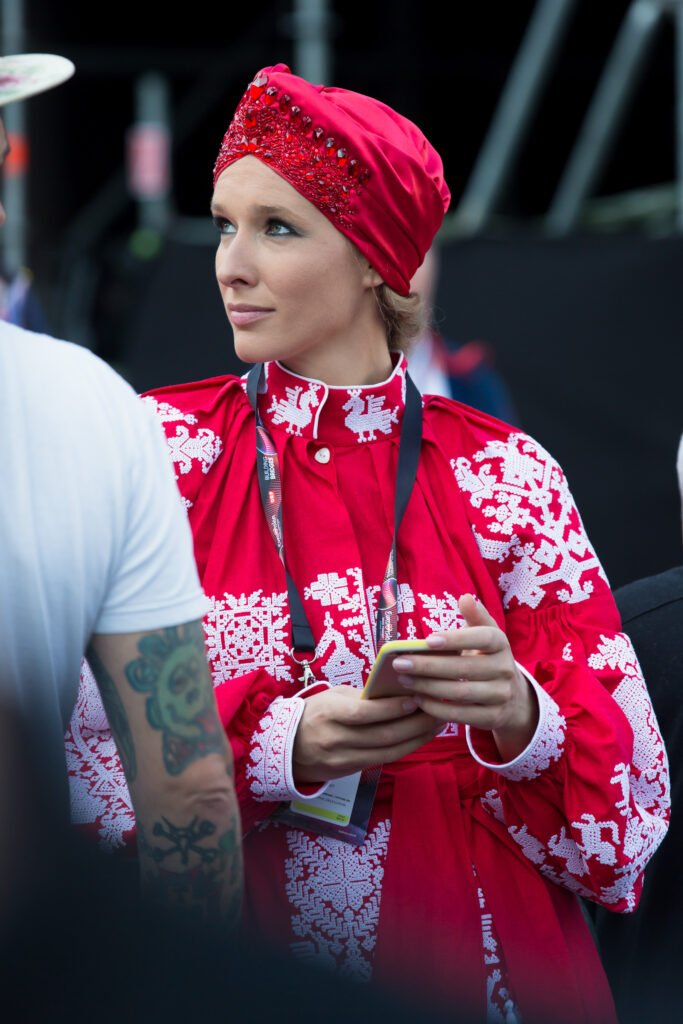
Kateryna Osadcha biography
TV and Reality Stars

Kateryna Osadcha: Holos Krainy Presenter and Her TV Career

Osadcha’s career began far from a television studio, on modelling runways and photo shoots abroad, and settled into one of the most recognisable presenting jobs in Ukraine. Born in Kyiv in 1983, Osadcha spent her teenage years working as a model in Japan and Western Europe, returned home at eighteen, retrained her voice and her professional direction, and then built a long television life around two very different kinds of programme: the society interview show Social Life and the singing competition Holos Krainy, known in English as The Voice of Ukraine. She is a presenter, not a coach or a judge on Holos Krainy. Coaches choose and mentor singers; Osadcha holds the live show together, introduces performers, speaks to coaches and contestants, and gives the audience a steady point of contact as the competition moves from auditions to the final. Alongside that flagship role, she has presented the children’s version of the format, served as a jury member on a modelling competition, co-hosted a major charity telethon, and put her name to foundation work aimed at helping teenagers think seriously about their future professions. Kateryna Osadcha Biography: Early Life in Kyiv Kateryna Osadcha was born on 12 September 1983 in Kyiv. Her father, Oleksandr Osadchyi, was the director of the Kyivprylad factory, and her mother was a homemaker. She also has a younger brother. The family background, as described in published biographical accounts, was comfortable and industrious rather than show-business connected, and her earliest public activities were not in front of a camera at all. At school she took music lessons and danced, becoming a member of the choreographic ensemble known as Little Falcons. That combination of music and movement would later look like an early rehearsal for a career spent on stages and in studios, but at the time it was simply the extracurricular life of a Kyiv schoolgirl with energy, discipline and an interest in performance. Her schooling itself was interrupted, and eventually reshaped, by work. Modelling arrived early and demanded travel, long days and time away from the classroom. Osadcha therefore completed her final school examinations externally, a practical solution that allowed her to keep working while still finishing her education. She did not drift into modelling as an adult after university; she entered it as a teenager and had to organise her education around it. The same practical approach shaped a later decision: when she returned to Ukraine and moved towards journalism, she studied in absentia at the Faculty of History of the University of Kyiv, fitting academic study around adult work and family life rather than following a conventional full-time student path. From Kyiv to Tokyo: The Modelling Years, Ages Thirteen to Eighteen Osadcha began her professional modelling career at thirteen, after graduating from the Bagira Agency’s modelling school in Kyiv. At fourteen, having just finished ninth grade, she travelled to Tokyo for three months of filming and photo work. Later assignments took her to Germany, England and France. She was not working only in one market or one fashion capital, but moving between countries, languages and production teams while still a teenager. That experience gave her a working familiarity with cameras, directors, styling and the pace of a shoot, and it also gave her an early lesson in adaptability: a model on location must understand instructions quickly, present herself consistently, and remain composed under pressure. By eighteen, however, she had decided that modelling would not be her adult career. She finished her modelling work and returned to live in Ukraine. The decision is often presented as a clean break, but in practice the skills carried over. A presenter, like a model, works to camera, understands framing and timing, and must be comfortable being looked at while doing a job. What changed was the substance of the work. Instead of embodying someone else’s visual idea for a shoot, she would have to ask questions, listen to answers, hold a conversation and carry information to an audience. That shift from image to language is the central turn in her biography, and the next phase of her life was spent making it possible. A New Voice: Language Training, Motherhood and a History Degree Osadcha’s return to Ukraine coincided with major personal change. Four months after the birth of her first child, she began working with a teacher to practise speech and diction, because her knowledge of the Ukrainian language was, by her own account in biographical sources, not strong enough for the broadcasting career she wanted. That runs against a common assumption that a successful presenter must have started out fluent and confident in the broadcast language. In Osadcha’s case, fluency was built deliberately, through tuition, after she had already become a mother and after she had spent formative years working largely outside Ukraine. Her journalism education followed a similarly practical route. She graduated in absentia from the Faculty of History of the University of Kyiv, a background that gave her a general humanities education rather than a narrow vocational media degree. Her first experience of television journalism came as a freelance correspondent for the First National Channel, which was renamed UA:First in 2015. Freelance correspondence is unglamorous, foundational work: researching stories, making contacts, turning up, asking questions and filing material to a deadline. For a former model with a newly trained broadcast voice, it was the place where presenting stopped being an ambition and became a craft learned on assignment. Kateryna Osadcha Biography: The Social Life Years In 2005, Osadcha passed a casting and became host of the project Social Life on the Tonis channel. In 2007 she became host of the programme Social Life at the First National channel, and in August 2008 the programme began airing on 1+1, the channel with which her name would become most closely associated. The moves between channels are not mere administrative detail. They show a programme finding its audience and its home, and a presenter moving with it, carrying the format’s identity from one broadcaster to another […]

Kateryna Osadcha: Holos Krainy Presenter and Her TV Career Read Post »

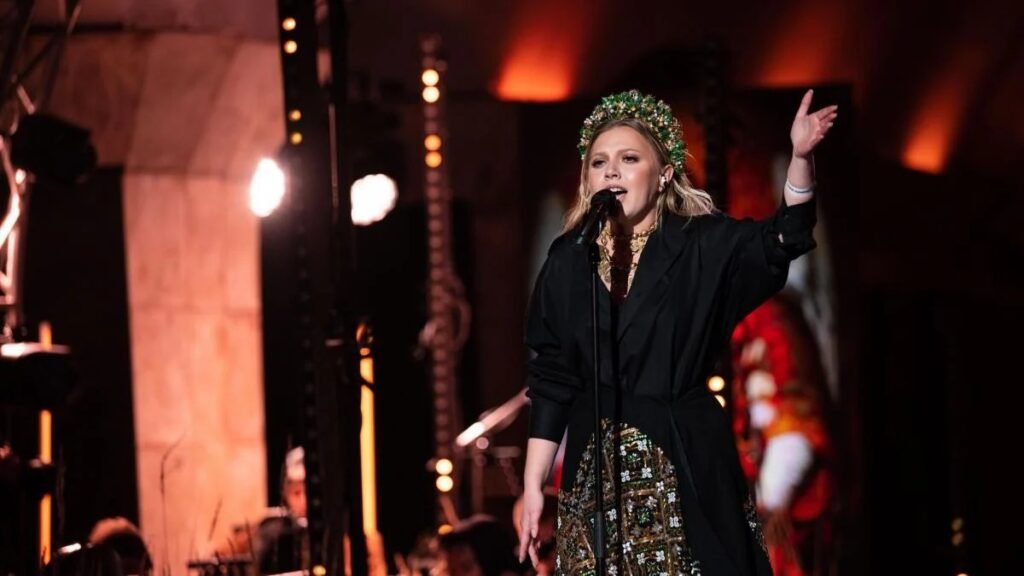
Mariya Kvitka Holos Krainy biography
TV and Reality Stars

Mariya Kvitka: Holos Krainy Season 12 Winner’s Journey

Mariya Kvitka Holos Krainy winner did not win Season 12 in the way most winners win. She won after the season itself had been broken in half, after the show had changed channels, after episodes recorded before a war had to be reworked for broadcast, and after she had reached the final through a route that had never before produced a winner. Holos Krainy is the Ukrainian version of The Voice. Its twelfth season began on 23 January 2022 on 1+1, on Sundays at 21:00. By the end of the year, the season was remembered less for a conventional contest arc than for the circumstances in which it finished. Kvitka was named winner by the public on 20 November 2022. The result also gave coaches Oleksandra Zaritska and Andriy Matsola their first win as coaches. Note: The images in this article are AI-generated illustrations, labelled as such. Source: Wikipedia records that Holos Krainy season 12 premiered on 23 January 2022, was suspended after six episodes, returned on 2 October 2022 on TET, and ended on 20 November 2022 with Mariya Kvitka winning through the Second Chance route. The season started normally, then stopped The first part looked like a standard refresh. From the previous season only Nadya Dorofeeva returned as a coach. Potap returned after a two-season absence, Svyatoslav Vakarchuk after a five-season absence, joined by first-time coach Olya Polyakova. The show was presented by Kateryna Osadcha and Yuriy Horbunov. Six episodes were broadcast before the season was suspended following Russia’s full-scale invasion in February 2022. This was not a season redesigned from the start to be about war — the season had already begun, performances had already been recorded, and it then had to find a way to continue in a country at war. It returned on 2 October 2022 on a different channel, TET, because 1+1 was broadcasting emergency news. Episodes seven to eleven had initially been recorded before 24 February 2022. For broadcast, Russian-language dialogue was replaced with a voiceover translation in Ukrainian. The show also added material in which contestants spoke about empowering and inspiring people through music, and remembered soldiers at the frontline. A viewer returning in October was not simply picking up where they had left off in February: the broadcast language had changed, the channel had changed, and the framing had changed. The contest was still a contest, but it was shown in a national context transformed between its first and second halves. The Second Chance route Season 12 introduced the Comeback Stage, in Ukrainian “Druhyy shans” (“Second Chance”), shown exclusively on the 1+1 video platform. It was a separate route back into the competition for artists who had not secured a place on a main team. After the blind auditions, coaches chose the best performers from the Comeback Stage participants to form the Second Chance team. A performer on that team could then reach the live final — and the win — without ever having been picked in the standard blind-audition process. The team is also called the Second Chance Team. In Ukrinform’s English-language reporting, its Polish spelling is rendered as Maskysa Kvitka, while the form used in this article — Mariya Kvitka — follows 1+1’s own English reporting. Spelling varies — Maskisa is also rendered Maskysa — and the form used here follows the season table. A folklorist before she was a TV winner Contemporary finale reporting described Kvitka as a keeper of Ukrainian culture and a folklorist by profession, and folk singer Kateryna Pavlenko praised the win during the final. The record also reports that, as of the final broadcast, Kvitka knew about 2,000 folk songs, saying she had collected them since childhood from old women, including her grandmothers in Polissia. The word “about” matters: no published season source fixes the number exactly, so it should be read as an estimate, not a precise count. Polissia, grandmothers and how a song survives Polissia is a historic and geographic region spanning northern Ukraine and neighbouring lands, known for woodland, marshland and a strong folk song and ritual tradition. When a singer says she learned songs from grandmothers in Polissia, she is describing a particular musical education: not a classroom conservatory, but learning by listening, repeating, and living alongside people who sang the songs in everyday and ritual contexts. That method is fragile: a song existing only in memory, only in the voice of an older generation, can disappear when that generation passes, unless a younger person learns it well enough to sing it again. “Recording” here does not necessarily mean releasing a record: it can mean a field recording, writing down the words and melody, or committing a song to memory through repeated singing with the person who knows it. The reporting uses the language of recording forgotten songs, which fits this preservation model. “Forgotten” does not usually mean that no one on earth knew the song; it means it had fallen out of common circulation, was no longer widely sung, or was known only in a small community or family. Bringing such a song back to a TV audience does not restore its original context, nor make a TV performance the same as a village performance. It gives a wider audience a chance to hear a form they might otherwise never encounter, and gives the singer a chance to argue, through performance, that the music still belongs in the present. Folk songs accompany work, weddings, seasonal rituals, mourning and celebration; they carry language, humour, grief and social rules. A singer who collected such songs was not only collecting tunes — she was collecting evidence of how people lived, spoke and marked important moments. When such a singer enters a competition built around contemporary popular performance, the tension is real: will the songs be heard on their own terms, or reshaped until they sound like everything else? The final: an underground stage, four finalists and a public vote The season 12 final was live from Kyiv’s underground — described as […]

Mariya Kvitka: Holos Krainy Season 12 Winner’s Journey Read Post »

Mykhailo Panchyshyn Holos Krainy biography
TV and Reality Stars

Mykhailo Panchyshyn: Holos Krainy Season 13 Winner’s Story

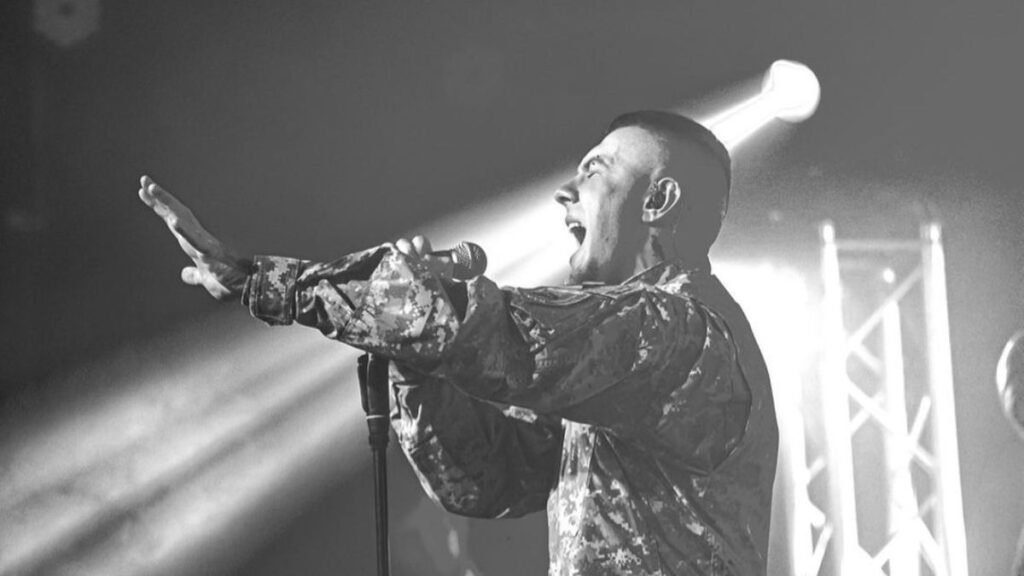
On 29 October 2023, Mykhailo Panchyshyn was named winner of Holos Krainy season 13, the Ukrainian version of The Voice. The result was decided by the public and gave coach Artem Pyvovarov his first win as a coach. Panchyshyn, performing as Ptashkin, did not arrive as a newcomer: he had already won another major Ukrainian TV singing contest, had served in the Armed Forces of Ukraine, and had written the original song that carried him through the blind audition and the final. The images in this article are AI-generated illustrations, labelled as such. Source: Wikipedia records that Holos Krainy season 13 ran from 3 September to 29 October 2023, was called the European Season, and ended with Mykhailo Panchyshyn (Ptashkin) winning as coach Artem Pyvovarov’s artist. Result at a glance Season 13 ran from 3 September to 29 October 2023 on 1+1 Ukraine. The hosts were Yuriy Horbunov and Kateryna Osadcha. The four coaches were Ivan Klymenko, Nadya Dorofeeva, Artem Pyvovarov and Julia Sanina. The winner was Mykhailo Panchyshyn, and the winning coach was Pyvovarov. The runner-up was Yuriy Horodets’kyy, from Dorofeeva’s team. Anastasiya Chaban and Khrystyna Starykova finished third, in the final-round structure described below. The season was also called the European Season. Panchyshyn was listed as 25 at his blind audition, performed as Ptashkin, and auditioned with his own original song, “Nevidomyi Heroi” (“Unknown Hero”). All four coaches turned. He joined Pyvovarov’s team and closed the final by singing the same song again — an original song at the start and at the end. Why season 13 was called the European Season It was the first season in the entire The Voice franchise to be held across Europe, per the published overview. The reason was Russia’s invasion of Ukraine. Production moved to the set of The Voice of Poland, and a custom-designed train was introduced to take the show to Poland. The setting changed while the coaches, contestants, language and audience vote remained Ukrainian. In a format change, the “Second Chance” coaches from the previous season were dropped. From the previous season only Nadya Dorofeeva returned as a coach, joined by debuting Julia Sanina, Artem Pyvovarov and Ivan Klymenko. Each coach recruited ten artists, forty contestants in total. A smaller team size means every choice carries more weight. Blind audition The second episode was broadcast on 10 September 2023. Panchyshyn was introduced as Mykhailo Panchyshyn, known as Ptashkin, aged 25, and sang “Nevidomyi Heroi” as an original song. All four coaches turned: Klymenko, Dorofeeva, Pyvovarov and Sanina. When more than one coach turns, the singer chooses; Panchyshyn chose Pyvovarov. An original song is not the safest option: a familiar cover gives an immediate reference point, while an original removes it, and the coaches must judge voice, melody and writing together. A four-chair turn for an original is a stronger signal than for a well-known cover. From his first appearance, his identity as a songwriter was part of his contestant identity. The title “Unknown Hero” set a theme that returned at the end. What is documented is that the song was written by Panchyshyn, performed at the blind audition and the final, and the final audience response was described as deeply emotional. The song is a piece of music; his service record is a separate fact; the show brought them together. Team Pyvovarov and a first coaching win Pyvovarov was a debuting coach, and by the end he was the winning coach; the published overview describes this explicitly as his first win as a coach. He was not an established winning coach adding a trophy — he was a first-time coach whose team produced the winner in his first season. What is documented is the structure: Pyvovarov recruited ten artists, Panchyshyn was one of them, and he survived the later rounds to the final. The coaching relationship was successful in competitive terms, ending with a public-vote win rather than a coach decision alone. The other finalists were strong: Dorofeeva’s Horodets’kyy was runner-up, and Klymenko’s Chaban and Sanina’s Starykova reached the second round of the final and finished third. A final with all four coaches represented in its later rounds makes the public vote a more meaningful contest, not a formality. Final night: three rounds The finale, episode nine, on 29 October 2023, had three rounds, each survived on the public vote, and each asked something different. Round one: eight finalists performed. Panchyshyn, for Pyvovarov, sang “The Show Must Go On” and advanced. The others advancing were Chaban, Starykova and Horodets’kyy. Eliminated were Mairamik Avoian, Halyna Pechenizhs’ka, Vlad Pelykh and Roman Panchenko. Round two: four remained. Panchyshyn sang “Manifest” and advanced. Horodets’kyy sang “Dumy” and advanced. Chaban sang “Pid krylom” and Starykova sang “Melodiya”; both finished third. Round three: the last two performed the songs with which they had first made an impression. Horodets’kyy sang “Kyieve mii” and was runner-up. Panchyshyn sang “Nevidomyi Heroi” and was named winner. Returning to the blind audition song lets viewers compare the singer at the end with the singer first heard, and it is especially direct here because the song was his own writing. As a setlist, the three final songs show range: a well-known rock anthem, a song titled “Manifest”, and an original Ukrainian song about an unknown hero — different pacing, emotional registers and audience relationships. Advancing after each is documented evidence for versatility. The service story behind the stage name This must be told carefully, without turning service into a contest narrative. Per an OBOZ.UA profile of 14 November 2023, Panchyshyn is an artist from Lviv who in younger years had already served in the territorial defence and a special unit of the Armed Forces of Ukraine, and had considerable concert experience before the full-scale invasion. War affected his family as early as 2014, when his brother Petro served in Donbas, and Panchyshyn himself did not hesitate when he decided to defend Ukraine. After the full-scale invasion, the profile reports that he first joined the Kyiv Theatre of the Resistance, […]

Mykhailo Panchyshyn: Holos Krainy Season 13 Winner’s Story Read Post »

Scroll to Top