Author name: Mughal Waleed

Mughal Waleed is the owner and author of EJOBARY, an entertainment information website about Ukrainian celebrities. He started EJOBARY to give English-language readers a clear guide to Ukrainian entertainment. From Pakistan, he writes biographical profiles and career summaries of Ukrainian actors, singers, TV stars, and influencers, covering their public work in film, television, music, and online media. His articles are built from named public sources, checked against more than one source, and reviewed by him before publication, as described in the Editorial Policy. He welcomes corrections and suggestions from readers. To get in touch, please use the Contact page.

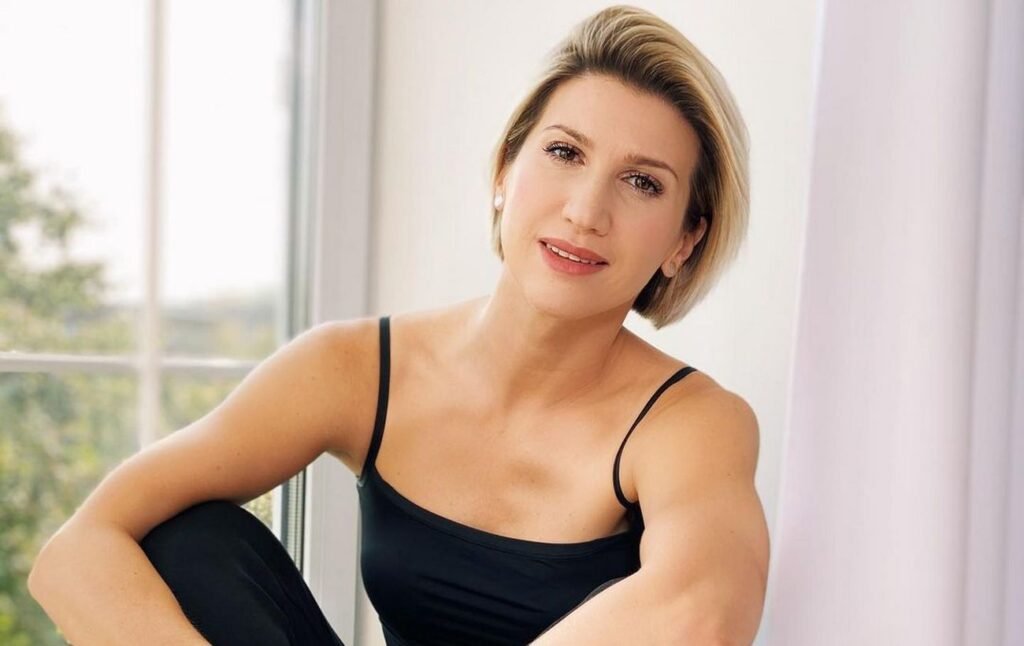
Anita Lutsenko, portrait, black top by window (2020).
Influencers

Anita Lutsenko: The Trainer Who Turned Fitness Television Into Everyday Coaching

Anita Lutsenko is best known in Ukraine as a fitness trainer who became a television coach, and then as an online coach whose programmes, books and social media advice reach people far beyond a television studio. Her career is different from a typical influencer story because it did not start with social media. It started with sport: rhythmic gymnastics as a child, competitive sports aerobics as a teenager, a university education in physical education and sport, and more than a decade of teaching fitness before she became a household name on television. That sporting base is why her online influence has lasted. When she talks about weight loss, strength, stretching or daily habits, she is not repeating a trend she discovered online. She is drawing on qualifications, competitive experience and years of coaching real people in gyms, at conventions and on a weight-loss television format. Medical disclaimer: this article describes Lutsenko’s public coaching advice for general information only. It is not medical advice, and it does not replace advice from a qualified doctor or other health professional. Readers should consult a health professional before starting a new diet or exercise programme, especially if they have a health condition, are taking medication, or are pregnant. The images in this article are AI-generated illustrations, labelled as such. 1. Early Life and Childhood Sport in Kyiv Anita Lutsenko was born on 11 March 1984 in Kyiv. She began rhythmic gymnastics at the age of four, studying at the school associated with Irina Deryugina, a name closely linked to Ukrainian rhythmic gymnastics. Starting sport that young shapes a child’s daily life in a specific way: regular training, discipline about the body, an early understanding of flexibility, coordination and performance under observation. She also studied aerobics and dance professionally as she grew older. That combination, gymnastics plus aerobics plus dance, later became the core of her fitness teaching. She did not specialise narrowly in one movement style. She learned to move, to teach movement, and to adapt movement for people with different abilities, a skill that matters far more in weight-loss coaching than the ability to perform a difficult routine oneself. Her childhood sport also explains her later emphasis on sustainability. A child who trains for years learns that the body responds to consistent work, not to a single extreme week. That lesson appears again and again in her adult coaching: small, repeatable habits, rather than crash approaches, are presented as the route to lasting change. 2. Competitive Years: Sports Aerobics and a Master of Sports Title From 1994 to 2002, Lutsenko took part in Ukrainian and European championships in sports aerobics, with earlier biographical summaries also noting participation in championships at city, national and European level. Under the guidance of coaches Olga Pasechna and Sergey Zika, according to a trainer profile, she achieved the title of Master of Sports in sports aerobics. She won a silver medal at the European Championship in sports aerobics, and won many times at the championship of Ukraine in aerobics and fitness. Those competitive results are important for two reasons. First, they establish that her authority as a trainer rests on judged, competitive performance, not only on television presence. Second, they explain her coaching range: sports aerobics combines strength, flexibility, rhythm and endurance, and a competitor in that discipline must train all of them. When she later taught step, aerobics, dance, strength, functional training, Pilates, stretching and aqua-aerobics, she was drawing on a broad competitive and teaching base, not learning each format from scratch for television. The competitive period also ended at a useful point for her teaching career. By the early 2000s, she was moving from competing herself to teaching others, a transition many athletes make, but one that requires a different skill: explaining a movement so that a beginner can do it safely, rather than performing it perfectly oneself. 3. University Education and Qualifications Lutsenko received her higher education at the National University of Physical Education and Sport in Ukraine. She earned a bachelor’s degree with honours in Olympic professional sport, and a master’s degree with honours in the theory and methodology of organisation of sports events and spectacles. Those degree titles, reported in biographical sources, matter because they show formal training in both sport performance and in how sporting activity is organised and presented. She also holds qualifications as a fitness trainer and physical education teacher, and she is a certified Pilates and TRX specialist. TRX, short for Total Resistance Exercises, uses suspension straps for body-weight training, and Pilates focuses on core strength, control and flexibility. Listing those specialisms is not a formality. It explains why her later programmes could include home workouts, studio classes, functional training and stretching, rather than only one style of exercise. Her teaching career began early. She first started teaching fitness in 2000, while still building her own competitive and university path. From 2008, she was a teacher at SFC, the training centre of the Sofia club, according to a trainer profile, and she worked with a number of fitness clubs and venues, including open and charitable classes. That long teaching period before television fame is the foundation of her later credibility: she had already taught hundreds of people before a camera made her famous. 4. Nike Conventions and Becoming a Presenter of Functional Training Before her television breakthrough, Lutsenko acted as a presenter in functional training at regional and international Nike conventions in Ukrainian cities, including Kyiv in 2006 to 2008, Odesa in 2006, Donetsk and Dnipropetrovsk. Convention presenting is a demanding, practical form of teaching. A presenter must lead a large room, keep timing, demonstrate clearly, correct form from a distance, and hold energy across a session. That experience helps explain why she adapted well to television. A television weight-loss show also requires leading a group, explaining a task clearly, and maintaining authority without shouting. Convention work had already taught her to do that for live audiences who could see every mistake. Television added cameras, but the core […]

Anita Lutsenko: The Trainer Who Turned Fitness Television Into Everyday Coaching Read Post »
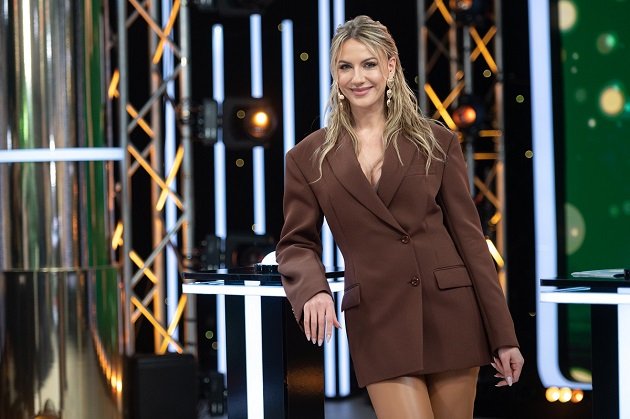
Lesia Nikitiuk, Ye Pytannia set, brown suit, Novy Channel, 13 Mar 2023.
Influencers

Lesia Nikitiuk: From Khmelnytskyi Comedy to Ukraine’s Travel and Talk Television

Lesia Nikitiuk is one of those Ukrainian television figures whose career is easier to understand as a journey than as a single breakthrough. She did not become famous through one show alone. She built an audience step by step: first through student comedy, then through a comedy duo, then through a travel format that took her around the world, and then through prime-time hosting, game shows and her own travel talk format. By the time social media became central to Ukrainian celebrity, she already had a television audience to bring with her, and she turned that audience into a large, active online following. That combination is why she fits an influencers category as well as a television category. She is not only a presenter who happens to have social media accounts. She is a presenter whose humour, direct manner and audience storytelling work in both places: on a television set, where timing and reaction matter, and on a phone screen, where a short clip, a photo or a personal update must hold attention in seconds. The images in this article are AI-generated illustrations, labelled as such. Source: Wikipedia (Ukrainian), “Нікітюк Леся Іванівна”, which records her birth on 19 October 1987 in Khmelnytskyi, her KVN and duo work, and her hosting of Oryol i Reshka, Hto Zverhu and Le Marshrutka. 1. Early Life in Khmelnytskyi and a Comedy Start Lesia Ivanivna Nikitiuk was born on 19 October 1987 in Khmelnytskyi, Ukraine. Her parents, Kateryna Petrivna Nikitiuk and Ivan Ivanovich Nikitiuk, worked at the Ukrelectroapparat enterprise. That ordinary, working family background is part of her public image: she has often been presented as a presenter from outside Kyiv’s media centre, whose humour draws on directness and self-mockery rather than on insider polish. After school, she studied at the Khmelnytskyi Humanitarian Pedagogical Academy. During her training, she joined the KVN comedy team Tornado Lux. KVN, a long-running comedy competition format across post-Soviet countries, teaches performers to write quickly, perform live, react to an audience, and survive a joke falling flat. Those skills later became central to her television work. One production from that period, titled “Halia, I’m on the bus,” collected more than 4.2 million views on YouTube, according to biographical reporting. That figure is useful not as a precise current count, but as evidence that her comedy was already reaching a large online audience before she became a national television host. Student comedy also gave her a partner and a format. In 2009, with close friend Olga Panasenko, she began performing in the Curling show, a comedy duo act. The duo format matters because it taught her to share a stage, to set up another performer’s joke, and to hold a character across a performance. Television presenting, especially in travel and game formats, requires the same skill: the host must make space for guests, co-hosts and locations, rather than dominating every moment. 2. The Comedy Duo and the First Television Break In 2011, Nikitiuk and Panasenko took part in the show Rozsmishi Komika, a comedy competition in which performers try to make comedians laugh. They succeeded, earning 50,000 hryvnias, and then another 20,000 hryvnias in a further appearance. In the Russian version of the programme, they earned 250,000 rubles. Those amounts, reported in biographical sources, are less important as money than as proof of a turning point: a student comedy act had now won on a televised stage, in front of professional comedians, and had been rewarded for it. That success helped open the door to travel television. Comedy and travel presenting share an underrated skill: both require a performer to react honestly to an unfamiliar situation. A comedian who can only deliver prepared lines will struggle when a location, a local custom or a travel mishap intervenes. A travel host who can only read a script will struggle when a plan changes. Nikitiuk’s comedy background gave her an improvisational base that travel television could use. It is worth noting the timeline carefully. Her comedy duo work came first, in 2009 to 2011, and her travel television breakthrough followed. She was not cast as a travel host with no performance history. She arrived with stage experience, a proven duo, and a televised comedy win. 3. Oryol i Reshka: The Travel Show That Made Her a Household Name From 2012 to 2013, Nikitiuk was a host of the television show Oryol i Reshka, known in English as Eagle and Tails or Heads and Tails. The format is simple and durable: two hosts travel to a destination, one with a large budget and one with almost none, decided by a coin toss. The contrast creates natural stories about luxury, survival, local transport, food and accommodation, and it forces hosts to show personality under very different conditions. Nikitiuk’s time on the show established her as a travel presenter. She returned to the format in later seasons, including the tenth season, which began on 8 February 2015, and its second, jubilee part, which aired from 17 August 2015, when she resumed hosting. On 10 December 2015, she set off on a round-the-world trip as part of the programme, a journey that became a major chapter in the show’s history and in her own career story. Secondary biographical summaries describe her hosting multiple seasons of the format, including luxury seasons and anniversary specials, while travelling to countries in Europe, Asia, Africa and the Americas. The exact season labels vary between sources, so no season-by-season list is given here. What is consistent across sources is the central fact: Oryol i Reshka was her breakthrough travel format, she hosted it across several years, and it made her recognisable to audiences far beyond comedy viewers. 4. Lesia-Zdiesya and Building an Author’s Voice In 2013, Nikitiuk hosted on the K1 channel an author’s programme about show business titled Lesia-Zdiesya. The title plays on her name and on the idea of being present where show business happens. An author’s programme is different from hosting a format created by others. It asks […]

Lesia Nikitiuk: From Khmelnytskyi Comedy to Ukraine’s Travel and Talk Television Read Post »

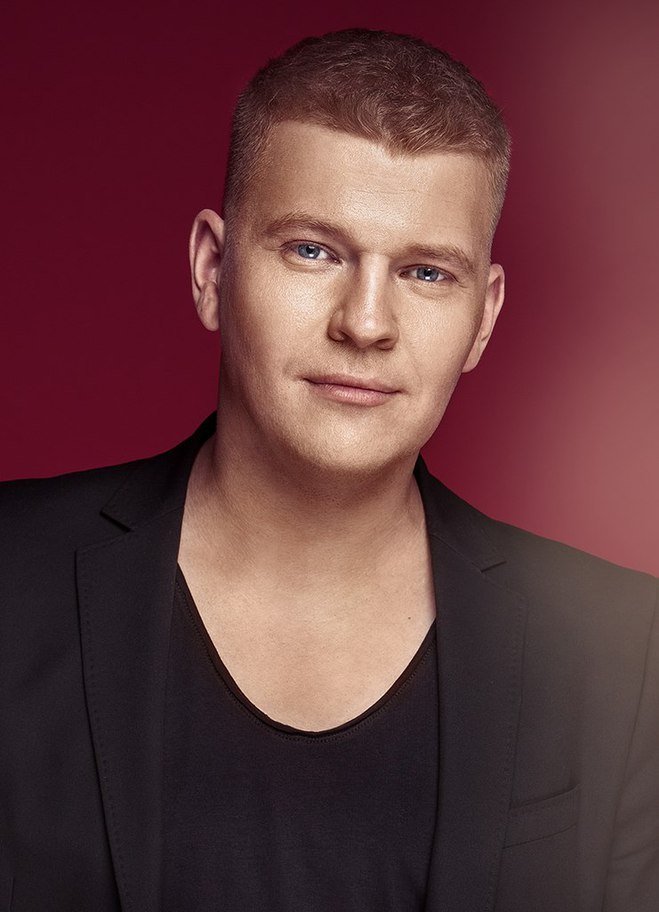
Anton Kopityn, studio portrait (red background).
TV and Reality Stars

Anton Kopityn: The Holos Krainy Season 5 Winner Who Started Again in Kyiv

Anton Kopityn’s win on Holos Krainy is remembered not only because he sang well, but because of where he came from when he sang. He was a singer from Donetsk who had moved to Kyiv with his family after war reached eastern Ukraine, and who was working manual jobs to support that family when the show called him. He did not arrive on the programme as a polished industry act. He arrived as a man rebuilding a life, who happened to have a voice strong enough to turn chairs, win a team place, survive every round, and then win a national final. That background is why season 5 of Holos Krainy still gets discussed years later. Talent shows often present a contestant’s story as a short introduction before a performance. In Kopityn’s case, the story was not decoration. It explained his determination, his choice of coach, and the public reaction to his victory. The images in this article are AI-generated illustrations, labelled as such. Source: Wikipedia lists Anton Kopityn (spelled Kopytin) as the winner of season 5 of Holos Krainy, which aired from 8 March to 7 June 2015 with Tina Karol as his coach. A note on spelling helps readers first. This article spells the surname Kopityn, while several Ukrainian and English sources spell it Kopytin. They refer to the same singer, the winner of Holos Krainy season 5. This article uses Kopityn in headings and the main text, and notes the variant so readers searching either spelling can recognise the same person. 1. The Verified Win: Season 5, 2015, Coach Tina Karol The core facts of the win are clear and can be stated without qualification. Anton Kopityn won season 5 of Holos Krainy. The season first aired on 8 March 2015 and last aired on 7 June 2015. His winning coach was Tina Karol. The other finalists listed for that season were Tetiana Reshetniak, Andrii Luchanko and Yevhen Tolochnyi. The presenters for the season were Olha Freymut and Yuriy Horbunov. That placement matters because it puts Kopityn in a specific line of winners. Season 4, immediately before him, was won by Ihor Hrokhotskyy with coach Svyatoslav Vakarchuk. Season 6, immediately after him, was won by Vitalina Musienko, also with Vakarchuk. Kopityn’s season therefore sits between two Vakarchuk-coached wins, and his own win belongs to Karol’s coaching record. It was Karol’s second season-5 success in a broader sense: she had coached earlier seasons and would coach and win again later, but season 5 is the season in which her contestant Kopityn took the title. The show itself, Holos Krainy, is the Ukrainian version of The Voice, premiered on 1+1 on 22 May 2011. By season 5, the format was well established in Ukraine: blind auditions, battles, knockouts and live finals decided by viewer votes. Winning therefore required more than one good performance. It required surviving a sequence of formats, each testing a different skill, and then winning a live vote against other finalists who had survived the same sequence. 2. Donetsk Roots and a Beginning in a Church Choir Kopityn was born in Donetsk, and his earliest musical formation, as reported in a profile published after his win, began in a church choir. That detail is often mentioned briefly, but it deserves a little more attention because it explains a particular kind of vocal training. A church choir teaches a singer to blend, to listen, to hold a line without forcing it, and to sing as part of a larger sound rather than always as a soloist. Those skills do not automatically make a pop contestant, but they do build breath control, pitch steadiness and an ear for harmony. The same profile described him travelling across Ukraine with a choir and getting to know the country without stereotypes, a phrase that, in context, referred to the experience of performing in many places and meeting audiences beyond his home city. It also described his family life at the time of the win: he and his wife were raising young children, a point that later reporting also noted when describing the family’s move. The point that matters for the season story is that Kopityn was not a teenager entering a contest for exposure. He was an adult with responsibilities, for whom the contest arrived at a moment of practical pressure. 3. Leaving Donetsk and Starting Again in Kyiv The most widely reported part of Kopityn’s pre-show life is the family’s move from Donetsk to Kyiv after war began in eastern Ukraine. Reporting after the win described the family gathering only essentials, travelling with their dog, and arriving in Kyiv needing to start again. In Kyiv, Kopityn took whatever work he could find to support his family. One account lists work as a janitor, electrician and plumber, while another, in his own reported words, describes working on a construction site and carrying tools he had used in his own house, including a welding machine and a perforator. Those two descriptions are compatible rather than contradictory: both describe manual, practical work taken out of necessity. The construction-site detail is particularly vivid because it is where the show found him. According to his own account as reported, he received a call from Holos Krainy while he was working on a construction site, and colleagues nearby were surprised to learn that he sang. That moment captures why his story resonated. The call did not arrive in a rehearsal studio. It arrived in the middle of a working day, for a man who had not built his life around the expectation of television fame. It is important to describe this move accurately and without exaggeration. The move was a displacement caused by war, not a career relocation. The family left a home they had built and worked on, and they rebuilt daily life in a new city. That context helps a reader understand why the final, and what Tina Karol did in it, carried emotional weight beyond a normal talent-show prize. 4. The Blind […]

Anton Kopityn: The Holos Krainy Season 5 Winner Who Started Again in Kyiv Read Post »

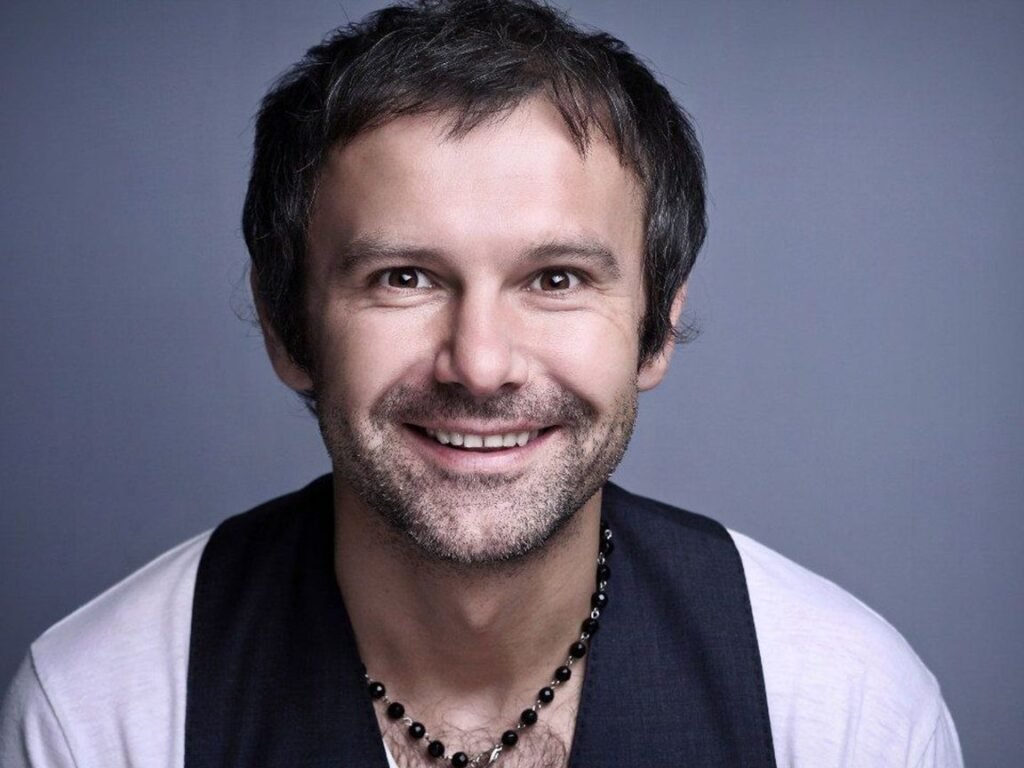
Svyatoslav Vakarchuk, studio portrait.
TV and Reality Stars

Svyatoslav Vakarchuk: The Holos Krainy Coach Who Listened First

When Svyatoslav Vakarchuk turned his red chair on Holos Krainy, the moment carried a different weight from most coaching turns on the show. He was not arriving as a television personality looking for a new format. He was arriving as the lead singer of Okean Elzy, one of Ukraine’s most widely known rock bands, a songwriter whose words were already part of public life, and a trained physicist who had spent years thinking in systems, patterns and precise language. That combination shaped his coaching in a particular way. He spoke quietly, he asked about meaning before technique, and he treated a contestant’s song choice as a decision about identity, not only about vocal display. Holos Krainy is the Ukrainian version of The Voice, a format created by Dutch producer John de Mol and first adapted in Ukraine on the 1+1 channel, where it premiered on 22 May 2011. In the format, coaches listen with their backs turned during blind auditions, press a button to claim a singer, and then guide that singer through battles, knockouts and live shows until viewers vote for a winner. A coach therefore does two jobs at once. The coach must be entertaining enough for prime-time television, and credible enough that a young singer trusts the advice. Vakarchuk’s long first run on the show, followed by a return years later, gives viewers a useful way to understand both jobs. His singing career is included only where it explains why he coached the way he did. The key questions for anyone searching for his coaching story are: what did Vakarchuk actually do in the chair, whom did he help to win, and why did his return in season 12 matter? The images in this article are AI-generated illustrations, labelled as such. Source: Wikipedia records that Holos Krainy premiered on 1+1 on 22 May 2011 and that Vakarchuk coached in seasons 3 to 6 and returned for season 12. 1. Who Vakarchuk Was Before the Red Chair Svyatoslav Ivanovych Vakarchuk, often called Slava Vakarchuk, was born on 14 May 1975 in Mukachevo, in Zakarpattia Oblast, and spent his childhood and youth largely in Lviv. His father, Ivan Vakarchuk, was a physicist, a professor at Lviv University and later Ukraine’s Minister of Education and Science. His mother was also connected to academic life. That background matters for the coaching story because Vakarchuk did not enter music through a television contest. He entered it while studying theoretical physics at Lviv University, and he later completed a doctorate in physical and mathematical sciences, with a thesis on the supersymmetry of an electron in a magnetic field. In 1994, while still a student, he became the lead vocalist of Okean Elzy, the band that would become central to Ukrainian rock. The band’s first album appeared in 1998, and its live audience grew steadily over the following years, including large stadium concerts in Kyiv. By the time Vakarchuk first sat in the Holos Krainy chair, he was therefore not a newcomer seeking exposure. He was an established frontman who had already learned how to hold a large room, how to choose material that could survive repeated performance, and how to keep a band together across years of touring and recording. That experience translated into a coaching style that was less about spectacle and more about durability. A rock frontman knows that a singer who impresses once but cannot repeat the performance, protect the voice, or connect a lyric to a lived feeling will struggle in later rounds. Vakarchuk’s television comments often returned to that test: can this singer do it again, under pressure, in a different arrangement, and still sound like themselves? 2. How Holos Krainy Works, and Where a Coach Matters Most To understand Vakarchuk’s coaching, it helps to separate the parts of Holos Krainy where a coach has real influence from the parts where the coach has almost none. In blind auditions, the coach hears only a voice. There is no staging, no biography on screen and no visual cue to influence the decision. The button press is therefore a judgment about tone, control, phrasing and potential. After that, the coach chooses songs, shapes arrangements, decides who sings what in battles, and helps a singer manage nerves and stamina. In later live rounds, viewers vote, and the coach’s role changes again. The coach can no longer carry a singer through on taste alone. The coach must help the singer choose material that a broad audience can understand quickly, while still protecting the singer’s individual sound. That tension is the heart of The Voice format in every country, and it is where Vakarchuk’s approach becomes distinctive. He often favoured songs with clear emotional language and strong melodic lines over songs chosen mainly to show range. Range, in his coaching logic, was a tool. Meaning was the reason to use it. The show’s presenters and fellow coaches also shape this work. Across his seasons, Vakarchuk worked alongside coaches such as Tina Karol, Potap, Oleksandr Ponomaryov and others, depending on the season, and the panel’s chemistry became part of the programme’s appeal. A coach who argued loudly for every singer would quickly lose credibility. A coach who stayed silent would disappear. Vakarchuk tended to occupy a middle position: direct when he disagreed, calm when he praised, and specific when he gave advice. 3. The First Coaching Run: Seasons 3 to 6 Vakarchuk served as a coach on Holos Krainy in seasons 3 through 6, a run that places him at the centre of the show’s early development. Season 3 aired in 2013, season 4 in 2014, season 5 in 2015 and season 6 in 2016. Contemporary reporting at the time described him as a judge and coach of the show from 2013 to 2016, which matches that four-season span. During those years, the programme was still establishing how Ukrainian audiences would respond to the international format, and coaches were not only mentors. They were also interpreters of what Ukrainian popular singing could sound […]

Svyatoslav Vakarchuk: The Holos Krainy Coach Who Listened First Read Post »

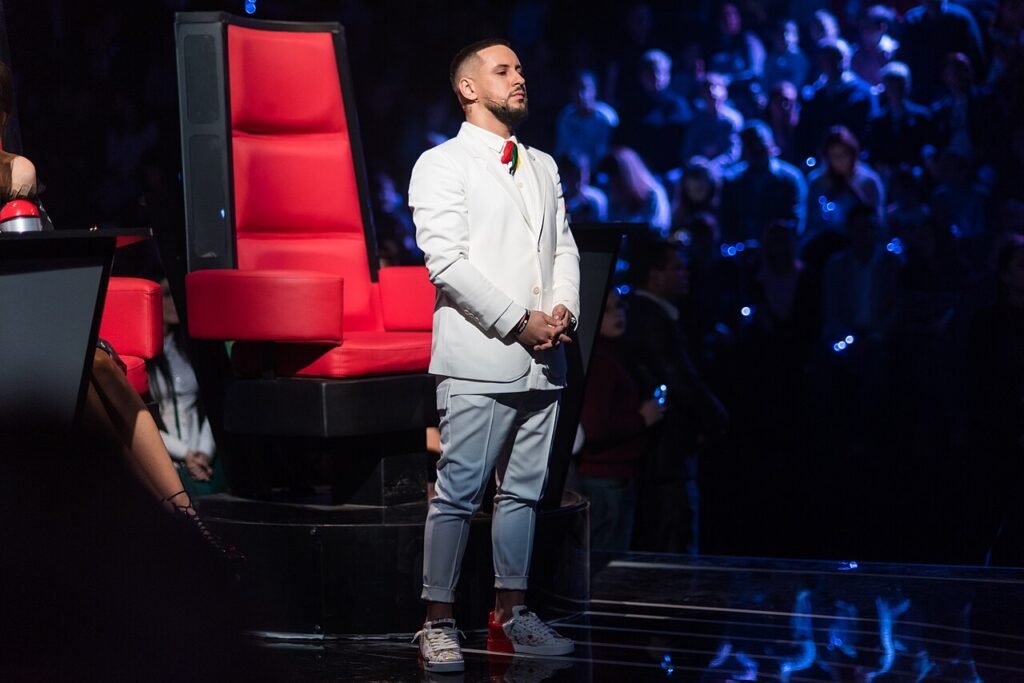
Monatik on stage in a white suit, The Voice Kids 4 final.
Singers and Music Artists

Monatik Biography: Ukraine’s Pop Star and Hitmaker

Who Is Monatik? Dmytro Serhiiovych Monatyk, known professionally as Monatik, stylised in all capitals, is a Ukrainian singer, songwriter, dancer and composer who has become one of the defining pop artists of modern Ukraine. Born on 1 April 1986 in Lutsk, in Volyn Oblast, he has been active as a performer since 2009, and his solo career, which began in earnest in 2011, has taken him from breakdance crews and backing-dancer jobs to stadium shows, television coaching roles and the opening performance of the Eurovision Song Contest 2017 in Kyiv. His music blends pop, rhythm and blues, funk and electronic dance music, and it is built around movement: Monatik is a dancer first in his artistic biography, and his songs, videos and stage shows are choreographed as completely as they are sung. That combination has made him unusual in Ukrainian pop, where singers and dancers have often been separate professions. He writes for himself and for others, he produces and composes, and he has built a long career without depending on a single hit, a single television show or a single style. For audiences outside Ukraine, he is most easily recognised as the performer who opened the first semi-final of Eurovision 2017 with Spinning, the English version of his hit Kruzhit. For audiences inside Ukraine, he is something larger: a hitmaker whose songs have soundtracked weddings, workouts, radio playlists and stadium concerts for more than a decade, and a television personality whose coaching work has introduced him to a younger generation. His story is also a story about persistence, because his path to fame was slow, indirect and full of auditions that did not lead where he expected. The images in this article are AI-generated illustrations, labelled as such. Source: Wikipedia records that Monatik, born Dmytro Serhiiovych Monatyk on 1 April 1986 in Lutsk, opened the first semi-final of the Eurovision Song Contest 2017 on 9 May. Early Life and Dance in Lutsk Monatik was born in Lutsk, a city in western Ukraine, on 1 April 1986, and grew up in an ordinary family. His father worked at a factory assembling aircraft engines and also produced foam rubber, while his mother worked as a secretary at the city executive committee, and his parents later started their own business. Nothing in that background pointed directly to a pop career, and his first artistic love was not singing but dance. As a young person in Lutsk he happened to see a breakdance mini-show in the city centre, an encounter that, in his own later accounts, sparked a lasting fascination with movement. From 2000 to 2006 he was a member of the Lutsk breakdance group DBS Crew, which became the best b-boy group in western Ukraine. Breakdance gave him more than steps. It gave him stage confidence, physical discipline, a sense of rhythm as a full-body practice, and a community of young performers who took popular culture seriously. It also taught him how to compete and how to perform for a crowd that judges instantly, lessons that would serve him in television auditions and live concerts alike. Alongside dance, he pursued formal education. In 2003 he entered the Law Faculty of the Interregional Academy of Personnel Management, where he studied in his free time between dancing and learning music, and after finishing university he qualified as a lawyer. He has been open about the fact that he knew from the beginning he would never work in the legal profession, but the degree mattered in a different way: it was a safety net, a sign of seriousness to his family, and a period in which he could keep dancing and making music while deciding what his real career would be. The Move to Kyiv and the First Breaks Monatik’s move from Lutsk to Kyiv, and from dance to music, came through a series of auditions that mostly did not go as planned but still changed his life. In 2008 he became a finalist in the audition for the second season of Fabryka Zirok, known in English as Star Factory, but he did not become part of the project. That disappointment turned out to be a turning point, because the singer Natalia Mohylevska, who had noticed him during the process, asked him to work on her ballet for her concert programme Real O. He agreed, moved to Kyiv, and began working as a dancer in her performance team, appearing in music videos and working as a choreographer for some of them. Kyiv in the late 2000s was the centre of the Ukrainian entertainment industry, and being there, working every day with professional singers, dancers and directors, gave him an education no audition could provide. In the same year, 2008, he put together his first music group, Monatique, which played funk and soul and survived through two live concerts in Lutsk, a modest start that nevertheless marked his first attempt to lead a musical project of his own. In 2009 he passed an audition to join D’arts, a dance company, and during the two years that followed he took part in a wide range of events, including the ballet Girl with the Matches in 2010. These were not glamorous years. They involved rented apartments, repeated auditions, life without fame or steady recognition, and the hard work of building a reputation one job at a time. What they gave him, though, was versatility: he could dance, choreograph, appear in videos and write songs, and that combination would soon become his advantage. Becoming a Songwriter for Others Before Monatik became famous as a singer in his own right, he became valuable as a songwriter for other artists, and that period explains the craft behind his later hits. His first steps as a composer became noticeable when he presented the song 40 Degrees for Svetlana Loboda in 2012, a track that showed he could write a strong, contemporary pop song for a major star’s voice rather than only for himself. Writing for others is a different discipline from […]

Monatik Biography: Ukraine’s Pop Star and Hitmaker Read Post »

Marianna Novikova, portrait
Actresses

Marianna Novikova: For Victory! Actress Sofia Role

Who Is Marianna Novikova? Marianna Novikova is a Ukrainian actress whose name reached a wide international audience through her role as Sofia in Valentyn Vasyanovych’s film To the Victory!, known in Ukrainian as Za peremohu! and presented in English as For Victory!. In the film she plays the wife of the central character, a filmmaker named Valyk, and her performance sits at the emotional centre of a story about family separation, artistic ambition and life imagined after war. The public record on Novikova in English-language sources is dominated by this one major film role; a birth date, childhood story or long list of earlier credits is not published for her in the same way as for longer-established stars. Novikova is an actress whose breakthrough has arrived through serious arthouse cinema rather than television fame, and whose most visible work so far is a performance in a film that won one of the major prizes at the Toronto International Film Festival. For audiences discovering Ukrainian cinema through its newest films, she is a name to learn now, at the point where a career is becoming more visible, rather than a name to look back on through decades of credits. The images in this article are AI-generated illustrations, labelled as such. For Victory!: The Film in Brief To the Victory! is a Ukrainian-Lithuanian comedy-drama written and directed by Valentyn Vasyanovych, who also plays the central character, Valyk, and serves as one of the film’s cinematographers. The film is set in a near-future Ukraine after the end of the war, and it follows Valyk, a filmmaker who is facing unemployment, isolation and estrangement from his family. He lives in Kyiv with his teenage son Yaroslav, played by Hryhoriy Naumov, while his wife and young daughter have started a new life in Vienna, having escaped there when Russia invaded Ukraine. Valyk clings to the fragile hope that normal life will return, that he will be able to make films again, and that his family will be reunited, even as the everyday evidence around him makes that hope look uncertain. The film’s tone blends comedy and drama, and its humour is often self-reflective: Valyk is shown making his own film, directing actors, talking to camera and appearing at a European film festival, where a scene in which he speaks passionately in Ukrainian and is asked to speak in English instead becomes a pointed comment on how Ukrainian artists are heard abroad. The production companies are ForeFilms, M-Films and Arsenal Films, and the film is spoken in Ukrainian with a runtime of about one hour and forty-five minutes. It is not a war film in the conventional sense of battle scenes. It is a film about what comes after, about the long, unglamorous work of living with what war has changed, and about an artist trying to keep working when the industry and the audience he knew have been scattered. Marianna Novikova as Sofia In To the Victory!, Marianna Novikova plays Sofia, Valyk’s wife. The casting is listed consistently across festival coverage, cast listings and reviews: Valentyn Vasyanovych as Valyk, Vladlen Odudeko as Vlad, Marianna Novikova as Sofia, Hryhoriy Naumov as Yaroslav, and Volodymyr Yatsenko as Tato, with further cast including Mykhailo Liubarskyi and Serhii Stepanskyi. Sofia’s place in the story is defined first by absence and then by meaning. She is not living with Valyk in Kyiv. She and the couple’s young daughter, played by Maria Odudenko, have built a new life in Vienna, while Valyk remains at home with their son. That separation is the film’s central family fact, and it gives Novikova’s role a particular weight. Sofia is not a villain for leaving, and she is not a symbol waiting to be rescued. In the logic of the film, she is a woman who made a decision for her child’s safety during an invasion, and who has since had to build an ordinary life in a foreign city while her husband holds on to a home and a career that war has interrupted. When Sofia appears, the audience feels the distance between the couple not only as geography but as different kinds of survival: one partner adapting abroad, the other waiting at home. Reviews of the film have noted that it ends not with a grand epiphany or a rousing call to arms but with a longed-for moment of quiet, everyday contentment, and Sofia’s presence is essential to that ending working at all. A film about reunion, or about its impossibility, needs the absent partner to feel real, and Novikova’s performance is what makes Sofia feel like a person rather than an idea. Valentyn Vasyanovych and His Cinema To understand Novikova’s role, it helps to understand the director she was working with, because Vasyanovych’s cinema has a distinctive method. He is known for earlier films including Atlantis and Reflection, both of which deal with how war affects Ukrainians, and To the Victory! continues that theme while shifting the timeline forward into an imagined post-war future. Vasyanovych works with long, locked-off takes, a restrained camera and a blend of fact and fiction that can make his films feel almost documentary even when the story is invented. In To the Victory! he again served as his own cinematographer, this time alongside Mykhailo Lubarsky, and the film’s visual calm is part of its argument: ordinary rooms, ordinary streets and ordinary conversations carry the weight that other films would give to dramatic incidents. He also cast the film from a circle of close collaborators and friends, with a tiny team of only six or seven people who helped each other by acting in the film and working behind the camera. That method matters for an actress in Novikova’s position. In a small, close-knit production, there is nowhere to hide behind spectacle, and a performance must work in long takes and quiet scenes. The fact that Vasyanovych trusted Novikova with the role of Sofia, the wife whose absence shapes the whole film, says something about the quality […]

Marianna Novikova: For Victory! Actress Sofia Role Read Post »

Olena Kravets, dressing-room portrait (2023)
Actresses

Olena Kravets Biography: Kvartal 95 Star and TV Host

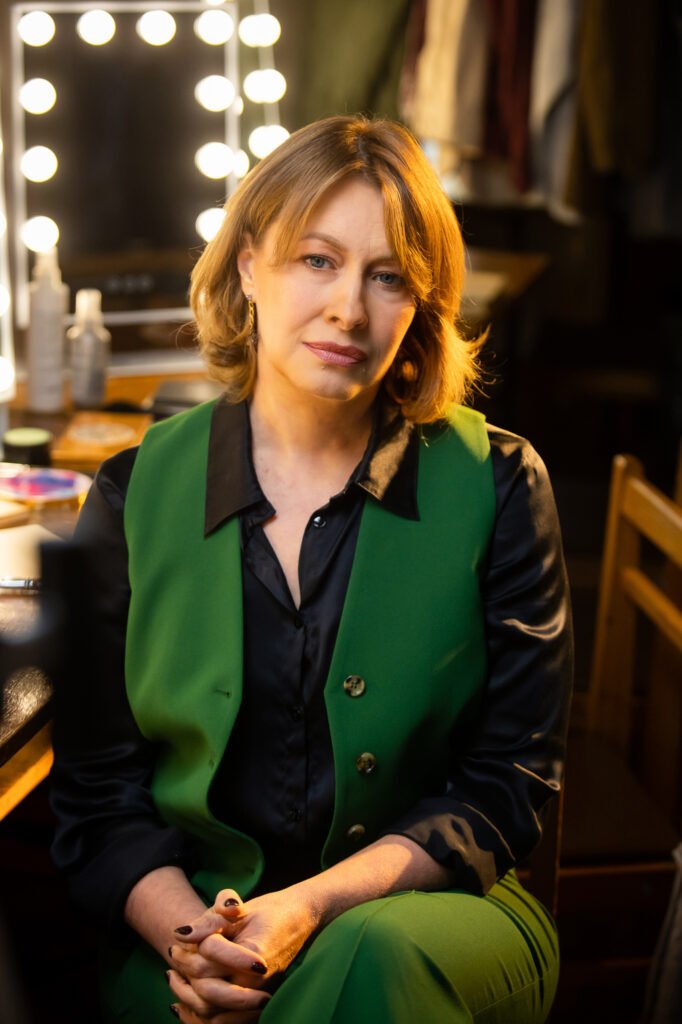
Who Is Olena Kravets? Olena Yuriivna Kravets is a Ukrainian actress, producer and television host whose career traces the recent history of Ukrainian popular comedy almost step for step. Born Olena Maliashenko on 1 January 1977 in Kryvyi Rih, in Dnipropetrovsk Oblast, she is best known internationally as the executive director of Kvartal 95 Studio, a role she held from 2000, and as the only woman in the core performing company for most of its history. For more than two decades, Ukrainian television audiences knew her face before they knew her name in credits: the quick-witted woman in the sketch who could play a housewife, an official, a politician or a neighbour with equal ease, and who held her own in a troupe built around strong male comics. Later, a much wider international audience met her as Olha Mishchenko in Servant of the People, the political satire in which she played the ex-wife of the accidental president played by Volodymyr Zelenskyy. That role, running from 2015 to 2019, showed a different side of her talent: comedy with a dramatic undertow, a character who could be funny, frustrated, competent and vulnerable in the same episode. In late 2022, after 25 years with Kvartal 95, she left the studio to focus on other projects, and began a new chapter as a solo host and producer. Her story is therefore not only a personal biography but a map of how Ukrainian entertainment changed: from student comedy competitions in the 1990s, through the television boom of the 2000s, to the politically charged satire of the 2010s and the wartime reinvention of the 2020s. Early Life and Education in Kryvyi Rih Kravets was born in Kryvyi Rih, a large industrial city in central Ukraine known for its iron ore and steel, and she grew up as the only daughter of Yurii Viktorovych Maliashenko, a metallurgist, and Nadiia Fedorivna Maliashenko, an economist who held a managerial position in a savings bank. That family background is worth noting because it shaped the performer she became. She did not come from a theatre family or an artistic dynasty; she came from a working professional household in an industrial city, and her comedy has always carried that grounding. At school she took part in extracurricular activities, including theatrical performances, but her formal education pointed elsewhere. She enrolled at the Kryvyi Rih Institute of Economics, part of the Kyiv National Economic University system, and earned a degree in finance and economics. The economics training turned out to be unexpectedly useful. In the early years of Kvartal 95, when the troupe was turning a student comedy team into a professional studio, Kravets took on administrative and organisational work alongside performing, channelling the practical skills of her degree into contracts, planning and production. It is a detail that explains her later title of executive director: she was never only the performer on stage, but also one of the people making the show happen behind it. Her early working life, during and after her studies, included a range of ordinary jobs that later fed her character work, including work as a radio presenter, an accountant at a bank, a cashier, and even managing a McDonald’s branch in Kryvyi Rih. Those experiences gave her a gallery of workplaces, bosses, customers and everyday frustrations to draw on, and they help explain why her sketch characters have often felt recognisable rather than invented. KVN and the Birth of Kvartal 95 Kravets’s route into entertainment ran through KVN, the Club of the Funny and Inventive, the long-running comedy competition that was a training ground for generations of performers across the former Soviet Union. While still a student she played in KVN as part of the Zaporizhzhia–Kryvyi Rih–Transit team, where her impressions and quick retorts stood out in a largely male line-up. KVN mattered because it taught a particular discipline: short scenes, topical jokes, musical numbers and team timing, all performed live and judged by an audience. It was competitive, fast and unforgiving, and it rewarded performers who could think on their feet. In 1998 she was invited to join the 95 Kvartal team, then still a KVN team, and that invitation changed her life. The team that would become Studio Kvartal 95 was built around a group of friends and collaborators from Kryvyi Rih, and Kravets became its only woman performer, a position she held for years. Being the only woman in such a company shaped her stage identity in two ways. On stage, she often played the woman against a room full of men, which gave her characters a particular sharpness: she was the wife who saw through the scheme, the official who refused to be charmed, the neighbour who said what everyone else was thinking. Off stage, she took on the administrative director’s role, helping to run a growing enterprise. In 2000 she moved to Kyiv with the studio, a move that marked the transition from a regional comedy team to a national television force. The Kyiv years would bring the fame, but the KVN years explain the craft: timing learned in competition, characters learned from ordinary work, and a toughness learned from holding a stage as the only woman in the team. Evening Quarter and Television Stardom The launch of Evening Quarter in 2005 turned Kvartal 95 from a successful comedy troupe into a national television institution, and it made Kravets one of the most recognisable performers in Ukraine. Evening Quarter was a variety and sketch show built around political satire, everyday humour and musical numbers, performed before a live audience and broadcast to millions. Kravets became a permanent actress of the show, playing a wide range of characters, from sassy housewives to deadpan officials, and her versatility became one of the show’s strengths. Where some sketch performers rely on a single catchphrase or persona, Kravets moved between types, and that range kept her fresh across years of weekly shows. She also became known for portraying well-known political figures, including Yulia Tymoshenko and […]

Olena Kravets Biography: Kvartal 95 Star and TV Host Read Post »

Ivan Mykolaichuk, studio portrait (black-and-white)
Actors

Ivan Mykolaichuk Biography: Ukraine’s Classic Film Star

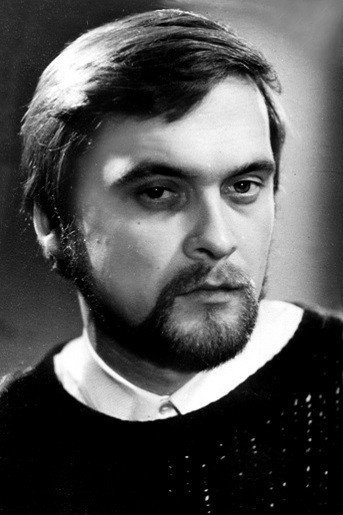
Who Was Ivan Mykolaichuk? Ivan Vasylyovych Mykolaichuk was a Ukrainian film actor, screenwriter and director whose short career left one of the deepest marks in the history of Ukrainian cinema. Born on 15 June 1941 in the village of Chortoryia in Bukovyna, in what is now Chernivtsi Oblast, and dying in Kyiv on 3 August 1987 at the age of 46, Mykolaichuk worked for barely more than two decades on screen, yet the films he shaped are still discussed, screened and taught as touchstones of Ukrainian culture. His name is most often linked with two works above all others: Sergei Parajanov’s Shadows of Forgotten Ancestors from 1964, in which he played the Hutsul hero Ivan Paliychuk, and Yuri Ilyenko’s The White Bird Marked with Black, a film he co-wrote and starred in, which won the Gold Prize at the Moscow International Film Festival. Those two films alone would secure a place in film history. Mykolaichuk, however, was not only an actor in other people’s visions. He wrote screenplays, directed two feature films of his own, composed music for film, and built a screen presence that audiences recognised instantly: intense, rooted, watchful, and unmistakably Ukrainian in bearing even when the role itself was historical or mythic. In later years he has often been described as one of the greatest actors in Ukrainian cinematography, a judgement that rests less on the number of his roles than on the weight of a handful of them. His career also unfolded under constant pressure from the Soviet system, which admired his talent and feared the national feeling his work carried. Understanding Mykolaichuk therefore means understanding both an artist and the conditions he worked in: a cinema that could produce extraordinary poetry, and a state that watched that poetry closely for signs of dissent. The images in this article are AI-generated illustrations, labelled as such. Source: Wikipedia records that Mykolaichuk played Ivan Paliychuk in Shadows of Forgotten Ancestors (1964) and co-wrote The White Bird Marked with Black, which won the Gold Prize at the 7th Moscow International Film Festival in 1971. Early Life in Bukovyna Mykolaichuk was born in Chortoryia, a village in the historic region of Bukovyna, on 15 June 1941, only days before the German invasion of the Soviet Union reshaped the whole region. Bukovyna itself matters to his story because it was a borderland, a place where Ukrainian, Romanian and other traditions met, where village custom, music and ritual were part of everyday life rather than museum pieces. The Hutsul culture of the Carpathians, with its music, dress, wooden churches and mountain way of life, would later become the living material of his most famous roles. Growing up in that world gave him something no drama school could teach: an ear for folk song, a physical ease in village scenes, and a sense of how people in such communities spoke, moved and held themselves. His formal training began early. In 1957 he completed drama studies at the Chernivtsi Ukrainian Music and Drama Theater, a regional theatre with a strong Ukrainian repertoire. That step took him from a village upbringing into professional performance while keeping him close to the theatrical traditions of western Ukraine. He then moved to Kyiv and in 1965 graduated from the Kyiv Institute of Theater Arts, the leading training ground for Ukrainian actors and directors. From 1965 he worked at the Kyiv Artistic Film Studio, known as the Dovzhenko Film Studio, which was the centre of Ukrainian feature filmmaking. The timing mattered. The mid-1960s were a period of relative cultural opening in Soviet Ukraine, when a new generation of filmmakers was pushing for a cinema rooted in Ukrainian literature, landscape and history. Mykolaichuk arrived at exactly that moment, trained, ambitious, and already formed by the culture he would soon embody on screen. The Breakthrough: Shadows of Forgotten Ancestors Mykolaichuk’s breakthrough came in 1964, when he was still a young actor, with two films released in the same year that pointed in different directions. The first was The Dream, based on Taras Shevchenko’s poem and directed by Volodymyr Denysenko, in which Mykolaichuk played the young Shevchenko himself, a casting choice that already signalled how seriously the studio took him. The second, and far more famous, was Shadows of Forgotten Ancestors, directed by Sergei Parajanov and based on the novella by Mykhailo Kotsiubynsky. Mykolaichuk played Ivan Paliychuk, a Hutsul man whose life is shaped by a childhood love, a family feud, grief and the harsh beauty of the Carpathian mountains. The film became an international landmark, celebrated for its colour, its camera work and its immersion in Hutsul ritual, from weddings and funerals to music and seasonal custom. For Mykolaichuk, the role was both a gift and a definition. His Ivan is not a polished hero but a man of feeling, stubborn and tender by turns, and the performance carries the film’s emotional centre through long stretches where dialogue gives way to image and music. The film also drew the attention of the authorities. Everyone who worked on Shadows of Forgotten Ancestors came under special scrutiny, and Mykolaichuk was no exception, a pattern that would follow him for the rest of his career. Yet the artistic result could not be undone. The film put Ukrainian poetic cinema on the world map, and it made Mykolaichuk, in his early twenties, the face of that movement. For audiences discovering Ukrainian cinema today, Shadows of Forgotten Ancestors remains the natural starting point, and Mykolaichuk’s performance remains the reason the film feels human rather than merely beautiful. The Dream and the Young Shevchenko Playing Taras Shevchenko, Ukraine’s national poet, in The Dream in 1964 was a remarkable assignment for an actor so young, and it reveals how Mykolaichuk was seen inside the Ukrainian film world. Shevchenko is not simply a historical figure in Ukrainian culture; he is a symbol of the nation itself, a poet whose words about freedom and dignity are known across generations. To cast a newcomer in that role was to say […]

Ivan Mykolaichuk Biography: Ukraine’s Classic Film Star Read Post »

Influencers

Dariia Kvitkova Influencer: From Reality Television to a Beauty, Fitness and Motherhood Brand

The Dariia Kvitkova influencer story begins, for most of the public, on a television screen rather than on a phone. In 2019 she won the ninth season of The Bachelor Ukraine, the Ukrainian version of the international dating format, when the season’s bachelor, the radio and television host Nikita Dobrynin, chose her in the finale. That single broadcast moment gave her a national audience overnight. What she did next is what makes her an influencer in the fuller sense of the word: she converted that audience into a sustained career as a beauty, fashion, fitness and motherhood creator, built around her own name, her own fitness project, and a style of content that mixes polished fashion imagery with frank talk about family life, training and work. She is known online as Dasha Kvitkova and under the handle kvittkova, and her public identity has been shaped, in roughly equal parts, by the show that made her famous and the business she built in its aftermath. Two clarifications belong at the start, because names in Ukrainian entertainment can mislead. Dariia Kvitkova is not Mariya Kvitka, the singer associated with the singing competition Holos Krainy who appeared in an earlier article in this series. The two women have similar surnames and both are Ukrainian public figures, but they are different people with different careers: one is a reality-television winner turned lifestyle influencer, the other is a singer. This profile is about Dariia Kvitkova only, and nothing in it should be read as belonging to the other woman. The second clarification concerns numbers. No follower, subscriber or earnings figures are given here. Such numbers circulate widely on aggregator sites, but they change constantly, they are rarely dated, and they are not drawn from a reliable primary source that can be checked. Her influence is described through events, projects and content themes, not through a count that would be out of date as soon as it was printed. Born on 9 July 1998 in Kyiv, according to biographical profiles of her, Dariia Kvitkova grew up in the Ukrainian capital and entered public life through work that already involved appearance, presentation and communication: modelling and hair styling. Those early jobs are often treated as a footnote, but they explain a great deal about her later content. A creator whose first work was styling hair and posing for photographs already understands lighting, angles, clothing and the discipline of looking camera-ready, and she already knows that beauty work is labour, not accident. When she later built a brand around beauty and fitness, she was drawing on skills she had practised before she was famous, not inventing a persona from nothing. Kyiv Beginnings: Styling, Modelling and Study Dariia Kvitkova was born on 9 July 1998 in Kyiv, Ukraine, where she was raised. Her early working life, before television, was in the beauty and fashion world at its practical end: she worked as a hair stylist and as a model. Both jobs gave her a working knowledge of the industry she would later influence from the other side of the camera. A hair stylist learns how a cut or colour behaves in real light, on real hair, over weeks rather than in a single photograph. A model learns how clothing moves, how a pose reads, and how a shoot is organised. Together, those experiences gave her a credibility that a creator who only reviews products rarely has: she had done the work herself, with her hands, before she described it to an audience. Alongside that work she studied at the Kyiv National University of Culture and Arts, where biographical profiles report that she majored in television and radio journalism and graduated in 2020. The timing is significant. Her studies were finishing just as her television career was accelerating, which means that her formal training in media and her practical experience of it arrived together. Journalism training, even at undergraduate level, teaches a set of habits that are visible in her later content: how to address an audience directly, how to structure a story, how to present personal material in a form that other people can follow, and how to keep a public presence going over time. It does not, by itself, make someone an influencer, but it helps to explain why her transition from contestant to creator looked smoother than it does for many reality-show winners, who arrive on television with no media background at all. Kyiv itself is part of the story. She is a Kyiv creator in a strong sense: born, educated and based in the capital, working in its fashion, beauty and media circles, and speaking to an audience that is largely Ukrainian-speaking and Ukrainian-based, even when her content travels further. The city gives her content its setting, from studios and streets to gyms and family spaces, and it gives her brand work its market, since Ukrainian fashion and beauty labels look first to creators who are present in the city where their customers live. Her biography, in other words, is not a story of a small-town arrival in the capital. It is a story of someone who grew up inside the media and beauty world she would later lead, and who used a television opportunity to move from its working edge to its centre. Winning The Bachelor Ukraine, Season Nine The Bachelor Ukraine, known in Ukrainian as Kholostyak, is the local version of the international Bachelor format, in which a single bachelor meets a group of contestants over a season, with eliminations leading to a finale in which he chooses one woman. In the ninth season, broadcast in 2019, the bachelor was Nikita Dobrynin, a radio and television host. In the finale he chose Darya Kvitkova, as she was then generally styled in reporting, and the couple’s relationship continued after the cameras stopped. It is worth pausing on what winning a show of this kind actually gives a contestant, because it is easily misunderstood. It does not give her a profession. It gives her attention, […]

Dariia Kvitkova Influencer: From Reality Television to a Beauty, Fitness and Motherhood Brand Read Post »

Influencers

Yevhen Klopotenko – Ukrainian Chef, Restaurateur and Food Campaigner

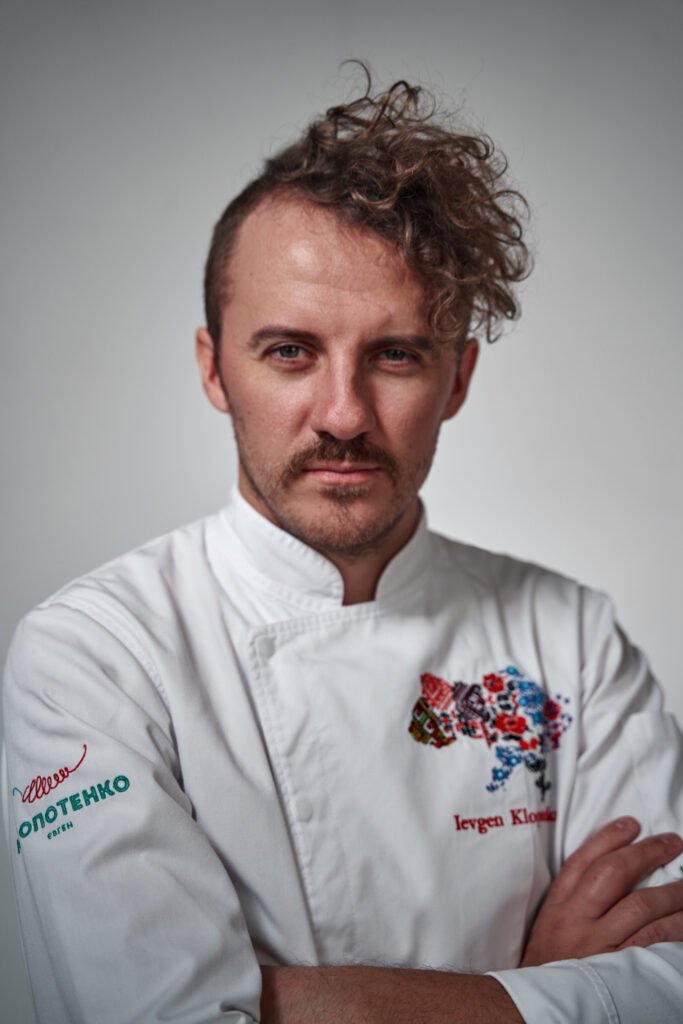
Yevhen Klopotenko is a Ukrainian chef who turned cooking into a public cause. He won MasterChef Ukraine in 2015, opened a Kyiv restaurant built around pre-Soviet recipes, campaigned for borshch at UNESCO, and rewrote school meals across Ukraine. As of November 2026, this page follows that career in order, from a self-taught cook to the country’s best-known food campaigner. Quick facts Name Yevhen Viktorovych Klopotenko Born 23 November 1986, Kyiv Known for MasterChef Ukraine, school meals reform, borshch at UNESCO Main works 100 Rokiv Tomu Vpered, Cult Food, Odyssey, klopotenko.com A winding road into the kitchen Klopotenko was born in Kyiv on 23 November 1986, when Ukraine was still part of the Soviet Union. His parents taught him to cook borshch and scrambled eggs, and those early lessons gave him his first interest in developing recipes. In 1991 he spent time living with his grandmother in England, near Manchester, where he encountered a wider range of food than he had known at home. He did not go straight from school into a kitchen career. He studied international relations at the Kyiv University of Economics and Law, worked at a Mexican restaurant in the United States, at a McDonald’s franchise in Germany on a university programme, and at various restaurants in Kyiv. Before becoming a professional chef, he sold homemade jam. He also travelled to Italy and developed an interest in Italian cooking, and watching Gordon Ramsay’s Kitchen Nightmares helped inspire him to become a chef. By his own early description, he was a keen home cook who cooked for pleasure, not a graduate of a culinary school working his way up a brigade. That background matters when his later work is judged, because his authority rests on research, on television exposure, on formal study undertaken after he was already known, and on a willingness to test old recipes in public until they worked. MasterChef Ukraine and Le Cordon Bleu Klopotenko’s breakthrough came in 2015, when he won season five of MasterChef Ukraine. The competition format mattered as much as the victory. MasterChef is a televised contest in which contestants must cook under time pressure, present food to judges, and hold an audience’s attention while doing it. Winning it gave him a professional credential in the eyes of the public, and a television performer’s profile. He spent a long stretch living in a hotel during the competition as he advanced through its stages, an experience he later described as demanding in a way that had little to do with cooking. The prize and the exposure that followed allowed him to do what his self-taught beginnings had not: study formally. In 2016 he graduated from Le Cordon Bleu in Paris. The sequence reverses the usual order. Most chefs train first and become known later. Klopotenko became known first, through a television audience, and then went to Paris to acquire the technique that would let him do more with the ideas he already had. On his return to Ukraine he gave online cooking courses and was hired as a brand chef for several Kyiv restaurants, developing menus and teaching house chefs how to prepare them. That work, moving between kitchens rather than staying in one, taught him how a recipe travels: it must be written clearly enough for another cook to follow, strong enough to survive a busy service, and distinctive enough to be worth cooking in the first place. Television also gave him a second career as a presenter of food as history. He created a television series called Odyssey, which presented Ukrainian culinary traditions through historical figures and ran for three seasons. A dish is introduced through the person who might have eaten it, the place it came from, and the occasion it belonged to, which makes the history memorable in a way a textbook entry is not. That storytelling instinct later shapes his books, his restaurant menus and his online videos alike. Discovering a cuisine he had not been taught The turning point in Klopotenko’s cooking came after MasterChef, when he confronted a gap in his own knowledge. Asked to name Ukrainian dishes, he could quickly list borshch, varenyky, pampushky and salo, and then he stalled. Beyond those famous dishes, he realised, most Ukrainians ate food introduced during the Soviet era, and the older repertoire had faded from everyday cooking. From around 2017, as he thought about opening a restaurant, he began to research pre-Soviet Ukrainian cooking seriously. He worked with historians and read Ukrainian literary manuscripts for references to food, including Ivan Kotliarevsky’s Eneida, Practical Kitchen by Olha Franko, and the 1913 book Food and Drink of Ukraine, written by several authors under the pseudonym Zinaida Klynovetska. He travelled around Ukraine to learn about regional cuisines, because Ukrainian cooking is not one uniform tradition: the Carpathians, Poltava, Odesa, Volhynia and the east each have dishes shaped by geography, trade and neighbouring cultures. This research produced a distinctive cooking philosophy. Klopotenko does not argue that Ukrainian food should be preserved exactly as it was a century ago, untouched. He argues that it should be recovered and cooked in a modern way, with contemporary technique and presentation, so that it can live in a present-day restaurant rather than a folklore display. A dish such as banosh, a corn porridge from the Carpathians, can be served with cottage cheese, mushrooms and apples in a way that people today recognise as Ukrainian, while still carrying the flavours and ingredients of its place of origin. Roasted parsnips with smoked sour cream, buckwheat bread flavoured with chamomile, and borshch seasoned with smoked pears all work the same way. Editor’s take: the research matters more than the restaurant. A chef can open a fashionable room and fill it for a year. Recovering a cuisine that had been flattened into four dishes, and then cooking it in a way that stands up in a modern kitchen, is a longer job, and it is the job that explains everything else Klopotenko did afterwards. 100 Rokiv Tomu Vpered, […]

Yevhen Klopotenko – Ukrainian Chef, Restaurateur and Food Campaigner Read Post »

Scroll to Top