Anita Lutsenko is best known in Ukraine as a fitness trainer who became a television coach, and then as an online coach whose programmes, books and social media advice reach people far beyond a television studio. Her career is different from a typical influencer story because it did not start with social media. It started with sport: rhythmic gymnastics as a child, competitive sports aerobics as a teenager, a university education in physical education and sport, and more than a decade of teaching fitness before she became a household name on television.
That sporting base is why her online influence has lasted. When she talks about weight loss, strength, stretching or daily habits, she is not repeating a trend she discovered online. She is drawing on qualifications, competitive experience and years of coaching real people in gyms, at conventions and on a weight-loss television format. Medical disclaimer: this article describes Lutsenko’s public coaching advice for general information only. It is not medical advice, and it does not replace advice from a qualified doctor or other health professional. Readers should consult a health professional before starting a new diet or exercise programme, especially if they have a health condition, are taking medication, or are pregnant. The images in this article are AI-generated illustrations, labelled as such.
1. Early Life and Childhood Sport in Kyiv
Anita Lutsenko was born on 11 March 1984 in Kyiv. She began rhythmic gymnastics at the age of four, studying at the school associated with Irina Deryugina, a name closely linked to Ukrainian rhythmic gymnastics. Starting sport that young shapes a child’s daily life in a specific way: regular training, discipline about the body, an early understanding of flexibility, coordination and performance under observation.
She also studied aerobics and dance professionally as she grew older. That combination, gymnastics plus aerobics plus dance, later became the core of her fitness teaching. She did not specialise narrowly in one movement style. She learned to move, to teach movement, and to adapt movement for people with different abilities, a skill that matters far more in weight-loss coaching than the ability to perform a difficult routine oneself.
Her childhood sport also explains her later emphasis on sustainability. A child who trains for years learns that the body responds to consistent work, not to a single extreme week. That lesson appears again and again in her adult coaching: small, repeatable habits, rather than crash approaches, are presented as the route to lasting change.
2. Competitive Years: Sports Aerobics and a Master of Sports Title
From 1994 to 2002, Lutsenko took part in Ukrainian and European championships in sports aerobics, with earlier biographical summaries also noting participation in championships at city, national and European level. Under the guidance of coaches Olga Pasechna and Sergey Zika, according to a trainer profile, she achieved the title of Master of Sports in sports aerobics. She won a silver medal at the European Championship in sports aerobics, and won many times at the championship of Ukraine in aerobics and fitness.
Those competitive results are important for two reasons. First, they establish that her authority as a trainer rests on judged, competitive performance, not only on television presence. Second, they explain her coaching range: sports aerobics combines strength, flexibility, rhythm and endurance, and a competitor in that discipline must train all of them. When she later taught step, aerobics, dance, strength, functional training, Pilates, stretching and aqua-aerobics, she was drawing on a broad competitive and teaching base, not learning each format from scratch for television.
The competitive period also ended at a useful point for her teaching career. By the early 2000s, she was moving from competing herself to teaching others, a transition many athletes make, but one that requires a different skill: explaining a movement so that a beginner can do it safely, rather than performing it perfectly oneself.

3. University Education and Qualifications
Lutsenko received her higher education at the National University of Physical Education and Sport in Ukraine. She earned a bachelor’s degree with honours in Olympic professional sport, and a master’s degree with honours in the theory and methodology of organisation of sports events and spectacles. Those degree titles, reported in biographical sources, matter because they show formal training in both sport performance and in how sporting activity is organised and presented.
She also holds qualifications as a fitness trainer and physical education teacher, and she is a certified Pilates and TRX specialist. TRX, short for Total Resistance Exercises, uses suspension straps for body-weight training, and Pilates focuses on core strength, control and flexibility. Listing those specialisms is not a formality. It explains why her later programmes could include home workouts, studio classes, functional training and stretching, rather than only one style of exercise.
Her teaching career began early. She first started teaching fitness in 2000, while still building her own competitive and university path. From 2008, she was a teacher at SFC, the training centre of the Sofia club, according to a trainer profile, and she worked with a number of fitness clubs and venues, including open and charitable classes. That long teaching period before television fame is the foundation of her later credibility: she had already taught hundreds of people before a camera made her famous.
4. Nike Conventions and Becoming a Presenter of Functional Training
Before her television breakthrough, Lutsenko acted as a presenter in functional training at regional and international Nike conventions in Ukrainian cities, including Kyiv in 2006 to 2008, Odesa in 2006, Donetsk and Dnipropetrovsk. Convention presenting is a demanding, practical form of teaching. A presenter must lead a large room, keep timing, demonstrate clearly, correct form from a distance, and hold energy across a session.
That experience helps explain why she adapted well to television. A television weight-loss show also requires leading a group, explaining a task clearly, and maintaining authority without shouting. Convention work had already taught her to do that for live audiences who could see every mistake. Television added cameras, but the core skill, clear group instruction, was already in place.
It also shows that her reputation as a trainer was already professional before 2011. She was not discovered by television and then trained. She was a working trainer and convention presenter whom television then cast because that work was visible to producers.
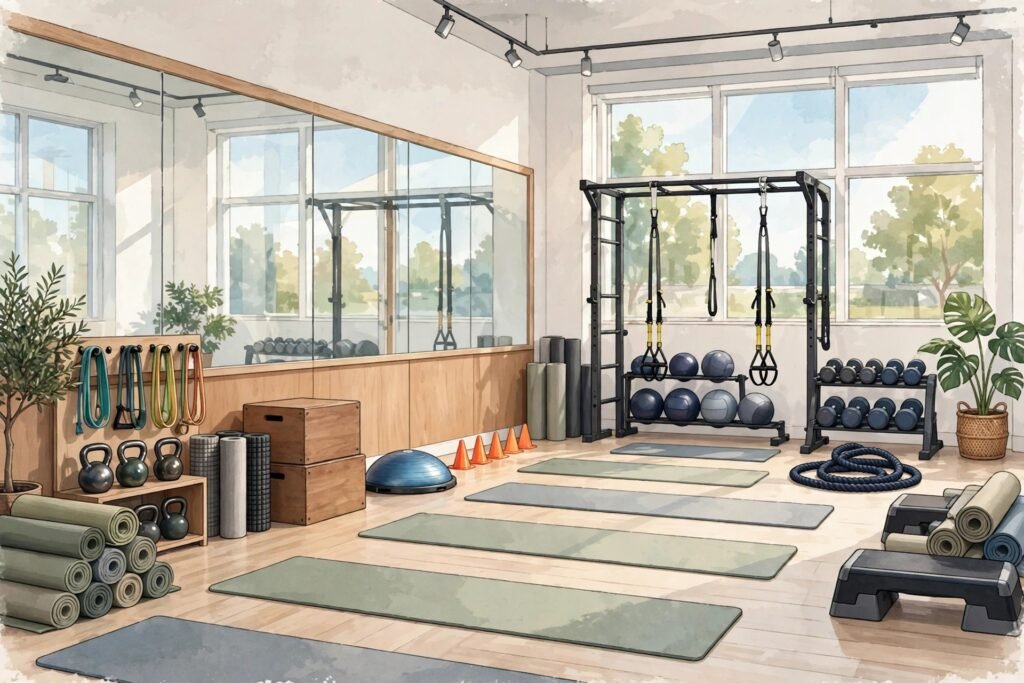
5. Zvazheni ta Shchaslyvi: The Television Breakthrough
In March 2011, Lutsenko became the lead trainer of the programme Zvazheni ta Shchaslyvi on STB, the Ukrainian version of the international format known as The Biggest Loser. Her team in the first season achieved a widely reported result: under her guidance, Mykola Voroshnov lost 85 kilograms, from 176 kilograms to 90 kilograms, and became the winner of the first season. Other members of her team also lost significant weight, and her team defeated the opposing coach’s team.
She continued as a coach for the second and third seasons of the programme in 2012 to 2013. That three-season run made her the face of televised weight-loss coaching in Ukraine for many viewers. It also shaped public expectations of her work: she was associated not with a single celebrity workout, but with sustained, supervised weight loss over a television season, with measurable results.
The format also tested her coaching in a way that a gym class does not. Television contestants arrive with health, motivation and personal challenges that must be managed over weeks, under cameras, with nutrition and training combined. A coach who only knows exercise cannot succeed in that setting. Lutsenko’s later emphasis on nutrition, habits and psychology in her books and online work can be traced back to this period, when training alone was clearly not enough.
6. From Television Coach to Author and Online Founder
After her television seasons, Lutsenko built a coaching presence that did not depend on a weekly broadcast. In 2017, she co-authored the book “You Just WOW!” about maintaining a healthy body and figure, written with nutritionist Svetlana Fus. The book’s co-authorship is significant: it paired a trainer with a nutritionist, signalling that her approach combined movement and food, rather than treating them as separate topics.
She is also one of the founders of the online weight-loss project WOWBODY, which developed five weight-loss programmes. A sportswear brand, WOWBODY shop, was later created from the same project. She also authored a free mobile application for women called Vingo, according to biographical sources. Those projects show a clear business and coaching model: television created recognition, books explained the method, and online programmes and an app made the method available to people who could not attend a class in Kyiv.
She also created the popular challenge “14 days without sweets,” a short, focused habit challenge that fits social media well because it has a clear start, a clear rule and a clear end date. Challenges of that kind are a bridge between television coaching and influencer coaching: they give followers a shared task, rather than only advice to read.
7. The Coaching Method: Habits, Protein, Water and No Guilt
Lutsenko’s public coaching advice, as reported in interviews and social media summaries, has a consistent character. She emphasises internal motivation over external motivation, arguing that losing weight to impress someone else rarely lasts, while enjoying movement and food choices for oneself does. She has said, in interview summaries, that a person should start for themselves, not for someone else to see a change, and that pleasure in morning exercise and healthy food is what makes a result sustainable into older age.
On sweets, her position is nuanced rather than absolutist. She has explained that when the brain asks for sweets, the body may actually need protein or water, and that eating enough protein and fibre leaves little room for excess sweets. She is not against sweets as such, but in favour of them for pleasure and enjoyment, not as a main source of nutrition. That distinction, pleasure versus nutrition, is a useful summary of her method: enjoy food, but do not rely on a single type of food to meet the body’s needs.
On daily habits, she has advised practical steps that do not require a gym: walking 7,000 to 10,000 steps a day, adding a short morning walk, getting up for warm-ups during the day, and paying attention to water intake and to signs such as swelling, with a recommendation to see a doctor for abnormal swelling rather than relying on diuretics. Those points, drawn from her social media advice as reported, show a coaching style that mixes exercise, nutrition and basic health awareness, while directing serious symptoms to medical professionals.
She has also spoken about body positivity in a balanced way: in favour of loving one’s body and of a healthy body that can hike 10 kilometres in the mountains, but against the idea that an unhealthy lifestyle should be called positive. That position, reported in an interview, helps readers understand why she is not a crash-diet influencer. Her message is health and capability, not a single body shape.

8. Television Personality Beyond Fitness: Dance and Media Work
Lutsenko’s television personality extends beyond fitness coaching. At one time, she was a trainer of Ukrainian singer and television presenter Vera Brezhneva, according to biographical sources. She also took part in the show Dancing with the Stars, explaining in an interview that sport had made her an iron lady and that she wanted to become more sensual and feminine, choosing dance as the way to do that. That interview also describes her enjoying rehearsals, competitive spirit and new emotions from the project.
Those details matter because they show a trainer willing to be a beginner again in a new discipline. A fitness coach who only teaches can appear distant from the struggle of learning. A coach who takes dance lessons on television shows the audience what learning feels like, including awkwardness and progress. That experience likely strengthened her influencer work, where followers are often beginners themselves.
Her media work also includes a YouTube presence and magazine coverage, including a July digital cover interview in which she discussed a book of healthy recipes titled “Let’s Make It Quick!” and described her own fridge contents in ordinary terms: cottage cheese, greens, vegetables, fruit, preserves, buckwheat or yesterday’s rice. That ordinary list is part of her appeal. She does not present healthy eating as exotic shopping. She presents it as combining familiar ingredients in different ways, with five food groups, vegetables and fruit, protein, dairy, carbohydrates and fats, as the base.
9. The Influencer Present: WOWBODY, Social Media and Working Motherhood
Today, Lutsenko’s influencer work centres on WOWBODY, social media coaching and the same practical advice she gave on television, now delivered directly to followers. Her Instagram handle, as given in video and profile sources, is anitasporty. That handle is the main public route for her short workouts, habit advice and programme announcements, alongside WOWBODY’s own channels.
In interviews, she has described herself as a working mother, noting that she has a young daughter and that the family raises her together without a nanny, sometimes bringing her to work. She has also said, frankly, that combining career and motherhood is not something she manages perfectly. That honesty is part of her influencer voice: she does not present a perfect balance, but a real one, with help from family and with work and parenting overlapping.
Her recent interview work also includes discussion of training after 40, strength training, muscle mass, premenopause and menopause, and why endless cardio alone is not a universal answer. That focus shows how her influencer work has matured with her audience: followers who began with weight-loss television in 2011 are now older, and their questions have changed from quick weight loss to strength, health and long-term wellbeing. A coach who only repeated 2011 advice would lose that audience. Lutsenko’s shift toward strength and muscle maintenance shows adaptation, not repetition.
For readers seeking a short summary, the path is: born 1984 in Kyiv, gymnastics from age four, sports aerobics competitor and Master of Sports with a European silver medal, university honours degrees, fitness teaching from 2000, Nike convention presenting, Zvazheni ta Shchaslyvi lead trainer from March 2011 with a first-season winner who lost 85 kilograms, seasons two and three in 2012 to 2013, book “You Just WOW!” in 2017, WOWBODY founder with five programmes, “14 days without sweets” challenge, and a continuing influencer presence under the handle anitasporty.
10. Beginner Takeaways: How a New Follower Can Use Her Advice Safely
A new follower who discovers Lutsenko through a short video or a challenge post often asks a practical question: where should I start, and what should I avoid? Her public advice, taken together, suggests a starting point that is deliberately modest. Begin with daily movement that can be repeated, such as walking, rather than with an extreme workout that cannot be sustained. Add short warm-ups during the day, especially for people who sit for long periods. Pay attention to basic habits, including water intake and meals built from familiar food groups, before worrying about specialised products or strict rules.
A second takeaway concerns sweets and cravings. Instead of framing a craving as a failure, her advice frames it as information: the body may need protein, water or a more filling meal, and a dessert enjoyed for pleasure is different from sweets used as a main energy source. That framing helps beginners avoid an all-or-nothing cycle in which one sweet leads to abandoning a whole plan. A short challenge, such as fourteen days without sweets, works in that logic as a reset and a test of habit, not as a permanent ban.
A third takeaway is about strength and age. For followers over forty, her recent interview focus on strength training and muscle mass is a reminder that weight alone is not the only measure. Muscle supports posture, movement and daily capability, and it changes how the body responds to food and activity. A beginner in that age group should therefore not judge a programme only by a scale reading in the first weeks. Strength, stamina, sleep and everyday ease of movement are also relevant measures, and they often improve before weight changes dramatically.
None of this replaces professional advice. Her own guidance directs people with abnormal swelling or other concerning symptoms to see a doctor, and the same caution applies to any new exercise or nutrition programme: people with health conditions, injuries or specific medical needs should check with a qualified professional before starting. That boundary is part of responsible influencer coaching. General habit advice can be shared publicly, but personal health decisions belong with a professional who knows the individual. A follower who respects that boundary gets the benefit of her practical coaching without treating a social post as a medical prescription.
Frequently Asked Questions
Who is Anita Lutsenko?
She is a Ukrainian sportswoman, professional fitness trainer, weight-loss specialist and television presenter, known for Zvazheni ta Shchaslyvi and for founding the online project WOWBODY.
When and where was Anita Lutsenko born?
She was born on 11 March 1984 in Kyiv, Ukraine.
What are Anita Lutsenko’s qualifications?
She studied at the National University of Physical Education and Sport, earning honours bachelor’s and master’s degrees, holds qualifications as a fitness trainer and physical education teacher, and is a certified Pilates and TRX specialist. She is a Master of Sports in sports aerobics.
What was Anita Lutsenko’s role on Zvazheni ta Shchaslyvi?
She became lead trainer in March 2011. Her first-season contestant Mykola Voroshnov lost 85 kilograms, from 176 to 90 kilograms, and won the season. She coached seasons two and three in 2012 to 2013.
What is WOWBODY?
WOWBODY is the online weight-loss project Lutsenko co-founded, which developed five weight-loss programmes and later a sportswear brand, WOWBODY shop.
What books has Anita Lutsenko written?
In 2017 she co-authored “You Just WOW!” with nutritionist Svetlana Fus, about maintaining a healthy body and figure. She later presented a book of healthy recipes, “Let’s Make It Quick!”
What is Anita Lutsenko’s Instagram handle?
Her Instagram handle, as given in video and profile sources, is anitasporty.