Actors

Ukrainian male actors, biographies, careers, filmography, notable projects

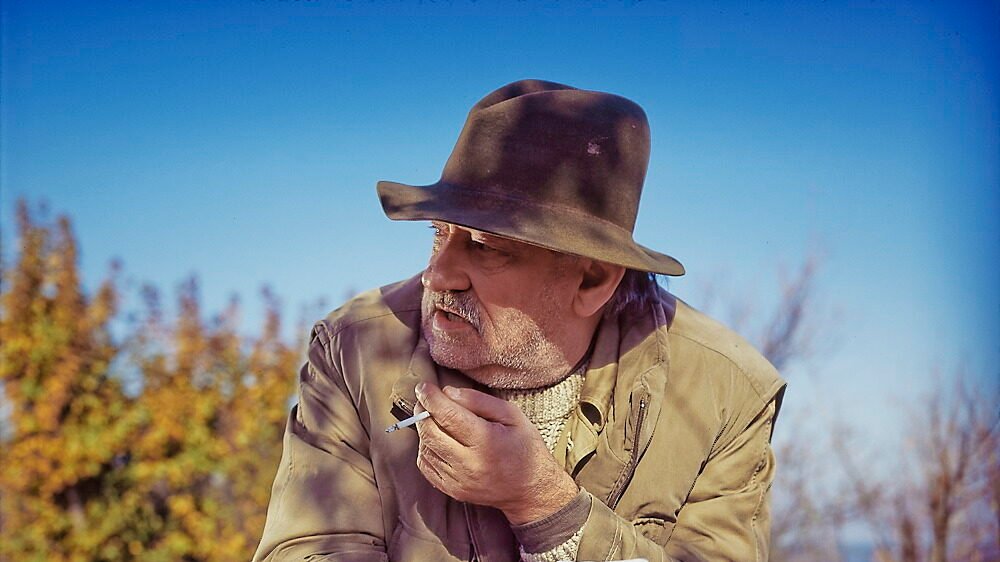
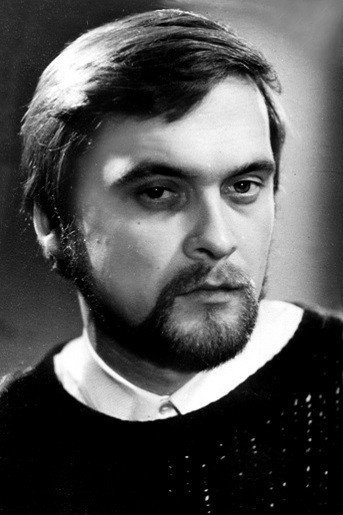
Ivan Mykolaichuk, studio portrait (black-and-white)
Actors

Ivan Mykolaichuk Biography: Ukraine’s Classic Film Star

Who Was Ivan Mykolaichuk? Ivan Vasylyovych Mykolaichuk was a Ukrainian film actor, screenwriter and director whose short career left one of the deepest marks in the history of Ukrainian cinema. Born on 15 June 1941 in the village of Chortoryia in Bukovyna, in what is now Chernivtsi Oblast, and dying in Kyiv on 3 August 1987 at the age of 46, Mykolaichuk worked for barely more than two decades on screen, yet the films he shaped are still discussed, screened and taught as touchstones of Ukrainian culture. His name is most often linked with two works above all others: Sergei Parajanov’s Shadows of Forgotten Ancestors from 1964, in which he played the Hutsul hero Ivan Paliychuk, and Yuri Ilyenko’s The White Bird Marked with Black, a film he co-wrote and starred in, which won the Gold Prize at the Moscow International Film Festival. Those two films alone would secure a place in film history. Mykolaichuk, however, was not only an actor in other people’s visions. He wrote screenplays, directed two feature films of his own, composed music for film, and built a screen presence that audiences recognised instantly: intense, rooted, watchful, and unmistakably Ukrainian in bearing even when the role itself was historical or mythic. In later years he has often been described as one of the greatest actors in Ukrainian cinematography, a judgement that rests less on the number of his roles than on the weight of a handful of them. His career also unfolded under constant pressure from the Soviet system, which admired his talent and feared the national feeling his work carried. Understanding Mykolaichuk therefore means understanding both an artist and the conditions he worked in: a cinema that could produce extraordinary poetry, and a state that watched that poetry closely for signs of dissent. The images in this article are AI-generated illustrations, labelled as such. Source: Wikipedia records that Mykolaichuk played Ivan Paliychuk in Shadows of Forgotten Ancestors (1964) and co-wrote The White Bird Marked with Black, which won the Gold Prize at the 7th Moscow International Film Festival in 1971. Early Life in Bukovyna Mykolaichuk was born in Chortoryia, a village in the historic region of Bukovyna, on 15 June 1941, only days before the German invasion of the Soviet Union reshaped the whole region. Bukovyna itself matters to his story because it was a borderland, a place where Ukrainian, Romanian and other traditions met, where village custom, music and ritual were part of everyday life rather than museum pieces. The Hutsul culture of the Carpathians, with its music, dress, wooden churches and mountain way of life, would later become the living material of his most famous roles. Growing up in that world gave him something no drama school could teach: an ear for folk song, a physical ease in village scenes, and a sense of how people in such communities spoke, moved and held themselves. His formal training began early. In 1957 he completed drama studies at the Chernivtsi Ukrainian Music and Drama Theater, a regional theatre with a strong Ukrainian repertoire. That step took him from a village upbringing into professional performance while keeping him close to the theatrical traditions of western Ukraine. He then moved to Kyiv and in 1965 graduated from the Kyiv Institute of Theater Arts, the leading training ground for Ukrainian actors and directors. From 1965 he worked at the Kyiv Artistic Film Studio, known as the Dovzhenko Film Studio, which was the centre of Ukrainian feature filmmaking. The timing mattered. The mid-1960s were a period of relative cultural opening in Soviet Ukraine, when a new generation of filmmakers was pushing for a cinema rooted in Ukrainian literature, landscape and history. Mykolaichuk arrived at exactly that moment, trained, ambitious, and already formed by the culture he would soon embody on screen. The Breakthrough: Shadows of Forgotten Ancestors Mykolaichuk’s breakthrough came in 1964, when he was still a young actor, with two films released in the same year that pointed in different directions. The first was The Dream, based on Taras Shevchenko’s poem and directed by Volodymyr Denysenko, in which Mykolaichuk played the young Shevchenko himself, a casting choice that already signalled how seriously the studio took him. The second, and far more famous, was Shadows of Forgotten Ancestors, directed by Sergei Parajanov and based on the novella by Mykhailo Kotsiubynsky. Mykolaichuk played Ivan Paliychuk, a Hutsul man whose life is shaped by a childhood love, a family feud, grief and the harsh beauty of the Carpathian mountains. The film became an international landmark, celebrated for its colour, its camera work and its immersion in Hutsul ritual, from weddings and funerals to music and seasonal custom. For Mykolaichuk, the role was both a gift and a definition. His Ivan is not a polished hero but a man of feeling, stubborn and tender by turns, and the performance carries the film’s emotional centre through long stretches where dialogue gives way to image and music. The film also drew the attention of the authorities. Everyone who worked on Shadows of Forgotten Ancestors came under special scrutiny, and Mykolaichuk was no exception, a pattern that would follow him for the rest of his career. Yet the artistic result could not be undone. The film put Ukrainian poetic cinema on the world map, and it made Mykolaichuk, in his early twenties, the face of that movement. For audiences discovering Ukrainian cinema today, Shadows of Forgotten Ancestors remains the natural starting point, and Mykolaichuk’s performance remains the reason the film feels human rather than merely beautiful. The Dream and the Young Shevchenko Playing Taras Shevchenko, Ukraine’s national poet, in The Dream in 1964 was a remarkable assignment for an actor so young, and it reveals how Mykolaichuk was seen inside the Ukrainian film world. Shevchenko is not simply a historical figure in Ukrainian culture; he is a symbol of the nation itself, a poet whose words about freedom and dignity are known across generations. To cast a newcomer in that role was to say […]

Ivan Mykolaichuk Biography: Ukraine’s Classic Film Star Read Post »
Actors

Ostap Stupka Biography: A Kyiv Stage Actor’s Own Career in Theatre, Film, and Television

The Ostap Stupka biography is often told the wrong way round, as if it were a footnote to a more famous name. Ostap Stupka was born on 2 September 1967 in Lviv, and he is the son of the celebrated Ukrainian actor Bohdan Stupka. That fact is true, and it shaped the rooms he grew up in. It is not, however, the story of his working life. Ostap Stupka is a People’s Artist of Ukraine in his own right, an actor of the Ivan Franko National Academic Drama Theatre in Kyiv who has performed in 35 plays there, a film actor with more than 30 screen credits, and a television presenter whose quiz show won a national television award. His roles run from the son of a hetman in a historical epic to a Red commissar in Kruty 1918, from a Cossack leader in a comedy series to a figure in a drama about Soviet punitive psychiatry. The career Ostap Stupka built for himself runs from a childhood backstage, through Kyiv training and a long theatre membership, a parallel life in television, and a screen career that has continued into his late fifties. The images in this article are AI-generated illustrations, labelled as such. Source: Wikipedia records that Ostap Stupka, born 2 September 1967 in Lviv, is a People’s Artist of Ukraine (2009) and an actor of the Ivan Franko National Academic Drama Theatre since 1988, and that he played Pylyp Orlyk in A Prayer for Hetman Mazepa. Ostap Stupka Biography: A Childhood Spent Backstage Ostap Bogdanovych Stupka was born in Lviv on 2 September 1967, into a family of performers. His grandfather Sylvestr Stupka was an opera singer. His mother, Larisa Kornienko, was a ballet dancer with the Lviv Opera and Ballet Theatre. His father, Bohdan Stupka, was already building the stage career that would make him one of Ukraine’s best-known actors. For a child, that meant growing up not at a distance from theatre but inside it: behind the scenes of the theatres where his parents performed, travelling with his mother to film sets to visit his father, and absorbing the working rhythms of rehearsal, costume, and performance before he could name them. One early memory recorded in his biography captures that immersion. At the age of five, he was deeply impressed by a trip to the Carpathian Mountains, where his father was filming White Bird with a Black Mark, Yuri Ilyenko’s celebrated film about a Bukovinian family divided by war and politics. A child of five does not analyse a film set, but he remembers scale, landscape, and the seriousness of adults at work, and that memory is often cited as the beginning of his feeling for the profession. From an early age he showed a particular fascination with make-up: he would secretly paint himself as Spartacus or other ancient heroes, drawing scars and wrinkles, and then improvise dances and actions on the spot. It is a small, vivid detail, and it points to the kind of actor he would become — one interested in transformation, in becoming a different person through appearance and movement, rather than in simply being himself on stage. His first appearance on a big stage came while he was still a child, when the Lviv Theatre toured to Odesa and Ostap, together with other children of the company’s actors, portrayed animals in the ballet The Creation of the World. He also learned the cello as a boy, obeying his grandfather, who took him to music school, although he did not particularly enjoy the lessons. Music stayed with him as an interest rather than a profession: in later interviews he has spoken of collecting vinyl records, of a taste that moved toward the blues, and of a childhood dream, at one time, of becoming a rock musician. When his family moved from Lviv to Kyiv at the age of twelve, he committed himself fully to pursuing acting and joined a theatre group led by Alexey Kuzhelny, a group that was even invited to take part in children’s television programmes. By the time he left school, the question was no longer whether he would try to act, but where he would train. Training in Kyiv and the Short Road to the Franko Theatre After finishing school, Ostap Stupka enrolled at the Karpenko-Karyi Kyiv National University of Theatre, Cinema, and Television, where he studied under Boris Stavitsky until 1988. The Karpenko-Karyi institute is Ukraine’s principal theatre school, and Stavitsky’s course placed him in a direct line of Kyiv stage training. His graduation in 1988 did not lead straight to a settled company job. He first joined the experimental theatre known as Kin, but he worked there for only two months. A year later, he became an actor at the Ivan Franko National Academic Drama Theatre in Kyiv, the theatre that would become his professional home. That short, unsettled start corrects a common assumption about actors from famous families. A celebrated surname does not remove the ordinary uncertainties of a young actor’s life: a brief engagement, a company that does not suit, a year of waiting for the right door to open. The Franko Theatre, when it did open, was not a small provincial stage but the country’s leading drama theatre, with a repertoire spanning Ukrainian classics, Shakespeare, and contemporary European drama, and a company that included some of Ukraine’s most respected performers. Joining it as a young actor in his early twenties meant entering a company where he would have to earn his place night after night, in front of audiences who knew the theatre’s standards and its history. Over the years that followed, he performed in 35 plays there, a figure that measures a career in repertory terms: not a handful of star vehicles, but dozens of productions, roles of different sizes, and seasons of ensemble work. The Franko Stage: Krum, the Burgomaster, and Repertory Work Two recent Franko Theatre roles give a concrete sense of Ostap Stupka’s mature stage work. The first […]

Ostap Stupka Biography: A Kyiv Stage Actor’s Own Career in Theatre, Film, and Television Read Post »

Actors

Oleksii Hnatkovskyi Biography: Ivano-Frankivsk Stage Actor, Director, and Ivan Dovbush

The Oleksii Hnatkovskyi biography is the story of an actor who arrived at the theatre by an unexpected route and stayed to become one of its defining figures. Born on 9 November 1985 in Ivano-Frankivsk, Oleksii Ivanovych Hnatkovskyi is a Ukrainian stage actor and theatre director whose working life has been bound up with a single institution, the Ivano-Frankivsk National Academic Drama Theatre named after Ivan Franko. He is a People’s Artist of Ukraine, a title conferred in 2024, and a Merited Artist of Ukraine, a title he received in 2014. National audiences outside the theatre world know him best as Ivan Dovbush, the brother of the folk hero Oleksa Dovbush, in Oles Sanin’s historical film Dovbush (2023), a performance that won him Best Supporting Actor at Ukraine’s National Film Awards in 2024. Television audiences later met him again as Stefan Terletskyi in the second season of Coffee with Cardamom, and streaming audiences met him in a different capacity altogether, as the host of the Ukrainian version of The Traitors. The images in this article are AI-generated illustrations, labelled as such. Source: Wikipedia records that Dovbush, directed by Oles Sanin, premiered on 24 August 2023, with Serhiy Strelnikov as Oleksa Dovbush and Oleksii Hnatkovskyi as Ivan Dovbush. Oleksii Hnatkovskyi Biography: An Unplanned Route into Theatre Oleksii Hnatkovskyi was born in Ivano-Frankivsk, then part of the Ukrainian Soviet Socialist Republic, on 9 November 1985. The city has remained the centre of his life and work ever since, and that continuity is part of what distinguishes his career from those of actors who build their reputations by moving to Kyiv. In interviews, Hnatkovskyi has described his entry into theatre in disarmingly plain terms. He did not plan to work in the theatre at all. He graduated in political science, and he danced all his life in a folk group in Ivano-Frankivsk. A friend from that folk group worked in the theatre’s ballet company and told him the theatre needed boys to help out. Hnatkovskyi went along, found the company welcoming, and stayed. Directors working at the theatre began to notice him, and what had started as a favour to a friend became a profession. That beginning explains a great deal about his later stage presence. He did not arrive at acting through a conventional childhood ambition, but through movement, music, and ensemble life. A folk dancer learns timing, stamina, spatial awareness, and the discipline of a group performance in which no single performer carries the whole show. Those are precisely the qualities that later marked his stage acting: physical confidence, a strong sense of rhythm in a scene, and an ease with large ensemble productions in which music, choreography, and drama share the stage. His own account of the move — that he came to the theatre for love, in his words, and somehow became accustomed to it — is often quoted because it captures a career that grew out of attachment to a place and a company rather than a calculated plan. The published record of his formal education contains a complication. One reference source lists his education as Vasyl Stefanyk Precarpathian National University, while another passage in the same source describes study at the Faculty of Culture and Arts of the Ivan Franko National University of Lviv. Hnatkovskyi’s own interview account, meanwhile, speaks of graduating in political science. Because those accounts do not agree in detail, the consistent points are: that he studied at university level, that his own account emphasises political science and folk dance rather than a drama-school path, and that his practical theatre training happened inside the Ivano-Frankivsk company itself. The Ivano-Frankivsk Theatre as a Working Home The theatre that shaped Hnatkovskyi is the Ivano-Frankivsk National Academic Drama Theatre named after Ivan Franko. Its history runs back more than a century: the theatre traces its founding to the registration of the Ukrainian People’s Theatre named after Ivan Tobilevych on 10 October 1910, and it marked its 115th anniversary in 2025. Hnatkovskyi’s career developed in parallel with the theatre’s own modern transformation, as the Ivano-Frankivsk Academic Regional Ukrainian Music and Drama Theatre named after Ivan Franko gained national status and became the Ivano-Frankivsk National Academic Drama Theatre. The institution is a repertory theatre in the full sense: a resident company performing a rotating repertoire of Ukrainian classics, contemporary Ukrainian drama, and world drama, with its own orchestra, ballet company, and choir tradition. Hnatkovskyi’s recorded work at the theatre begins in 2004, when he joined as a ballet artist and member of the supporting staff, and a further reference entry records him working at the theatre as an actor and director from 2006. In June 2022, the theatre’s own competition results announced that Oleksii Ivanovych Hnatkovskyi, together with Iryna Hryhorivna Vitovska-Vantsa, had been appointed to the position of leading stage master, the highest acting rank in the company. That appointment is a useful marker of his standing inside the institution: it is a company rank earned through sustained repertory work, not a screen celebrity title imported from outside. His repertoire at the theatre has combined Ukrainian classics, contemporary writing, and world drama, and critics have noted his ability to move between psychological drama, satire, and tragicomedy, often playing characters whose personal stories reflect wider social conflicts or historical traumas. The theatre’s recent history also frames his public role. Under the artistic direction of Rostyslav Derzhypilsky, the company has pursued an ambitious programme of touring, festival work, and international cooperation, including membership of the European Shakespeare network and a Ukrainian Shakespeare Festival in Ivano-Frankivsk. Hnatkovskyi has appeared as a guest actor in projects in other Ukrainian cities and has taken part in theatre festivals in Ukraine and abroad. His is not a career built on a single production or a single city engagement, but on long membership of a company that itself tours, experiments, and represents Ukrainian theatre internationally. Stage Roles: From Hamlet to Kaidash The range of Hnatkovskyi’s stage roles is best understood through the parts recorded in […]

Oleksii Hnatkovskyi Biography: Ivano-Frankivsk Stage Actor, Director, and Ivan Dovbush Read Post »

Valentyn Vasyanovych For Victory film
Actors

Valentyn Vasyanovych: Director-Actor Behind For Victory!

Valentyn Vasyanovych For Victory film work marks a turning point in a career built behind the camera. For years, Vasyanovych was known first as a cinematographer and director whose fixed camera watched war and its aftermath without rushing to explain them. In To the Victory! — released and discussed in English under titles including For Victory! — he steps into the centre of the frame himself, playing a filmmaker who stays in Kyiv while his wife and daughter build a new life in Vienna. The film is not a conventional war drama. It imagines a time after the fighting has formally ended and asks a quieter, harder question: what happens to families, friendships and art when the war is over on paper but not in people’s lives? That question has shaped Vasyanovych’s films for more than a decade. His best-known works before this one, Atlantis (2019) and Reflection (2021), followed a former soldier and then a surgeon trying to live after violence. For Victory! completes that arc from a different angle. Its central figure is not a soldier returning home, but an artist who never left and now finds that staying has its own cost. The film won the Platform Prize at the 2025 Toronto International Film Festival. That fact alone explains why the film has drawn attention beyond festival circles, but it does not explain its tone. Reviewers have described a work that is melancholy and funny at once, personal without claiming to be a straight autobiography, and formally disciplined in the way Vasyanovych’s cinema always is: long, static shots, conversations held in full, and silences left intact. From Zhytomyr to Kyiv: Training as a Cameraman and Documentary Maker Valentyn Mykolayovych Vasyanovych was born on 21 July 1971 in Zhytomyr, Ukraine. His training explains much of his later style. He studied cinematography and documentary filmmaking at the Karpenko-Kary National University of Theatre, Cinema and Television in Kyiv, an institution also listed in English sources as the Kyiv National University of Theatre, Cinema and Television. He then studied at the Andrzej Wajda Master School of Film Directing in Poland in 2006–2007, graduating from that programme in 2007. Festival biographies list diplomas in both camerawork and documentary direction, and that double training has stayed visible throughout his work: he thinks like a person who frames a shot and like a person who waits for real life to enter it. Documentary came first. His early short Keepsake (1998) was a documentary focused on his own family, made while he was living and working with other artists in Kyiv. Against the Sun (2004) brought him wider recognition as a filmmaker and won several awards, according to festival biographies. Those early works established a pattern that would recur: small-scale production, close observation, and a willingness to let a scene run longer than a conventional drama would allow. They also established his habit of working across roles. On his own films he has repeatedly served as director, writer, cinematographer and editor, and often as producer as well. That is not a vanity credit. In a cinema built on a fixed frame and precise duration, the person who decides where the camera sits, how long it stays there and where the cut falls is making the central artistic decisions, and Vasyanovych has kept those decisions in his own hands. The Tribe and the Education of a Visual Storyteller Before his own features reached major festivals, Vasyanovych made a decisive contribution to another director’s film. He was cinematographer and producer on Myroslav Slaboshpytskyi’s The Tribe (2014), a drama set in a school for deaf students and performed in sign language without spoken dialogue or subtitles. The film won the Grand Prize at Cannes Critics’ Week and was described in festival biographies as the most successful Ukrainian film in recent history at that time. For Vasyanovych, the experience mattered for craft as much as reputation. The Tribe demanded long, choreographed takes in which the camera had to follow complex action without cutting away from it, and it proved that an audience would stay with a film that refused conventional explanation. His own debut feature, Business as Usual (2012), had already shown that he was moving from documentary toward fiction. Festival filmographies also list Kredens (2013) and Crepuscule (2013, documentary) among his works from this period. The period shows a filmmaker learning to carry documentary patience into invented stories. He did not abandon observation when he began directing actors. He brought the same attention to rooms, workplaces and routines, and he began to use performers — including non-professional actors whose appearance and experience resembled their characters — as part of that observation rather than as decoration around a plot. Black Level: A Dialogue-Free Portrait of Midlife Crisis Black Level (2017) was the film in which Vasyanovych’s own directorial language became unmistakable to international audiences. It is a dialogue-free film about a wedding photographer in a midlife crisis, a man whose professional life consists of staging other people’s happiest days while his own life comes apart. The film follows him after the loss of his sick father and the breakdown of a relationship, and it does so largely without words, relying on gesture, routine and the camera’s steady gaze. It was awarded the FIPRESCI Prize at the Odesa International Film Festival, and it was selected as Ukraine’s entry for Best Foreign Language Film at the 90th Academy Awards, although it did not reach the December shortlist. The importance of Black Level goes beyond its festival record. It proved that Vasyanovych’s static camera was not only a way to film war. It could also film ordinary disappointment, loneliness and the small rituals by which a person tries to keep going. The wedding photographer photographs celebrations for a living, yet the film refuses to treat his crisis as a single dramatic event. Instead it accumulates mornings, jobs, phone calls and empty rooms until the audience understands his state without being told it. That method — accumulation rather than exposition — would […]

Valentyn Vasyanovych: Director-Actor Behind For Victory! Read Post »

Stanislav Boklan biography
Actors

Stanislav Boklan Biography: Stage, Film, and Servant of the People

The Stanislav Boklan biography is the story of a stage actor who spent a decade building a theatre career in Mariupol, then more than two decades at the Kyiv Young Theatre, before a film role in his fifties carried his name to audiences far beyond Ukraine. Born on 12 January 1960 in Brusyliv, in the Zhytomyr region, Stanislav Volodymyrovych Boklan became a People’s Artist of Ukraine, a title he received in 2016 after years of work in classical and contemporary theatre and a growing list of film and television roles. International viewers are most likely to know him as Yuriy Ivanovych Chuiko, the prime minister in the political satire series Servant of the People, while Ukrainian cinema audiences remember him first as Ivan Kocherga, the blind kobzar in Oles Sanin’s historical drama The Guide. Between those two poles — the theatre stage and the television screen — lies a career that began with a failed entrance examination, a factory job, and a second attempt at drama school. The images in this article are AI-generated illustrations, labelled as such. Wikipedia records his birth on 12 January 1960 in Brusyliv, his role as the blind kobzar Ivan Kocherga in The Guide (2014) and his role as Prime Minister Yuriy Ivanovych Chuiko in Servant of the People (2015–2019). Stanislav Boklan Biography: Early Life and Training Stanislav Boklan was born on 12 January 1960 in Brusyliv, Zhytomyr Oblast, then part of the Ukrainian SSR in the Soviet Union. His family lived in Brusyliv before moving to Kyiv, where he spent the majority of his childhood. That move matters to the shape of his career, because Kyiv, not his birthplace, became the city where he trained, worked, and eventually became a leading stage actor. After finishing school, he did not go straight into acting. He worked as a meter of electrical parameters in a micromodule at the Kristall plant, a practical job that sits far from the theatre world he would later enter. When he first applied to the Kyiv National I. K. Karpenko-Kary Theatre, Cinema and Television University, he failed the entrance examinations. He was advised to return again the following year, and he did. He was admitted to the course of People’s Artist of Ukraine Boris Stavitsky, and he graduated from the acting faculty in 1984. The detail is worth keeping because it explains something about the performer he became: his entry into the profession was not smooth or early, but earned on a second attempt, after a year working outside the theatre. As a student, he made his stage debut in Orpheus Descends into Hell, an early sign of the classical repertoire that would define much of his stage work. A Decade in Mariupol After graduating in 1984, Boklan moved to Mariupol and joined the Donetsk Regional Russian Drama Theatre, where he remained for ten years, until 1994. In that company he played a range of roles and also wrote several songs for performances, an early indication that his contribution to a production went beyond the part he was cast in. His notable roles from this period included Arthur in Sławomir Mrożek’s Tango, Treplev in Anton Chekhov’s The Seagull, and Vincent in Ciao, also rendered as Chao. Other roles from the Mariupol years included K. Manya in Look for the Woman. A decade in a regional company gave him what drama school alone could not: nightly stage experience, a working repertoire, and the discipline of a resident ensemble. By the time he left Mariupol, he was no longer a recent graduate learning the craft, but an experienced stage actor ready for a larger Kyiv stage. Twenty-Six Years at the Kyiv Young Theatre In 1994, Boklan joined the Kyiv Academic Young Theatre, known in English as the Kyiv Young Theatre, and he stayed with the company until early 2020. That is a span of twenty-six years, the longest single chapter of his working life, and the period in which his reputation as a stage actor of broad range was established. Contemporary accounts of his Young Theatre work describe a performer with a charming stage presence, distinctive plasticity, emotional range, and a keen sense of genre, able to analyse material independently, reveal the psychology of a character, and find a single expressive solution for a role that fitted the overall concept of a production. The breadth of his Young Theatre repertoire is striking. His roles there included parts in Chasing Two Hares, The Bus, Zoyka’s Apartment, Woyzeck, Lift, Hamlet, Steel Will, Athenian Evenings, Hedda Gabler, Don Juan, Uncle Vanya, Satisfaction, Torchalov, Round Dance of Love, and The Fourth Sister. That list moves from Ukrainian comedy to Chekhov, from Ibsen to contemporary drama, and it explains why critics and colleagues described him as an actor of unlimited creative ability rather than a performer tied to one type. Two stage awards from this period mark particular achievements. For the role of the Count in The Round Dance of Love, he received the Kyiv Pectoral award in 2002 for best male performance. For the role of Tesman in Hedda Gabler, he received an award at the Slavic Meetings festival in Chernihiv in 2004. He left the Young Theatre in early 2020. The reason for his departure has not been established. His return to the stage after that departure came as a guest rather than as a company member. In December 2024, the National Academic Drama Theatre named after Lesya Ukrainka invited People’s Artist of Ukraine Stanislav Boklan to take one of the leading roles in the premiere production of The Ferryman. He was not part of that theatre’s troupe; he appeared as a guest star, a distinction that underlines how his stage identity had changed. Where he had once been a resident ensemble actor, he was now an established name invited in for a particular production. The Long Road to the Screen Boklan’s screen career began modestly and built slowly, which is one reason his later breakthrough feels so complete. His earliest listed screen work dates […]

Stanislav Boklan Biography: Stage, Film, and Servant of the People Read Post »

Hryhorii Baklanov Dovzhenko film biography
Actors

Hryhorii Baklanov: Playing Young Dovzhenko in “Dovzhenko. First Look” (October 2026)

The Hryhorii Baklanov Dovzhenko film chapter began in October 2026, when he appeared as the young Oleksandr Dovzhenko in the biopic Dovzhenko. First Look. The casting is striking because it asks a contemporary television and stage actor to embody a figure who is usually discussed as a monument of cinema history, not as a beginner. The film does not begin with Dovzhenko the celebrated director. It begins earlier, in Odesa in 1926, when the man who would become one of Ukraine’s most important filmmakers was still trying to make his first film. That choice of starting point gives Baklanov a particular kind of role: not an impersonation of a famous older artist, but a portrait of ambition before reputation. The images in this article are AI-generated illustrations, labelled as such. Sources: Wikipedia records that Baklanov was born in Odesa on 31 August 1994, graduated from the Karpenko-Karyi University in 2016, and played Lavrin Kaidash in Catch Kaidash, which premiered on STB in March 2020. The October 2026 release in one view The film is scheduled for Ukrainian release on 30 October 2026, with a Kyiv premiere planned for 28 October 2026 at the Zhovten cinema. It is directed by Kostiantyn Konovalov and written by Konovalov and Stanislav Sukhonenko. Its cast includes Hryhorii Baklanov as the young Dovzhenko, Oleksandr Yatsenko, Ostap Stupka, Iryna Mak, Kateryna Vyshneva, Remzi Bilyalov, Oleksandr Sokolov, Albina Korzh and Kateryna Kostyantynova. Its running time is listed as two hours and 52 minutes. The film has also appeared under the English title Dovzhenko. First Sight in some international catalogues. The Ukrainian title is Dovzhenko. Pershyi Pohliad. What the film is about, according to its own premise The published premise is deliberately narrow, and that narrowness is part of its interest. The story takes place in Odesa in 1926, a city described in the film’s own synopsis as recovering from years of upheaval and alive with jazz, boxing and ballet. Into that city comes a young Oleksandr Dovzhenko, intent on shooting his first film. He dreams, in the film’s framing, of cinema as art rather than as a tool of propaganda, but he encounters a system that is not ready to let an artist speak freely in his own language. That framing matters because it explains why the film is not a survey of Dovzhenko’s whole life. It isolates the moment of beginning: the point at which a young artist has a vision but no institutional protection, no established audience and no guarantee that his first film will ever be finished, let alone seen. The Film Office report summarised the trailer’s arc in similar terms, describing Dovzhenko’s ambition to create a kind of Hollywood on the Black Sea gradually turning into a struggle for creative freedom, with the realisation that pursuing his own artistic vision could put his life at risk. Readers should treat that as a description of the film’s dramatic premise, not as a verified historical transcript of Dovzhenko’s private thoughts in 1926. According to the 112.ua report, the project was produced by Odesa Film Production alongside the Dovzhenko National Film Studio, with Maven and the NGO Uzunfond also involved, and with support from the Ukrainian State Cinema Agency and the Ministry of Culture. UnitedContentHUB and Maya Films were named as international co-production partners. The director was Kostiantyn Konovalov, and the co-writer named in later cast listings was Serhii Trymbach, a film scholar and researcher of Dovzhenko’s work. The cast around Baklanov A biopic about a beginner is, in practice, an ensemble piece, because a beginner’s world is made up of the people who encourage, obstruct, employ or observe him. Maksym Samchyk plays Yuriy Yanovskyi, Polina Vasylyna plays Ida Penzo, and Bohdan Beniuk plays Pavlo Nechesa. Roman Yasinovskyi and Vadym Makhomed are also listed among the cast. Later reporting on the Kyiv premiere added a useful detail: Samchyk and Vasylyna attended the Kyiv premiere in person, while Baklanov could not attend because he was working on another film set, and instead sent a recorded video message to the audience in which he said he regretted missing the event, looked forward to early audience feedback, and wished the film a long theatrical run. He is the title performer; his absence from one event was a scheduling matter, not a change of casting. Yuriy Yanovskyi was a major twentieth-century Ukrainian author and poet who worked as an editor at the Odesa Film Studio in the mid-1920s, and later drew on those experiences for his celebrated novel Master of the Ship. Ida Penzo was a prominent dancer and performer who worked across theatrical and film projects during Ukraine’s avant-garde cultural era. Why the 1926 starting point matters Oleksandr Dovzhenko was born in 1894 and first became a teacher before turning to film. He arrived in Odesa and entered cinema in 1926, the very year in which Dovzhenko. First Look is set. His early work included the comedy Vasya the Reformer, and he gained wider recognition with Zvenyhora in 1928. That film, together with Arsenal and Earth, forms the group often called his Ukraine Trilogy, and Earth remains his most internationally recognised work. Dovzhenko died in 1956, and the Dovzhenko Film Studios in Kyiv were later named after him. By starting in 1926, the film avoids the well-known later films and instead asks what it felt like to stand at the beginning of that career, when none of those later titles existed yet. There is also a centenary logic to the release date: the film was scheduled for 1 October 2026, described as landing on the centenary of Dovzhenko’s cinematic debut. Hryhorii Baklanov before Dovzhenko Baklanov was born on 31 August 1994 in Odesa, the same city in which Dovzhenko. First Look is set. He attended a children’s theatre school in Odesa before moving to Kyiv to study acting, and in 2016 he graduated from the Kyiv National I. K. Karpenko-Kary Theatre, Cinema and Television University, where he trained in the class of Yurii Vysotskyi. He performed with the Kyiv […]

Hryhorii Baklanov: Playing Young Dovzhenko in “Dovzhenko. First Look” (October 2026) Read Post »

Scroll to Top