The Oleksii Hnatkovskyi biography is the story of an actor who arrived at the theatre by an unexpected route and stayed to become one of its defining figures. Born on 9 November 1985 in Ivano-Frankivsk, Oleksii Ivanovych Hnatkovskyi is a Ukrainian stage actor and theatre director whose working life has been bound up with a single institution, the Ivano-Frankivsk National Academic Drama Theatre named after Ivan Franko. He is a People’s Artist of Ukraine, a title conferred in 2024, and a Merited Artist of Ukraine, a title he received in 2014. National audiences outside the theatre world know him best as Ivan Dovbush, the brother of the folk hero Oleksa Dovbush, in Oles Sanin’s historical film Dovbush (2023), a performance that won him Best Supporting Actor at Ukraine’s National Film Awards in 2024. Television audiences later met him again as Stefan Terletskyi in the second season of Coffee with Cardamom, and streaming audiences met him in a different capacity altogether, as the host of the Ukrainian version of The Traitors. The images in this article are AI-generated illustrations, labelled as such. Source: Wikipedia records that Dovbush, directed by Oles Sanin, premiered on 24 August 2023, with Serhiy Strelnikov as Oleksa Dovbush and Oleksii Hnatkovskyi as Ivan Dovbush.
Oleksii Hnatkovskyi Biography: An Unplanned Route into Theatre
Oleksii Hnatkovskyi was born in Ivano-Frankivsk, then part of the Ukrainian Soviet Socialist Republic, on 9 November 1985. The city has remained the centre of his life and work ever since, and that continuity is part of what distinguishes his career from those of actors who build their reputations by moving to Kyiv. In interviews, Hnatkovskyi has described his entry into theatre in disarmingly plain terms. He did not plan to work in the theatre at all. He graduated in political science, and he danced all his life in a folk group in Ivano-Frankivsk. A friend from that folk group worked in the theatre’s ballet company and told him the theatre needed boys to help out. Hnatkovskyi went along, found the company welcoming, and stayed. Directors working at the theatre began to notice him, and what had started as a favour to a friend became a profession.
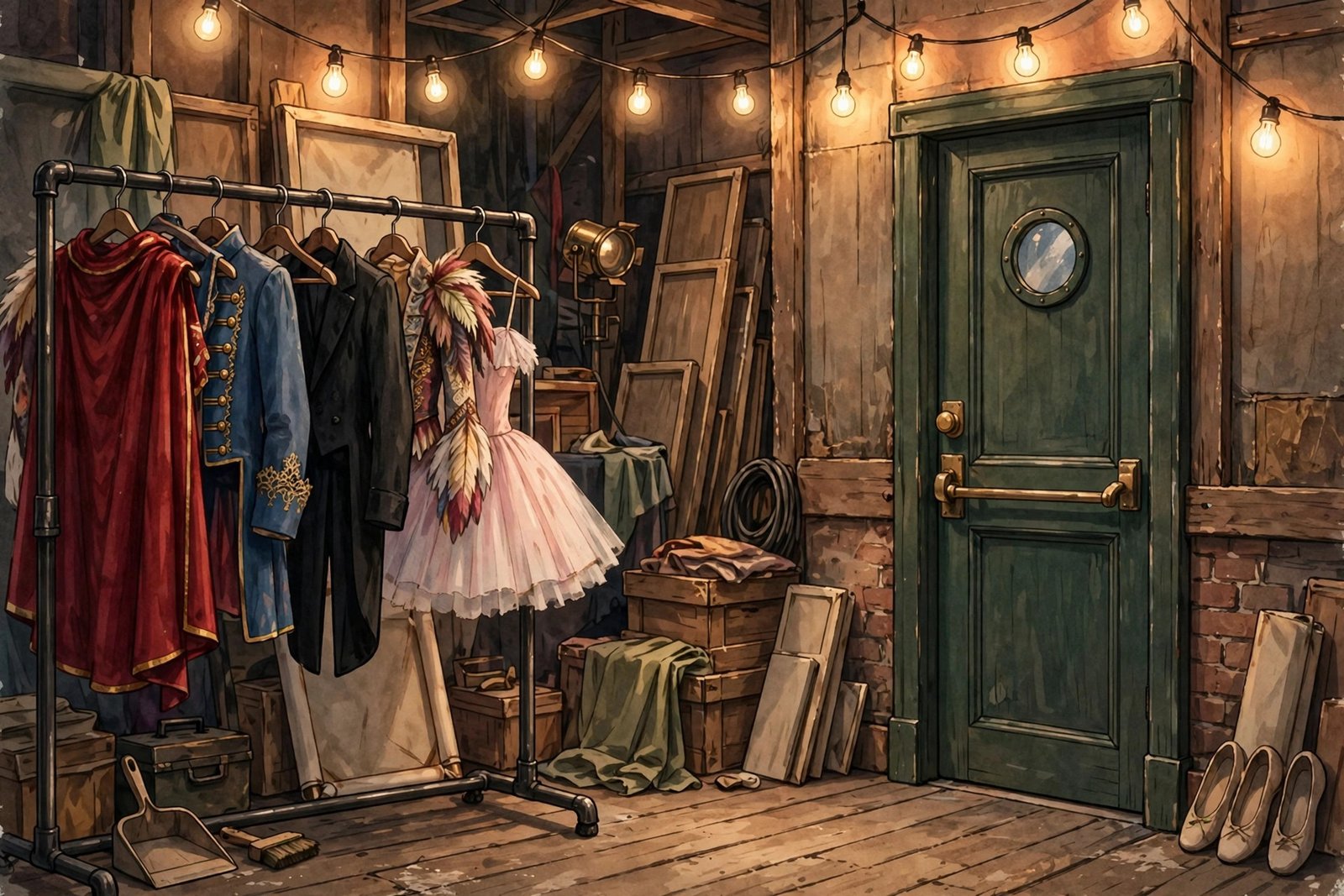
That beginning explains a great deal about his later stage presence. He did not arrive at acting through a conventional childhood ambition, but through movement, music, and ensemble life. A folk dancer learns timing, stamina, spatial awareness, and the discipline of a group performance in which no single performer carries the whole show. Those are precisely the qualities that later marked his stage acting: physical confidence, a strong sense of rhythm in a scene, and an ease with large ensemble productions in which music, choreography, and drama share the stage. His own account of the move — that he came to the theatre for love, in his words, and somehow became accustomed to it — is often quoted because it captures a career that grew out of attachment to a place and a company rather than a calculated plan.
The published record of his formal education contains a complication. One reference source lists his education as Vasyl Stefanyk Precarpathian National University, while another passage in the same source describes study at the Faculty of Culture and Arts of the Ivan Franko National University of Lviv. Hnatkovskyi’s own interview account, meanwhile, speaks of graduating in political science. Because those accounts do not agree in detail, the consistent points are: that he studied at university level, that his own account emphasises political science and folk dance rather than a drama-school path, and that his practical theatre training happened inside the Ivano-Frankivsk company itself.
The Ivano-Frankivsk Theatre as a Working Home
The theatre that shaped Hnatkovskyi is the Ivano-Frankivsk National Academic Drama Theatre named after Ivan Franko. Its history runs back more than a century: the theatre traces its founding to the registration of the Ukrainian People’s Theatre named after Ivan Tobilevych on 10 October 1910, and it marked its 115th anniversary in 2025. Hnatkovskyi’s career developed in parallel with the theatre’s own modern transformation, as the Ivano-Frankivsk Academic Regional Ukrainian Music and Drama Theatre named after Ivan Franko gained national status and became the Ivano-Frankivsk National Academic Drama Theatre. The institution is a repertory theatre in the full sense: a resident company performing a rotating repertoire of Ukrainian classics, contemporary Ukrainian drama, and world drama, with its own orchestra, ballet company, and choir tradition.
Hnatkovskyi’s recorded work at the theatre begins in 2004, when he joined as a ballet artist and member of the supporting staff, and a further reference entry records him working at the theatre as an actor and director from 2006. In June 2022, the theatre’s own competition results announced that Oleksii Ivanovych Hnatkovskyi, together with Iryna Hryhorivna Vitovska-Vantsa, had been appointed to the position of leading stage master, the highest acting rank in the company. That appointment is a useful marker of his standing inside the institution: it is a company rank earned through sustained repertory work, not a screen celebrity title imported from outside. His repertoire at the theatre has combined Ukrainian classics, contemporary writing, and world drama, and critics have noted his ability to move between psychological drama, satire, and tragicomedy, often playing characters whose personal stories reflect wider social conflicts or historical traumas.
The theatre’s recent history also frames his public role. Under the artistic direction of Rostyslav Derzhypilsky, the company has pursued an ambitious programme of touring, festival work, and international cooperation, including membership of the European Shakespeare network and a Ukrainian Shakespeare Festival in Ivano-Frankivsk. Hnatkovskyi has appeared as a guest actor in projects in other Ukrainian cities and has taken part in theatre festivals in Ukraine and abroad. His is not a career built on a single production or a single city engagement, but on long membership of a company that itself tours, experiments, and represents Ukrainian theatre internationally.
Stage Roles: From Hamlet to Kaidash
The range of Hnatkovskyi’s stage roles is best understood through the parts recorded in his theatre profile. They include Hamlet, Aeneas, Friar Lorenzo, and Ivan Synytsia, alongside a wider repertoire drawn from Ivan Franko, Taras Shevchenko, Lesia Ukrainka, modern Ukrainian playwrights, and foreign authors adapted for the Ukrainian stage. Each of those names points to a different kind of acting challenge. Hamlet demands sustained psychological introspection and command of verse and rhetoric. Aeneas, the Trojan hero of classical epic, demands heroic bearing and the weight of a founding myth. Friar Lorenzo, in Shakespeare’s Romeo and Juliet, demands moral gravity in a supporting role that shapes the tragedy without dominating it. Ivan Synytsia belongs to the Ukrainian classical repertoire, where a performer must speak to a home audience’s literary memory. That a single actor’s recorded profile spans all four suggests a company actor trusted with both leading and load-bearing supporting parts.
Two more recent stage roles give a clearer picture of his mature work. In the Ivano-Frankivsk production of Kaidash’s Family, based on Ivan Nechui-Levytsky’s classic novel of village family life, Hnatkovskyi played Omelko Kaidash, the family patriarch. The casting is significant: Omelko is a comic and tragic figure at once, a father whose stubbornness, pride, and affection drive the family’s quarrels and reconciliations. Playing him requires an actor who can be funny without turning the character into a caricature, and severe without losing the audience’s sympathy. It is a role that rewards exactly the blend of satire, tragicomedy, and psychological realism that critics have associated with Hnatkovskyi.
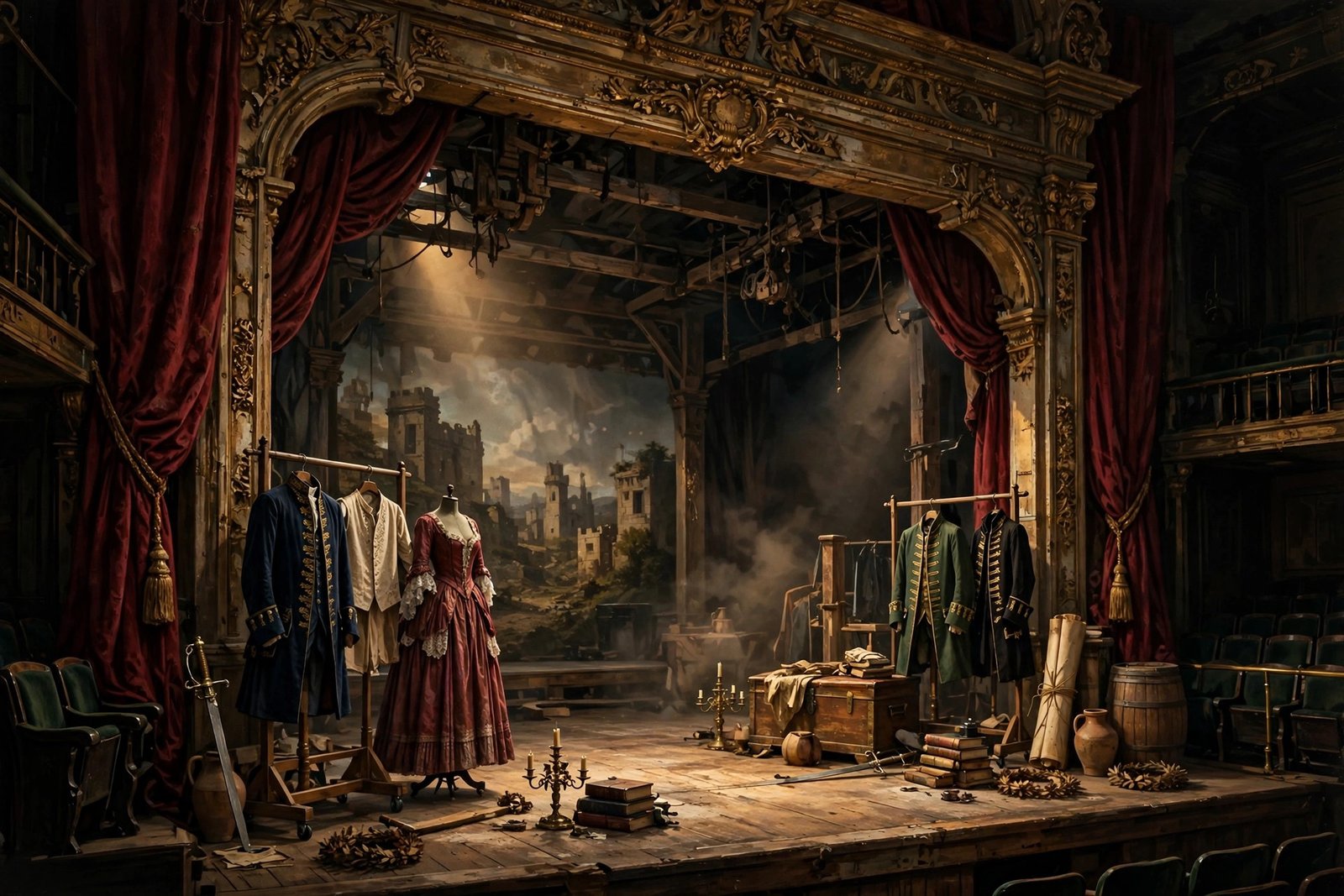
The second is his leading work in Hutsulka Ksenia, the theatre’s celebrated musical based on the work of Yaroslav Barnych, directed by Rostyslav Derzhypilsky. The production has passed 200 sold-out performances, according to the Slovak National Theatre’s announcement of its guest performances, and it was presented in Slovakia in September, in Prešov on 11 September and in Bratislava on 12 September, to mark the 35th anniversary of Ukraine’s independence. The production combines live music, choreography, costumes inspired by Hutsul culture, set design, and a laser show, with music performed in a contemporary orchestral arrangement conducted by Bohdan Tkachuk. Hnatkovskyi is listed among the lead performers, alongside Pavlo Kilnytskyi, Myroslava Polatayko, Yuriy Vykhovanets, Yana Ivasyuk, Oleg Panas, Lilia Abramyuk, Nadiya Levchenko, and Olesia Pasichnyak. A musical of that scale, performed to sold-out houses over many years and then toured abroad, is a different discipline from straight drama: it requires singing, movement, ensemble precision, and the stamina to keep a long-running hit fresh. His presence at the centre of it underlines how fully his early training in folk dance and ensemble performance carried into his mature career.
Directing: All Quiet on the Western Front and Shakespeare
Alongside acting, Hnatkovskyi has built a parallel career as a stage director, and it is here that his interest in re-reading familiar material in contemporary theatrical language is clearest. His directing debut was All Quiet on the Western Front in 2017, Erich Maria Remarque’s novel of the First World War adapted for the stage. The choice of material is telling. Remarque’s story is not a heroic war narrative but an account of young soldiers destroyed by a war they did not choose, and staging it requires a director to handle large-scale violence, youth, and moral waste without spectacle for its own sake. In 2019, Hnatkovskyi was named a laureate of the Vitalii Smoliak Prize in the nomination for directorial work for All Quiet on the Western Front, a regional theatre prize that recognised the production as a directing achievement rather than only an acting one.
He followed that debut with further directing work recorded in his theatre profile: Twelfth Night, or WHAT You Will!!! in 2019, and Matchmaking at Honcharivka in 2022. The Shakespeare comedy and the Ukrainian classic comedy of village matchmaking sit at opposite ends of the comic spectrum, and directing both suggests a director interested in comedy as a serious craft, not as light relief between dramas. Twelfth Night was also recognised at festival level: the Ivano-Frankivsk production was included in the list of winners and laureates of the GRA festival in 2020, with the connection to his direction confirmed by the theatre’s profile. Accounts of his staging describe it as dynamic and visually expressive, incorporating elements of physical theatre, multimedia, and non-traditional use of the auditorium space. That description fits a director formed inside a company that already mixes music, choreography, and drama: he directs with the whole stage, not only with dialogue.
Directing also changed his relationship with the theatre as an institution. A director must think about a company, a repertoire, and a public, not only about a single role. That shift in perspective is visible in the way Hnatkovskyi speaks about the Ivano-Frankivsk theatre: not as a stage on which he happens to work, but as a cultural institution with a civic responsibility, a place that must speak to its city and its country as well as perform.
Dovbush: Ivan, the Brother at the Centre of the Story
Hnatkovskyi’s national screen breakthrough came with Dovbush (2023), directed by Oles Sanin. The film tells the story of Oleksa Dovbush, the eighteenth-century Carpathian outlaw and folk hero who led the opryshky, the mountain rebels who robbed the rich and defended the poor. Serhiy Strelnikov played Oleksa Dovbush. Hnatkovskyi played Ivan Dovbush, Oleksa’s brother. The distinction matters, because Ivan is not a decorative supporting figure. In Sanin’s telling, the two brothers embody different responses to oppression, and their relationship — loyalty, rivalry, love, and divergence — gives the epic its human centre. Critics paid particular attention to Hnatkovskyi’s performance: one review noted that while Strelnikov took the lead role, many experts paid more attention to Hnatkovskyi as Ivan, describing his contradictory, morally complex character as impossible to leave indifferent.
The production itself was on a scale unusual for Ukrainian cinema. Filming began in August 2018, was interrupted for technical reasons and then by quarantine restrictions, and resumed in earnest in early June 2021. Scenes were shot in the Carpathians and in the Lviv and Ternopil regions and in Kyiv, including at historic castles such as Svirzh Castle, to recreate the first half of the eighteenth century. The film’s budget was about 120 million hryvnias, of which 65 million came from the Ukrainian State Film Agency. More than 1,000 costumes were made, a team of about 3,000 people worked on the production, and scenes involved as many as 600 people on set at once. The cast also included Daria Plakhtiy as Marichka, Agata Buzek as Princess Jabłonowska, Mateusz Kościukiewicz as Colonel Przeluski, Jerzy Sheibal as Hetman Józef Potocki, and Rostyslav Derzhypilsky as the opryshok Pravytsia, Ivan’s tutor.
Hnatkovskyi’s preparation for the role was physical as well as dramatic. He has spoken about spending about six months training to master knife fighting for the film, a parallel to Strelnikov’s year and a half training with the bartka, the traditional opryshky axe, and Kościukiewicz’s six months learning to fence with a Polish sabre. The fights and stunts were performed by the actors themselves rather than by stunt doubles, according to contemporary reporting on the production. That physical commitment is consistent with his stage background: a performer trained in movement and ensemble discipline could be asked to carry extended combat choreography and still keep the character’s psychology visible inside the action.
The film’s reception confirmed the scale of the gamble. Dovbush became the highest-grossing Ukrainian film of 2023, and its opening weekend alone took more than 8.7 million hryvnias from 59,800 tickets sold. For Hnatkovskyi personally, the recognition followed in 2024, when he won Best Supporting Actor at the eighth National Film Awards ceremony for his performance as Ivan Dovbush. It was a supporting-actor prize: it recognised a performance that strengthened the film from inside the story rather than by carrying its poster. In interviews after the film, Hnatkovskyi also spoke about turning down many film roles before accepting Ivan, and about the cast’s conviction during production that they were making an epochal Ukrainian film. It explains why the role has become the anchor of his public biography.
Before and After Dovbush on Screen
Dovbush was not Hnatkovskyi’s first screen credit, but it was the one that changed the scale of his screen career. An earlier film credit is Cyborgs: Heroes Never Die (2017), in which he appeared in a small role. The film, about the Ukrainian defenders of Donetsk airport, belongs to the first wave of Ukrainian war cinema after 2014, and his participation in it, even in a minor part, connects his screen work to the same subject — Ukraine’s recent wars — that his theatre work would later address directly. The contrast between that small early credit and the central role in Dovbush six years later is a reminder of how late his screen breakthrough arrived, and how much stage experience stood behind it.
After Dovbush, his screen work widened in two directions at once: period television drama and reality hosting. In the second season of Coffee with Cardamom, subtitled The Power of the Land (2025), he played Stefan Terletskyi. The series, based on Nataliya Gurnytska’s novel The Coffee Melody in the Key of Cardamom, is set in 1840s Lviv and follows Anna, a young woman running her family bakery, through love, family obligation, and the political upheavals of the Spring of Nations. The first season centred on Anna’s romance with the Polish nobleman Adam Rodzinsky. The second season shifts focus to Anna’s transformation into a woman who defends her land and her family, and introduces two new suitors: Pavel Krushevsky, played by Oleksandr Kobzar, and Stefan Terletskyi, played by Hnatkovskyi, presented as Pavel’s rival for Anna’s heart. The role placed Hnatkovskyi inside one of Ukraine’s most successful domestic period dramas, a series noted for its success at home and its reception in Poland, the United Arab Emirates, and Latin America. It also showed a different screen register from Dovbush: not combat and brotherhood, but courtship, rivalry, and social standing in a nineteenth-century city.
His other post-Dovbush screen move was into hosting. In 2025 he became the host of the Ukrainian version of The Traitors, known in Ukrainian as Zradnyky, on the SWEET.TV streaming platform. The format, adapted from the Dutch series De Verraders, gathers contestants in a country house where a small number of secret traitors work against the majority, known as the faithful, for a cash prize. The Ukrainian version offered a maximum prize of 500,000 hryvnias, opened a public casting call in January 2025, was confirmed by SWEET.TV on 26 February 2025, filmed in June 2025, and revealed Hnatkovskyi as host on 25 September 2025, alongside a first teaser. Its first two episodes debuted on 31 October 2025. Hosting a reality competition is a different skill from stage acting: the host must control pace, sustain suspense, and remain a neutral authority figure while contestants deceive one another. That Hnatkovskyi was chosen for the role after Dovbush suggests producers saw in him a screen authority that his theatre career had built — a performer audiences would accept as a master of ceremonies in a game about trust and betrayal. He has also provided commentary for a Suspilne Kultura broadcast of the Academy Awards ceremony, explaining nominations and the making of nominated films to Ukrainian viewers through the night.
Theatre, War, and the Executed Renaissance
The full-scale Russian invasion of Ukraine in 2022 changed the work of every Ukrainian theatre, and Hnatkovskyi’s public statements from this period show an artist thinking about what a theatre is for in wartime. He has spoken about the importance of remembering the Executed Renaissance, the generation of Ukrainian writers, artists, and intellectuals of the 1920s and early 1930s who were repressed and killed under Stalin. The day before one widely reported interview, he had presented in Kyiv a play on that subject brought from Ivano-Frankivsk, a project he said he had been working on for several years. His argument, in that interview, was that Russia’s war against Ukraine did not begin with tanks and missiles, but earlier, with the destruction of Ukrainian language, history, and culture and their replacement in people’s minds. Remembering the Executed Renaissance, in that account, is not an academic exercise but a form of defence: a way of restoring what was destroyed.
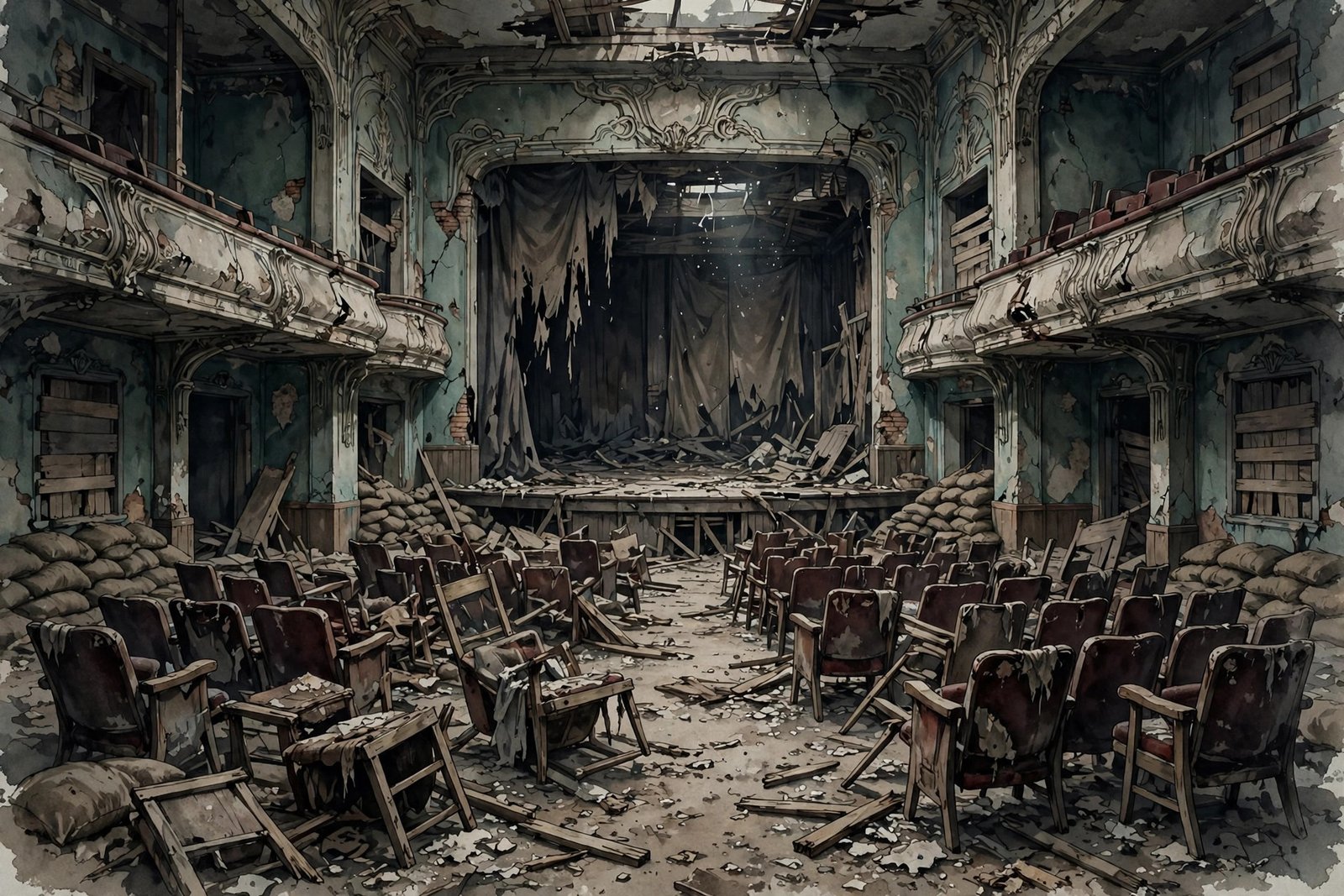
The same period raised a more personal question that Hnatkovskyi has discussed openly: the question of military service for male artists. Reporting on his statements presents two sides of the same position. On one hand, he has spoken about enlisting and about the view that every man should sooner or later take his turn. On the other hand, he has also spoken about considering service, talking to military leaders about options, and concluding for the time being that his work in theatre, including fundraising for the military, is a vital contribution, with some members of his company serving and others working in support roles. Because published accounts differ in emphasis, no single definitive claim about his service status is made here. What is consistent across the accounts is the underlying position: that both fighters and civilians have essential roles, that civilians should contribute in whatever way they can, and that a theatre’s fundraising and morale work is itself part of the war effort. That position is consistent with the civic view of theatre that runs through his directing and his public statements.
Honours and What They Mark
Hnatkovskyi’s honours trace a steady rise through Ukraine’s system of state artistic titles. In 2014 he received the title of Merited Artist of Ukraine, the state honorary title for outstanding contribution to the performing arts. In 2024, by presidential decree No. 772/2024, he received the title of People’s Artist of Ukraine, one of the highest national titles for artists, awarded for exceptional achievements in theatre and the performing arts. The timing of the second title is significant: it was conferred as the Ivano-Frankivsk theatre celebrated its 115th anniversary, when People’s Artist titles were also awarded to fellow company members Roman Lutskiy and Nadiya Levchenko, and Honored Artist titles to Ivan Blyndar, Liubomyr Valivots, Yurii Vyhovanets, Andrii Melnyk, Oleh Panas, Iryna Onyshchuk, and Inna Smoliy. Receiving the title alongside colleagues, in an anniversary honour for the whole company, underlines again that his career is a company career: the honour recognised an individual, but it arrived as part of a collective celebration.
Alongside the state titles sit two professional prizes that mark his two crafts separately. The Vitalii Smoliak Prize in 2019 recognised him as a director, for All Quiet on the Western Front. The National Film Award in 2024 recognised him as a screen actor, for Dovbush. Taken together with the GRA festival recognition for Twelfth Night in 2020, they form a compact record: a theatre director recognised for a war drama, a stage director recognised for Shakespeare, and a film actor recognised for a historical epic, all within five years. For a performer who began as a ballet artist and supporting staff member in 2004, that sequence is the clearest measure of the distance travelled.
Why Oleksii Hnatkovskyi Matters to Ukrainian Culture
Hnatkovskyi matters to Ukrainian culture for a reason that is easy to miss if only his film roles are counted. He represents a particular Ukrainian theatre tradition: the strong regional repertory company that does not depend on Kyiv for its identity. Ivano-Frankivsk, a city in western Ukraine with its own Hutsul cultural hinterland, its own literary memory, and its own theatre history stretching back to 1910, has produced in Hnatkovskyi an artist who stayed, built a repertoire there, directed there, and then carried that theatre’s work to Kyiv, to Slovakia, and to international festivals. His Dovbush performance then carried a Carpathian story, filmed in the Carpathians with Hutsul dialect and Polish dialogue, to a national cinema audience. In both cases, the regional and the national reinforce each other: the theatre gave him the craft, and the film gave the theatre’s world a wider audience.
He also matters as an example of a career that does not follow the usual screen-first path. Many Ukrainian actors become known through television in their twenties and return to theatre later, if at all. Hnatkovskyi did the reverse. He spent nearly two decades in repertory theatre, directed major productions, earned state honours for stage work, and only then became a national screen name in his late thirties, followed by a leading television drama role and a reality-hosting job in his fortieth year. That sequence suggests a different model of an acting career: one in which screen fame is the late fruit of stage craft, not a substitute for it. For younger actors in regional theatres, that model may be the most useful part of his story.
Selected Filmography and Stage Credits
Selected screen credits for Oleksii Hnatkovskyi include Cyborgs: Heroes Never Die (2017) in a small role, Dovbush (2023) as Ivan Dovbush, and Coffee with Cardamom. The Power of the Land (2025) as Stefan Terletskyi. He hosted the Ukrainian version of The Traitors (Zradnyky, first season, 2025) on SWEET.TV, and he has provided commentary for a Suspilne Kultura broadcast of the Academy Awards ceremony. His directing credits at the Ivano-Frankivsk theatre include All Quiet on the Western Front (2017), Twelfth Night, or WHAT You Will!!! (2019), and Matchmaking at Honcharivka (2022). His recorded stage roles at the theatre include Hamlet, Aeneas, Friar Lorenzo, Ivan Synytsia, Omelko Kaidash in Kaidash’s Family, and a leading role in Hutsulka Ksenia. His honours include Merited Artist of Ukraine (2014), the Vitalii Smoliak Prize for directorial work (2019), People’s Artist of Ukraine (2024), and Best Supporting Actor at the National Film Awards (2024) for Dovbush.
Frequently Asked Questions
Who is Oleksii Hnatkovskyi?
Oleksii Ivanovych Hnatkovskyi is a Ukrainian stage actor and theatre director, born on 9 November 1985 in Ivano-Frankivsk. He has spent his career at the Ivano-Frankivsk National Academic Drama Theatre named after Ivan Franko, where he was appointed a leading stage master in 2022. He holds the titles of Merited Artist of Ukraine (2014) and People’s Artist of Ukraine (2024).
What role did Oleksii Hnatkovskyi play in Dovbush?
He played Ivan Dovbush, the brother of the folk hero Oleksa Dovbush, played by Serhiy Strelnikov, in Oles Sanin’s historical film Dovbush (2023). His performance won Best Supporting Actor at Ukraine’s National Film Awards in 2024, and critics singled out his morally complex portrayal of Ivan.
Is Oleksii Hnatkovskyi mainly a theatre actor or a film actor?
He is mainly a theatre actor and director. His screen career began with a small role in Cyborgs: Heroes Never Die (2017) and reached a wide audience only with Dovbush (2023), after nearly two decades of stage work in Ivano-Frankivsk. He has since added television drama and reality hosting to his screen work, but his base remains the Ivano-Frankivsk theatre.
What has Oleksii Hnatkovskyi directed?
His directing credits at the Ivano-Frankivsk theatre include All Quiet on the Western Front (2017), for which he won the Vitalii Smoliak Prize for directorial work in 2019, Twelfth Night, or WHAT You Will!!! (2019), recognised at the GRA festival in 2020, and Matchmaking at Honcharivka (2022).
What is Coffee with Cardamom, and who does Hnatkovskyi play in it?
Coffee with Cardamom is a Ukrainian period drama set in 1840s Lviv, based on Nataliya Gurnytska’s novel. In its second season, The Power of the Land (2025), Hnatkovskyi plays Stefan Terletskyi, introduced as a rival of Pavel Krushevsky for the heart of the heroine Anna, as Anna fights to defend her land and family.
Did Oleksii Hnatkovskyi host The Traitors in Ukraine?
Yes. He hosted the first season of the Ukrainian version of The Traitors, known as Zradnyky, on SWEET.TV. He was revealed as host on 25 September 2025, and the first two episodes debuted on 31 October 2025, with a maximum prize of 500,000 hryvnias.
What honours has Oleksii Hnatkovskyi received?
His recorded honours include Merited Artist of Ukraine (2014), the Vitalii Smoliak Prize for directorial work (2019), People’s Artist of Ukraine by presidential decree No. 772/2024, and Best Supporting Actor at the National Film Awards (2024) for Dovbush.