Author name: Mughal Waleed

Mughal Waleed is the owner and author of EJOBARY, an entertainment information website about Ukrainian celebrities. He started EJOBARY to give English-language readers a clear guide to Ukrainian entertainment. From Pakistan, he writes biographical profiles and career summaries of Ukrainian actors, singers, TV stars, and influencers, covering their public work in film, television, music, and online media. His articles are built from named public sources, checked against more than one source, and reviewed by him before publication, as described in the Editorial Policy. He welcomes corrections and suggestions from readers. To get in touch, please use the Contact page.

TV and Reality Stars

Dorofeeva: Holos Krainy Coach, Seasons and Teams

Nadia Dorofeeva, known on stage as DOROFEEVA, is best known to many television viewers not for a single song but for a red chair. Since 2021 she has been a coach on Holos Krainy, the Ukrainian version of The Voice, and before that she coached the children’s version of the show as part of a duo. Her coaching record is unusually clear: a win in her first adult season, a disrupted second season shaped by war, and a runner-up finish in a third season staged outside Ukraine. Holos Krainy, whose Ukrainian title means The Voice of the Country, premiered on the 1+1 network on 22 May 2011. It is part of the international The Voice format created by Dutch television producer John de Mol Jr., and it was the second international adaptation of the programme after the American version. Coaches listen to blind auditions with their backs turned, press a button to turn for a singer they want, build a team, and then guide those singers through battles, knockouts and live shows decided, in the end, by the public. A coach’s job, therefore, is not only to choose voices but to choose songs, to shape performances week after week, and to keep a team together under the pressure of elimination. Dorofeeva’s three adult seasons show different sides of that job, and they are best understood season by season. Some images in this article are AI-generated illustrations, not photographs of Dorofeeva; they are labelled as such. Source: Wikipedia records that Holos Krainy premiered on 1+1 on 22 May 2011 and that Dorofeeva coached in seasons 11, 12 and 13. Why a Pop Star Was Put in the Chair Nadiia Volodymyrivna Dorofieieva was born on 21 April 1990 in Simferopol. Before Holos Krainy, she had spent a decade as one half of the pop duo Vremya i Steklo, formed in Kyiv in 2010 by producer Oleksii Potapenko, known as Potap, and producer Iryna Horova, alongside Oleksii Zavhorodnii, known as Positiff. The duo’s best-known songs included “Imya 505”, “Pesnya 404”, “Navernoepotomuchto”, “Na Stile”, “Troll”, “TOP”, “E, Boy” and “Dim”. The project ended in 2020, after which Dorofeeva and Positiff began solo careers. Dorofeeva’s first solo song under the name DOROFEEVA, “gorit”, was released on 20 November 2020. That background matters for her coaching for two reasons. First, she arrived at Holos Krainy as a working performer who had spent years in a duo, which meant she understood harmony, stage partnership and the discipline of performing as part of a group, not only as a solo singer. Second, she had already coached on television before her adult Holos Krainy debut, on the children’s version of the show. She was therefore not a first-time television coach in 2021, even though season 11 was her first season in the adult chair. Her early career also included singing and dance competitions in her youth, a finalist place on the television project Chance, and several years performing in the group M.Ch.S. before Vremya i Steklo. Those experiences gave her a performer’s view of auditions, which is different from a purely technical view: she had been the person auditioning, as well as the person later choosing. Her solo work after 2020, including the EP “dofamin” in spring 2021 and the album “Sensi” in 2022, and her switch to performing in Ukrainian after the Russian invasion of Ukraine began, are background here, not the focus. They explain why, by the time she returned for season 13 in 2023, she was coaching in a changed musical landscape, in which Ukrainian-language repertoire and songs about home, endurance and identity carried a different weight than they had in 2021. First Steps as a Coach: Holos Dity Dorofeeva’s first coaching role on a Voice show was not on Holos Krainy but on Holos Dity, The Voice Kids. In autumn 2017, after taking part in the Ukrainian version of Dancing with the Stars on 1+1, she became a coach on Holos Dity together with Positiff, as the duo Vremya i Steklo. The children’s show used three coaches rather than four, and the duo occupied one chair together, which meant that Dorofeeva’s early coaching was collaborative: decisions about repertoire, staging and advice were shared with her duo partner, and the team was a joint team. The duo coached Holos Dity in season 4 in 2017 and season 5 in 2019. In season 4, the coaches were Natalia Mohylevska, Vremya i Steklo and Monatik, and the winner was Daneliya Tuleshova from Monatik’s team. Vremya i Steklo’s finalists that season included Alexander Minyonok and Yana Gornaya. In season 5, the coaches were Jamala, Vremya i Steklo and Dzidzio, and the winner was Oleksandr Zazarashvili from the Vremya i Steklo team, with Karina Stolaba and Maksym Komisarchuk also listed among that team’s finalists. That win is the earliest coaching victory in Dorofeeva’s television record, and it predates her adult Holos Krainy win by two years. The children’s coaching experience is relevant to the adult show because it taught a different kind of coaching. With younger singers, the emphasis is on protection, confidence and age-appropriate repertoire, rather than on the competitive tactics of battles and steals that dominate the adult format. Dorofeeva’s later adult coaching, with its attention to song choice and to singers’ confidence on stage, can be seen as building on that earlier work, even though the formats are different. It also meant that, when she took the adult chair in 2021, viewers already knew her as a coach, not only as a singer, and the transition felt like a promotion within the same television family rather than a new departure. Joining Holos Krainy: Season 11 in 2021 Dorofeeva joined Holos Krainy as a coach in season 11, which ran from 24 January to 25 April 2021. The other coaches that season were Tina Karol, Oleh Vynnyk and Monatik. The show was presented, as in later seasons, within the 1+1 stable, and it aired on Sunday evenings. Dorofeeva was the only coach in that line-up who had […]

Dorofeeva: Holos Krainy Coach, Seasons and Teams Read Post »
Singers and Music Artists

Ziferblat Biography: Ukraine’s Eurovision 2025 Band

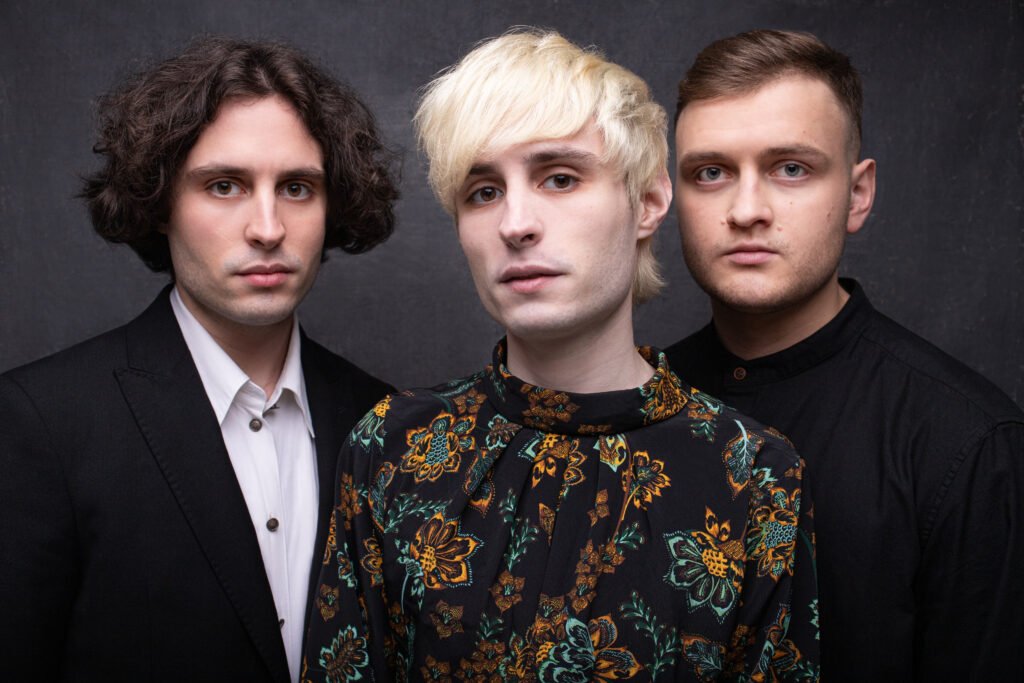
Ziferblat are a Ukrainian alternative-rock band whose name, in Ukrainian, means clockface. The trio is made up of twin brothers Daniil Leshchynskyi on vocals and keyboard and Valentyn Leshchynskyi on guitar, together with drummer Fedir Khodakov. They formed in 2015 and spent almost a decade building a following in Ukraine before a much wider European audience met them in 2025, when they represented Ukraine at the Eurovision Song Contest in Basel, Switzerland, with the song “Bird of Pray”. That performance finished ninth in the final with 218 points, after winning its semi-final, and it turned a band long described in Ukraine as an alternative act into one of the country’s most recognisable recent Eurovision representatives. What makes the Ziferblat story different from a sudden breakthrough is its length. The band did not arrive at Eurovision on a first attempt. They were longlisted for Vidbir, Ukraine’s national selection, in 2023 without reaching the shortlist, finished second in Vidbir 2024, and only won Vidbir 2025 on their third cycle of trying. Each step added to the same catalogue rather than replacing it: an early extended play, a debut album built from songs written years earlier, and then a Eurovision entry that carried the band’s older interest in Ukrainian musical tradition into a bilingual, contemporary rock song. Who Ziferblat Are Ziferblat are a three-piece band from Ukraine. Daniil Leshchynskyi, also spelled Danylo in some sources, sings and plays keyboard. His twin brother Valentyn Leshchynskyi plays guitar. Fedir Khodakov plays drums and joined the current line-up in 2019. The twins were born on 15 November 1996, and Khodakov was born on 28 February 1998. Earlier members included keyboard player Viktor Nikolenko and drummer Valentyn Oliynyk, both with the band from 2015 to 2018, and Yevhen Shevchenko, who played bass guitar and drums between 2018 and 2021. The present trio, therefore, is the result of a settled line-up that has now been together for several years, rather than a group assembled for a single contest. The band’s name is written in Ukrainian as Tsyferblat, and transliterated in English as Ziferblat. The clockface image suits a band whose music often looks backwards and forwards at the same time: older Ukrainian sounds, 1970s-influenced rock textures, and modern alternative production. In interviews around Eurovision, the band pushed back against any single label for their sound. Terms used for them have included progressive rock, art rock, alternative rock, and the Ukrainian phrase often translated as moustache funk, a style associated with the 1960s and 1970s that blends Western rock with traditional Ukrainian elements. Daniil Leshchynskyi has said that their song contains some elements of that tradition, but that no artist likes to be defined by one genre, and that Ukrainian culture has had a strong influence on their work. That resistance to a neat label is useful for a listener approaching the catalogue for the first time, because the early songs, the debut album and the Eurovision entry do not all sound the same. Ziferblat are signed, for their releases, to the label Geisha Ninja Samurai. Their work is usually credited to the band as a whole, including production on “Bird of Pray”, which is a useful detail: the Eurovision song was not handed to them by an outside writing camp, but written by all three members. The songwriters credited for “Bird of Pray” are Valentyn Leshchynskyi, Daniel Leshchynskyi and Fedir Khodakov, with Valentyn Leshchynskyi credited as lyricist. That shared authorship matters because it connects the Eurovision entry directly to the band’s earlier writing, rather than treating Basel as a separate project. Formation in 2015 and the First Years Ziferblat were founded in 2015. Daniil and Valentyn Leshchynskyi are fraternal twin brothers, and the early years were spent finding a sound and a stable line-up rather than chasing a contest entry. The band’s first extended play, “Kinoseans”, was released in December 2017, a title sometimes translated as “Cinematic Session”. That early release is a useful starting point for understanding the band’s later work: it was not a Eurovision audition piece, but a small, self-contained record made before the band had any national-selection profile. In 2019, the band released the single “Vnochi” and performed it on the Ukrainian edition of “X-Factor”. “Vnochi” is remembered by fans as one of the band’s early signature songs, and the programme gave them a television audience beyond the clubs and small halls where they had been playing. That television exposure gave them a wider audience, but Ziferblat had already been working for four years by then. The first years, then, are best understood as a slow build. The band released music, performed, changed members, and kept writing, without the pressure of a contest deadline. That history is why the later Vidbir attempts feel like a natural extension of a working band’s career rather than a manufactured bid for attention, and it is also why the band’s catalogue rewards listening beyond the Eurovision entry. Early Singles and the Road to a Debut Album After “Vnochi” in 2019 came “Zemlya” in 2022, a single that arrived with a music video. Later in 2022 came “Dlya choho ty pryyshla”, followed in February 2023 by “Dysko-Fanko Terapiya”. Both of those later songs would be included on the debut album, and together they show the band moving between Ukrainian-language material and a funk- and groove-led sound. “Zemlya”, which means earth or land, arrived after the full-scale invasion began in February 2022, and it is not the same song as “Bird of Pray”, a confusion worth avoiding because the two songs are sometimes mentioned together in summaries of the band’s work. “Dysko-Fanko Terapiya”, by contrast, points to the funk and groove elements that have always sat alongside the band’s rock base. This period also shows the band becoming comfortable singing in Ukrainian and, later, in English. That bilingual comfort would become central to “Bird of Pray” and to “Place I Call Home”, but in the early singles it appears more gradually, with Ukrainian as the main language of the […]

Ziferblat Biography: Ukraine’s Eurovision 2025 Band Read Post »

Singers and Music Artists

Leléka: Ridnym, Vidbir 2026 Win and Eurovision Story

Leléka won Vidbir 2026 with “Ridnym” and then represented Ukraine at the Eurovision Song Contest 2026 in Vienna, finishing ninth in the final. That sentence alone places her in a remarkable line of Ukrainian music history. Vidbir, Ukraine’s national selection for Eurovision, has produced winners, runners-up and cultural moments that travelled far beyond a single television night. Leléka’s victory was different from many of them, because it was not built on spectacle. It was built on a quiet, folk-rooted song about loved ones, change and the way home, performed by a singer whose career had been formed far from the Eurovision stage, in jazz rooms, theatre work and film composition in Berlin and Kyiv. Her result also sits in the context of Ukraine’s Eurovision record, which includes three victories and an unbroken run of final qualifications that few countries can match. Who Is Leléka? Leléka is the stage name of the Ukrainian singer, arranger and film composer Viktoriia Leleka. The name itself carries meaning: in Ukrainian, “leleka” is the word for stork, a bird associated in Ukrainian culture with home, family and return. For a singer whose best-known song is addressed to loved ones — “Ridnym” translates as “To Relatives” or “To Loved Ones” — the name is unusually fitting, even if it began as the name of a band rather than a solo brand. She was born in Shakhtarske in the Dnipropetrovsk region of Ukraine. Shakhtarske is a mining town, and her background is a long way from the Kyiv and international music scenes in which she later worked. That distance matters to her story. Leléka is not a performer who grew up inside the Kyiv pop industry. She is a trained theatre and music professional who built a career step by step, first in Kyiv, then in Germany, and whose Eurovision breakthrough came after years of work in jazz and film music rather than after a rapid rise through television talent shows. In Ukraine, before Vidbir, she was also known as the composer of the music for the television series And There Will Be People (I budut liudy), a historical drama. That credit is important because it shows the breadth of her musicianship. She is not only a vocalist who performs songs written by others. She composes, arranges and writes for screen, and that composer’s ear shapes the way “Ridnym” is put together, with its blend of folk instruments, strings, electronic textures and jazz phrasing. Education: Kyiv Theatre, Then Berlin and Dresden Leléka graduated from the I. K. Karpenko-Karyi National University of Theatre, Cinema and Television in Kyiv. While she was studying there, she also worked as an actress at the Molodyi Theatre in Kyiv. Theatre training of this kind gives a performer more than stage technique. It teaches text, character, breath control, ensemble discipline and the ability to hold a stage without relying on elaborate production. All of those qualities are visible in her Vidbir and Eurovision performances, which were notably restrained by Eurovision standards, relying on voice, stillness and meaning rather than on large-scale staging effects. In 2016, she moved to Berlin. The move was a turning point. In Berlin she founded the ethno-jazz group Leléka, the ensemble that shares her stage name and that remains central to her musical identity. She also studied jazz vocals at the Dresden Conservatory, formally the Carl Maria von Weber University of Music in Dresden, and later earned a master’s degree in film composition. That combination — theatre acting, jazz singing and film composition — is rare, and it explains why her music does not fit neatly into a single genre label. It moves between folk, jazz, art pop and electronic music, with a composer’s attention to texture and a jazz singer’s attention to phrasing. The Berlin years also made her part of a Ukrainian artistic diaspora in Germany. She was living and working abroad while remaining musically and culturally connected to Ukraine, writing and singing predominantly in Ukrainian, and taking part in cultural initiatives that promoted Ukrainian music internationally. That position — physically abroad, artistically Ukrainian — would later become part of the public conversation around her Eurovision representation. Many Ukrainian artists have built careers abroad while keeping Ukrainian language and themes at the centre of their work, and Leléka is one of them. The Band Leléka: Folk-Jazz Roots The group Leléka describes itself as a folk-jazz ensemble, and its music takes Ukrainian folk material and treats it with jazz freedom: improvisation, open arrangements, and a willingness to let a song breathe rather than forcing it into a pop formula. After the self-titled EP Leléka in 2017, the band released its debut album Tuman in 2019, and a second album, Sontse u sertsi, in September 2021. Those records established the band’s sound well before Eurovision audiences encountered it: Ukrainian-language texts, folk roots, jazz instrumentation, and a vocal style praised for warmth and natural power. The band also earned recognition in the European jazz world. It won the Creole — Global Music Contest in 2017 and the European Young Jazz Talent Award at the Internationale Jazzwoche Burghausen in 2018, and Leléka came in second place at the Young Munich Jazz Prize in 2019. Those are specialist awards, not mainstream pop prizes, and they tell a different story from a typical Eurovision biography. They show a musician who had already been recognised by jazz juries and festival audiences before a television audience of millions ever heard her name. Alongside the band, Leléka developed a separate solo art project called Donbasgrl, sometimes written Donba₴grl. She launched that project in 2024, debuting with the single “Zbroia”, based on a poem by Lesya Ukrainka, with a music video addressing themes of depression. In 2025, Donbasgrl was selected for the Eurosonic Noorderslag showcase festival in the Netherlands, where she performed a full set developed with the German music producer Jakohitsdifferent, and in the same year she released the single “Zhyva”, also produced with Jakohitsdifferent. Later in 2025 she headlined the Green Futures stage at […]

Leléka: Ridnym, Vidbir 2026 Win and Eurovision Story Read Post »

Actresses

Anna Koshmal Biography: Life, Roles and Svaty Fame

Anna Koshmal is a Ukrainian television actress whose name is closely tied to two of the most talked-about Ukrainian series of the past fifteen years. For many viewers, she will always be Zhenya, the teenage granddaughter at the centre of the family comedy Svaty. For others, she is Natasha Sakhno, the president’s niece in the political satire Servant of the People. Between those two landmarks sits a long run of television work in which Koshmal moved from a surprise teenage casting to a steady, working screen actress, taking title roles, family dramas, mini-series and comedy parts in quick succession. Her career is interesting precisely because it did not follow the usual route. She was not a child star groomed for the screen from an early age, and she did not arrive in television through a drama school acting degree. She came from dance, music and variety training, was spotted almost by chance, and then had to learn screen acting in front of a large audience, in one of the region’s most popular series. That beginning shaped everything that followed: a performer who is comfortable in ensemble comedy, who can carry a leading role in a melodrama, and who has kept working across Ukrainian television even as the industry around her changed completely. Early Life in Kyiv Anna Sergeevna Koshmal was born on 22 October 1994 in Kyiv, Ukraine. Her family background was outside the entertainment world. Her father, Sergei Koshmal, was a military officer, and her mother, Tamara Koshmal, worked as a teacher. She grew up with an older brother, also named Sergei. That ordinary, non-theatrical household matters to her story, because nothing in her family background pointed directly toward a screen career. The artistic impulse came from Koshmal herself, and from the classes her parents supported when she was still a child. From the age of six, she was involved in dance, including ballet and ballroom dancing, and later took part in sports training as well. A little later, her parents enrolled her in a music school, where she studied vocals. The combination is worth noting: dance gave her physical discipline and stage presence, music gave her voice training and timing, and together they gave her a performer’s foundation long before she ever faced a camera. Many screen actors arrive with only one of those skills. Koshmal arrived with several, and that breadth would later help her in roles that asked for singing as well as acting. Her Ukrainian name is rendered in several forms in different sources, including Hanna Koshmal, reflecting the Ukrainian form of her first name. In English-language coverage she is most consistently known as Anna Koshmal, and that is the name used throughout this article. Her height is listed in reference sources as 1.67 metres. Those basic biographical details are consistent across the main English-language profiles of her career, which is useful in a field where minor details about television actors are often reported differently from one site to another. Training in Dance, Music and Variety Arts After finishing school in 2010, Koshmal continued her education at the Kyiv Municipal Academy of Variety and Circus Arts, an institution founded in 1961 that trains performers in singing, dancing, acting, directing and circus arts. She studied directing there. That choice is revealing. A directing course does not only teach a student how to perform; it teaches how a scene is built, how timing works, how a performer fits into an ensemble, and how a director sees a performance from the other side of the camera. For a young performer who would soon be working with experienced comic actors, that broader view of the craft was a genuine advantage. Accounts of her student years describe a young woman who had still not settled on a single artistic direction. Music and dance both came naturally to her, and a stage career of some kind seemed likely, but a screen acting career was not yet the plan. She was, by several accounts, a student at a creativity centre when the casting process that changed her life reached her. The story of that casting has been told in more than one version, but the core facts are consistent: a casting director visited the centre where she was studying, she was placed among a small group of contenders, and the director of Svaty, Andrey Yakovlev, approved her for the role. She did not arrive at that audition as an established actress with a showreel. She arrived as a trained young performer who had never carried a major screen role. That background also explains a detail that fans of Svaty often remember: Koshmal sang in the series. She performed the song “Moy Kalendar” (“My Calendar”) as a duet with Fedor Dobronravov, one of the series’ leading actors. The song was composed by A. Udovenko, with lyrics by Dm. Kozlov and A. Yakovlev. For an actress whose training included vocals, a singing moment inside a comedy series was a natural fit rather than a stretch, and it showed audiences early on that her skills went beyond spoken dialogue. The Svaty Breakthrough: Playing Zhenya Svaty, also translated as The In-Laws or Matchmakers, is a family comedy built around grandparents and their extended family, and by its fifth season it was already a well-loved series with an established audience. The challenge for the new season was a familiar one in long-running television: the granddaughter at the heart of the family story had grown up. The sweet small child of the earlier seasons had become a teenager, and the series needed a performer who could play that older Zhenya convincingly. Koshmal was seventeen when she took on the role of Zhenya, full name Evgenia Kovaleva in most English-language references, sometimes written as Zhenya Kovaleva. The character as written for season five was a rebellious, goth-leaning teenager who clashed with her grandparents and reacted sharply to their remarks. To play her, Koshmal dyed her hair black, a visible break from her own appearance that helped audiences accept […]

Anna Koshmal Biography: Life, Roles and Svaty Fame Read Post »

Actors

Ostap Stupka Biography: A Kyiv Stage Actor’s Own Career in Theatre, Film, and Television

The Ostap Stupka biography is often told the wrong way round, as if it were a footnote to a more famous name. Ostap Stupka was born on 2 September 1967 in Lviv, and he is the son of the celebrated Ukrainian actor Bohdan Stupka. That fact is true, and it shaped the rooms he grew up in. It is not, however, the story of his working life. Ostap Stupka is a People’s Artist of Ukraine in his own right, an actor of the Ivan Franko National Academic Drama Theatre in Kyiv who has performed in 35 plays there, a film actor with more than 30 screen credits, and a television presenter whose quiz show won a national television award. His roles run from the son of a hetman in a historical epic to a Red commissar in Kruty 1918, from a Cossack leader in a comedy series to a figure in a drama about Soviet punitive psychiatry. The career Ostap Stupka built for himself runs from a childhood backstage, through Kyiv training and a long theatre membership, a parallel life in television, and a screen career that has continued into his late fifties. The images in this article are AI-generated illustrations, labelled as such. Source: Wikipedia records that Ostap Stupka, born 2 September 1967 in Lviv, is a People’s Artist of Ukraine (2009) and an actor of the Ivan Franko National Academic Drama Theatre since 1988, and that he played Pylyp Orlyk in A Prayer for Hetman Mazepa. Ostap Stupka Biography: A Childhood Spent Backstage Ostap Bogdanovych Stupka was born in Lviv on 2 September 1967, into a family of performers. His grandfather Sylvestr Stupka was an opera singer. His mother, Larisa Kornienko, was a ballet dancer with the Lviv Opera and Ballet Theatre. His father, Bohdan Stupka, was already building the stage career that would make him one of Ukraine’s best-known actors. For a child, that meant growing up not at a distance from theatre but inside it: behind the scenes of the theatres where his parents performed, travelling with his mother to film sets to visit his father, and absorbing the working rhythms of rehearsal, costume, and performance before he could name them. One early memory recorded in his biography captures that immersion. At the age of five, he was deeply impressed by a trip to the Carpathian Mountains, where his father was filming White Bird with a Black Mark, Yuri Ilyenko’s celebrated film about a Bukovinian family divided by war and politics. A child of five does not analyse a film set, but he remembers scale, landscape, and the seriousness of adults at work, and that memory is often cited as the beginning of his feeling for the profession. From an early age he showed a particular fascination with make-up: he would secretly paint himself as Spartacus or other ancient heroes, drawing scars and wrinkles, and then improvise dances and actions on the spot. It is a small, vivid detail, and it points to the kind of actor he would become — one interested in transformation, in becoming a different person through appearance and movement, rather than in simply being himself on stage. His first appearance on a big stage came while he was still a child, when the Lviv Theatre toured to Odesa and Ostap, together with other children of the company’s actors, portrayed animals in the ballet The Creation of the World. He also learned the cello as a boy, obeying his grandfather, who took him to music school, although he did not particularly enjoy the lessons. Music stayed with him as an interest rather than a profession: in later interviews he has spoken of collecting vinyl records, of a taste that moved toward the blues, and of a childhood dream, at one time, of becoming a rock musician. When his family moved from Lviv to Kyiv at the age of twelve, he committed himself fully to pursuing acting and joined a theatre group led by Alexey Kuzhelny, a group that was even invited to take part in children’s television programmes. By the time he left school, the question was no longer whether he would try to act, but where he would train. Training in Kyiv and the Short Road to the Franko Theatre After finishing school, Ostap Stupka enrolled at the Karpenko-Karyi Kyiv National University of Theatre, Cinema, and Television, where he studied under Boris Stavitsky until 1988. The Karpenko-Karyi institute is Ukraine’s principal theatre school, and Stavitsky’s course placed him in a direct line of Kyiv stage training. His graduation in 1988 did not lead straight to a settled company job. He first joined the experimental theatre known as Kin, but he worked there for only two months. A year later, he became an actor at the Ivan Franko National Academic Drama Theatre in Kyiv, the theatre that would become his professional home. That short, unsettled start corrects a common assumption about actors from famous families. A celebrated surname does not remove the ordinary uncertainties of a young actor’s life: a brief engagement, a company that does not suit, a year of waiting for the right door to open. The Franko Theatre, when it did open, was not a small provincial stage but the country’s leading drama theatre, with a repertoire spanning Ukrainian classics, Shakespeare, and contemporary European drama, and a company that included some of Ukraine’s most respected performers. Joining it as a young actor in his early twenties meant entering a company where he would have to earn his place night after night, in front of audiences who knew the theatre’s standards and its history. Over the years that followed, he performed in 35 plays there, a figure that measures a career in repertory terms: not a handful of star vehicles, but dozens of productions, roles of different sizes, and seasons of ensemble work. The Franko Stage: Krum, the Burgomaster, and Repertory Work Two recent Franko Theatre roles give a concrete sense of Ostap Stupka’s mature stage work. The first […]

Ostap Stupka Biography: A Kyiv Stage Actor’s Own Career in Theatre, Film, and Television Read Post »

Actors

Oleksii Hnatkovskyi Biography: Ivano-Frankivsk Stage Actor, Director, and Ivan Dovbush

The Oleksii Hnatkovskyi biography is the story of an actor who arrived at the theatre by an unexpected route and stayed to become one of its defining figures. Born on 9 November 1985 in Ivano-Frankivsk, Oleksii Ivanovych Hnatkovskyi is a Ukrainian stage actor and theatre director whose working life has been bound up with a single institution, the Ivano-Frankivsk National Academic Drama Theatre named after Ivan Franko. He is a People’s Artist of Ukraine, a title conferred in 2024, and a Merited Artist of Ukraine, a title he received in 2014. National audiences outside the theatre world know him best as Ivan Dovbush, the brother of the folk hero Oleksa Dovbush, in Oles Sanin’s historical film Dovbush (2023), a performance that won him Best Supporting Actor at Ukraine’s National Film Awards in 2024. Television audiences later met him again as Stefan Terletskyi in the second season of Coffee with Cardamom, and streaming audiences met him in a different capacity altogether, as the host of the Ukrainian version of The Traitors. The images in this article are AI-generated illustrations, labelled as such. Source: Wikipedia records that Dovbush, directed by Oles Sanin, premiered on 24 August 2023, with Serhiy Strelnikov as Oleksa Dovbush and Oleksii Hnatkovskyi as Ivan Dovbush. Oleksii Hnatkovskyi Biography: An Unplanned Route into Theatre Oleksii Hnatkovskyi was born in Ivano-Frankivsk, then part of the Ukrainian Soviet Socialist Republic, on 9 November 1985. The city has remained the centre of his life and work ever since, and that continuity is part of what distinguishes his career from those of actors who build their reputations by moving to Kyiv. In interviews, Hnatkovskyi has described his entry into theatre in disarmingly plain terms. He did not plan to work in the theatre at all. He graduated in political science, and he danced all his life in a folk group in Ivano-Frankivsk. A friend from that folk group worked in the theatre’s ballet company and told him the theatre needed boys to help out. Hnatkovskyi went along, found the company welcoming, and stayed. Directors working at the theatre began to notice him, and what had started as a favour to a friend became a profession. That beginning explains a great deal about his later stage presence. He did not arrive at acting through a conventional childhood ambition, but through movement, music, and ensemble life. A folk dancer learns timing, stamina, spatial awareness, and the discipline of a group performance in which no single performer carries the whole show. Those are precisely the qualities that later marked his stage acting: physical confidence, a strong sense of rhythm in a scene, and an ease with large ensemble productions in which music, choreography, and drama share the stage. His own account of the move — that he came to the theatre for love, in his words, and somehow became accustomed to it — is often quoted because it captures a career that grew out of attachment to a place and a company rather than a calculated plan. The published record of his formal education contains a complication. One reference source lists his education as Vasyl Stefanyk Precarpathian National University, while another passage in the same source describes study at the Faculty of Culture and Arts of the Ivan Franko National University of Lviv. Hnatkovskyi’s own interview account, meanwhile, speaks of graduating in political science. Because those accounts do not agree in detail, the consistent points are: that he studied at university level, that his own account emphasises political science and folk dance rather than a drama-school path, and that his practical theatre training happened inside the Ivano-Frankivsk company itself. The Ivano-Frankivsk Theatre as a Working Home The theatre that shaped Hnatkovskyi is the Ivano-Frankivsk National Academic Drama Theatre named after Ivan Franko. Its history runs back more than a century: the theatre traces its founding to the registration of the Ukrainian People’s Theatre named after Ivan Tobilevych on 10 October 1910, and it marked its 115th anniversary in 2025. Hnatkovskyi’s career developed in parallel with the theatre’s own modern transformation, as the Ivano-Frankivsk Academic Regional Ukrainian Music and Drama Theatre named after Ivan Franko gained national status and became the Ivano-Frankivsk National Academic Drama Theatre. The institution is a repertory theatre in the full sense: a resident company performing a rotating repertoire of Ukrainian classics, contemporary Ukrainian drama, and world drama, with its own orchestra, ballet company, and choir tradition. Hnatkovskyi’s recorded work at the theatre begins in 2004, when he joined as a ballet artist and member of the supporting staff, and a further reference entry records him working at the theatre as an actor and director from 2006. In June 2022, the theatre’s own competition results announced that Oleksii Ivanovych Hnatkovskyi, together with Iryna Hryhorivna Vitovska-Vantsa, had been appointed to the position of leading stage master, the highest acting rank in the company. That appointment is a useful marker of his standing inside the institution: it is a company rank earned through sustained repertory work, not a screen celebrity title imported from outside. His repertoire at the theatre has combined Ukrainian classics, contemporary writing, and world drama, and critics have noted his ability to move between psychological drama, satire, and tragicomedy, often playing characters whose personal stories reflect wider social conflicts or historical traumas. The theatre’s recent history also frames his public role. Under the artistic direction of Rostyslav Derzhypilsky, the company has pursued an ambitious programme of touring, festival work, and international cooperation, including membership of the European Shakespeare network and a Ukrainian Shakespeare Festival in Ivano-Frankivsk. Hnatkovskyi has appeared as a guest actor in projects in other Ukrainian cities and has taken part in theatre festivals in Ukraine and abroad. His is not a career built on a single production or a single city engagement, but on long membership of a company that itself tours, experiments, and represents Ukrainian theatre internationally. Stage Roles: From Hamlet to Kaidash The range of Hnatkovskyi’s stage roles is best understood through the parts recorded in […]

Oleksii Hnatkovskyi Biography: Ivano-Frankivsk Stage Actor, Director, and Ivan Dovbush Read Post »

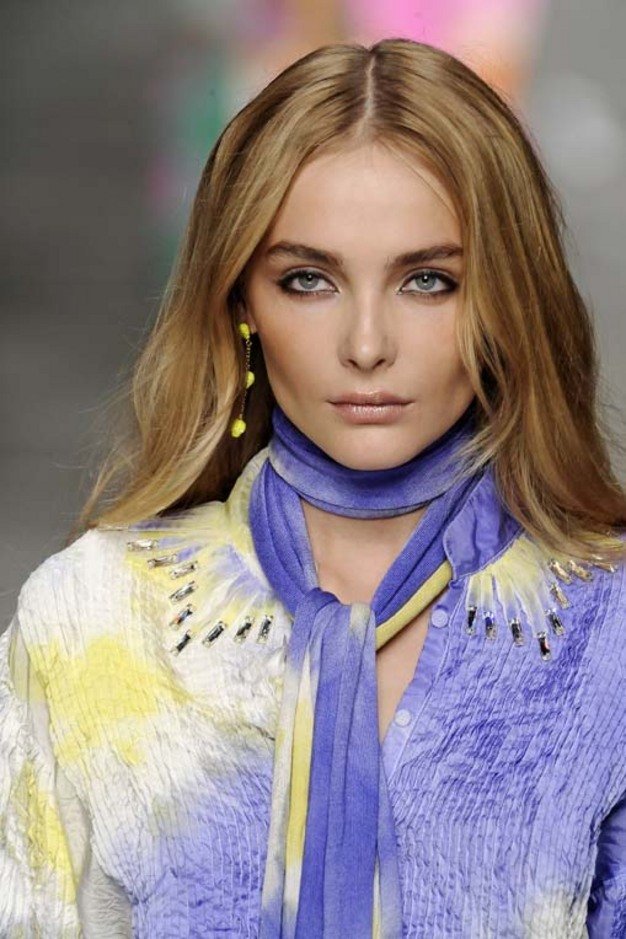
Snejana Onopka influencer: Blumarine runway portrait, long blonde centre-parted hair, purple and yellow scarf
Influencers

Snejana Onopka: Ukrainian Model and Influencer’s Career

The Snejana Onopka influencer story begins long before social media turned models into daily content creators. Onopka built her influence the older way: through runways, advertising campaigns and magazine covers that travelled far beyond Ukraine. Born in Severodonetsk and discovered as a teenager in Kyiv, she became one of the most recognisable Ukrainian faces in international fashion in the mid-2000s. Her breakthrough came through the photographer Steven Meisel, whose Prada and Dolce & Gabbana campaigns and two Italian Vogue covers introduced her to designers, editors and casting directors across New York, Milan and Paris. What followed was a career shaped by major houses, long-lasting creative partnerships and, later, a quieter but still visible presence in fashion and art projects. The images in this article are AI-generated illustrations, labelled as such. Sources: Wikipedia records that Onopka was born in Severodonetsk on 15 December 1986, was spotted by a foreign scout at 15, and was photographed by Steven Meisel for Prada and Dolce & Gabbana in 2005, with two Vogue Italia covers. Snejana Onopka Influencer Roots: From Severodonetsk to Kyiv Snejana Onopka was born on 15 December 1986 in Severodonetsk, in what was then the Ukrainian Soviet Socialist Republic. Severodonetsk, in eastern Ukraine, was far from the fashion capitals where she would later work, and that distance makes the next step in her story important. In 2001, she moved to Kyiv, the Ukrainian capital. While living there, she was spotted by a foreign scout at the age of 15, and that meeting began her career as a model. The four years between that discovery and her major breakthrough in 2005 are not filled in by the same kind of detailed public record. The 2005 Breakthrough: Steven Meisel, Prada and Two Vogue Italia Covers In 2005, Steven Meisel photographed Onopka for the Prada and Dolce & Gabbana fall advertising campaigns. The campaigns mattered for a practical reason: Meisel was, and remains, one of the most influential fashion photographers in the world, and a campaign photographed by him is seen by every major casting director, editor and designer. Sources describing this period say the work sparked a booking frenzy, and the sequence that followed supports that description. Meisel then photographed her for two covers of Italian Vogue. Two covers of the same edition in a short period are a strong signal in fashion publishing. A single cover can be a moment. Two covers suggest that an editor and a photographer both wanted to return to the same face, and that the reader response justified doing so. For Onopka, the Italian Vogue covers became the foundation of her reputation. They also gave her a visual identity that was distinct from many of her contemporaries: a classic, studio-based elegance rather than a purely commercial or purely street-cast look. Contemporary coverage later compared her old-school glamour to earlier screen and runway figures, including Nadja Auermann, and noted a resemblance in spirit to Greta Garbo. Those comparisons are useful not as measurements of beauty, but as evidence of how editors positioned her — as a throwback glamour figure in an era that also celebrated a very different, more casual model type. A Runway Debut That Opened and Closed Shows Onopka’s runway debut came in September 2005, and it was unusually strong. She closed the Marc by Marc Jacobs show in New York. In the same season, she opened the Dolce & Gabbana show and the Karl Lagerfeld show. Opening and closing are the two most visible positions in a fashion show. The opening look sets the tone for the collection, and the closing look is the last image the audience takes away. A new model entrusted with both, for different houses, in her debut season, had clearly made an impression in castings and in campaign work before the shows began. That debut also set a pattern. She was not limited to one city or one kind of house. New York, Milan and Paris all became working cities for her, and her runway list grew to include Chanel, Gucci, Anna Sui, Christian Dior, Versace, Balmain, Dolce & Gabbana, Marc Jacobs and Isabel Marant. Other documented runway credits include Valentino, Giorgio Armani, Miu Miu, Lanvin, Yves Saint Laurent, Louis Vuitton, Chloé, Alexander McQueen and Givenchy. The breadth of that list is the point. Some models become closely associated with one aesthetic. Onopka worked across romantic, minimal, classical and avant-garde presentations, which is one reason her name appears in so many different show archives from the same period. The 2006 Season: Lanvin, Louis Vuitton and Yves Saint Laurent If 2005 was the breakthrough, 2006 was the consolidation. In that year, Meisel photographed her again for Calvin Klein and Dolce & Gabbana campaigns. Mert Alas and Marcus Piggott photographed her for a Louis Vuitton campaign, and Juergen Teller photographed her for Yves Saint Laurent. Each of those photographers brought a different visual language. Meisel’s work was polished and studio-driven. Mert and Marcus were known for glossy, high-impact imagery. Teller’s work was rawer and more direct. That Onopka could move between those approaches in a single year says something about her range as a photographic model, not just her runway walk. In the same year, she became the face of Lanvin, replacing Lily Donaldson. Becoming the face of a house is different from walking in its show or appearing in one editorial. It means the brand chose her image to represent a season, and that image was then reproduced in stores, magazines and advertising around the world. For a Ukrainian model who had been discovered only five years earlier, the Lanvin role marked a move from promising newcomer to established campaign face. Her runway work in early 2006 reinforced that status. In February 2006, she opened the fall Dolce & Gabbana show in Milan, returning to a house that had been central to her debut. She also appeared in French Vogue editorials photographed by Mario Sorrenti and Peter Lindbergh, and in a Vogue editorial with Sasha Pivovarova photographed by Meisel. The combination […]

Snejana Onopka: Ukrainian Model and Influencer’s Career Read Post »

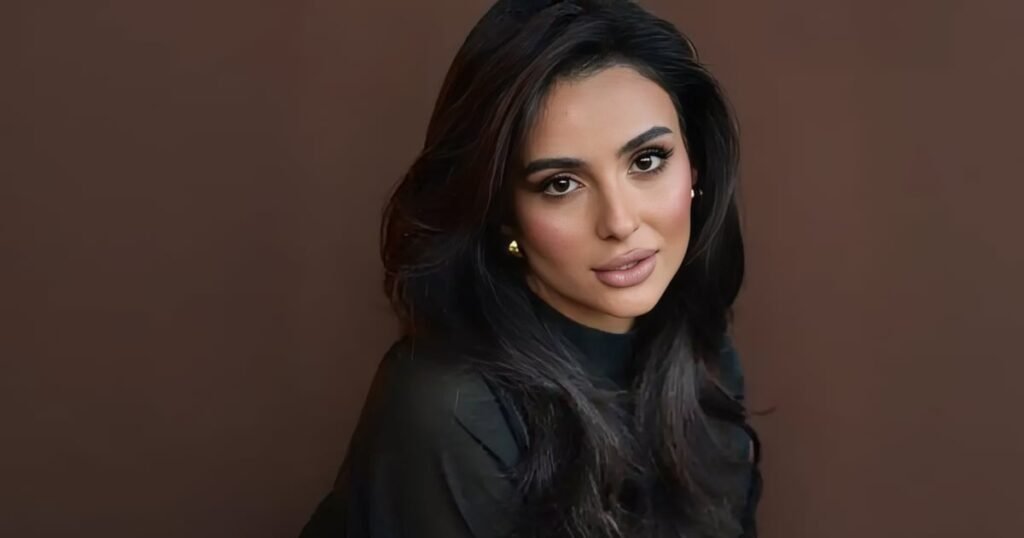
Anna Trincher influencer: portrait with long dark hair, dark top, brown background
Influencers

Anna Trincher: Singer, Actress, and Ukrainian Influencer’s Story

This Anna Trincher influencer story begins long before social media made her a daily presence for Ukrainian audiences. Anna Trincher, born Anna Leonidivna Trincher on 3 August 2001 in Kyiv, Ukraine, built her public life in stages: first as a child singer in choirs and competitions, then as a national television contestant, then as a television actress, and only then as a creator whose songs, videos, and everyday posts travel together. That order matters, because it explains why her online influence does not rest on a single viral clip. It rests on a career that audiences could already follow on television and on stage, and on music that listeners could find again after each broadcast. Her work spans Ukrainian-language pop, acting in a widely watched school drama, voice work for film, and a social media presence centred on singing videos, dance clips, and personal updates. Some images in this article are AI-generated illustrations, not photographs of Trincher; they are labelled as such. Source: Wikipedia records that Trincher, born 3 August 2001, won Ukraine’s Junior Eurovision national final on 22 August 2015 with ‘Pochny z sebe’ and finished 11th with 38 points in Sofia, and that she was the second runner-up in the eighth season of The Voice of Ukraine in 2018. Early Life and Musical Training in Kyiv Anna Trincher was born in Kyiv, where she spent her childhood surrounded by the city’s concert and stage culture. Biographical accounts describe her mother taking her to concerts in the capital, an early exposure that left a lasting impression on a child who already loved performing. Rather than arriving at fame through one audition, she entered music through the slower route of training: she sang in a choir as a young child, and she later studied at a music school, beginning with the bandura, the traditional Ukrainian string instrument, before piano was added to her studies. That combination — a folk instrument, keyboard training, and choral singing — gave her an unusual foundation for a pop singer. Choral work trains blend, timing, and listening to other voices; bandura study trains independence and accompaniment; piano study trains harmony and song structure. None of those skills guarantees a recording career, but together they explain the steadiness of her later live performances, where she has often been presented as a singer who can carry a song without relying on studio effects alone. Accounts of her childhood also describe her writing songs early, a habit that would become important a decade later when she was credited as a co-composer of her Junior Eurovision entry. Again, the detail should not be overstated: early songwriting by a school-age musician is common, and it does not by itself prove professional authorship. What it does show is a performer whose interest was not limited to singing other people’s material. She was learning how songs are put together at the same time as she was learning how to perform them, and that dual interest has stayed visible throughout her catalogue, where personal, romantic, and reflective lyrics sit alongside straightforward pop hooks. Her formal acting education followed a parallel track. While still at school, she studied acting through the California branch of the New York Film Academy, and after finishing school in 2018 she entered the acting faculty of Kyiv National University of Culture and Arts, known by its Ukrainian abbreviation KNUKI. The sequence is worth noting because her best-known acting role arrived before that university place: she was cast in a television drama in the spring of 2017, while her formal higher education in acting was still ahead of her. In other words, her screen career began with practical casting and on-set experience, and her university study then formalised training she was already using at work. First Competitions and The Voice Kids Ukraine Before most Ukrainian viewers knew her name, Trincher had already entered a series of musical competitions and festivals. Sources list the “Nightingale of Ukraine” competition, the “My Chance” online competition, the musical division of the International Turkish Olympiad, and “New Wave” in 2015 among her early competitive experiences. These were not all the same kind of event: some were festival stages, some were online contests, and some were international gatherings where young singers represented their countries or schools. Taken together, they gave her something that a single television appearance cannot: repeated experience of preparing a song, performing it for judges and strangers, and returning to do it again. That apprenticeship is a recurring pattern in the careers of Ukrainian child performers of her generation, for whom competitions were both training grounds and shop windows. Her first major television breakthrough came on the second season of The Voice Kids Ukraine, known in Ukrainian as “Holos. Dity”. She was thirteen, from Kyiv, and she sang “Let It Be” at her blind audition, an episode broadcast in February 2015 in the season’s listings. Two coaches turned for her — Tina Karol and Natalia Mogilevska — and she was mentored by Natalia Mogilevska. The choice of a Beatles standard for a blind audition was a deliberate test of tone and control: the song leaves little room to hide behind production, and its long, exposed lines reward a singer who can hold pitch and phrasing without forcing the voice. For a thirteen-year-old, the performance functioned as an introduction to a national audience that had not seen her festival work, and it placed her inside the professional television system that would shape the next stage of her career. That system also gave her a second, narrower opportunity in the Junior Eurovision selection process. She had already attempted to represent Ukraine at Junior Eurovision in 2014 with the song “Nebo znaye”, translated as “Heaven Knows”, placing thirteenth in that year’s attempt. A thirteenth-place finish in a national selection is easy to overlook, but it is important for understanding her persistence: she did not win a place at the first attempt, and she returned the following year with different material. That return, rather than the […]

Anna Trincher: Singer, Actress, and Ukrainian Influencer’s Story Read Post »

Yuriy Horbunov biography: Horbunov in a light-blue suit over a white T-shirt
TV and Reality Stars

Yuriy Horbunov: Holos Krainy Host and Ukrainian TV Presenter

This Yuriy Horbunov biography follows a Ukrainian television presenter, actor and producer whose name has become closely linked with the 1+1 channel and with Holos Krainy, the Ukrainian version of The Voice. Born on 24 August 1970 in Novyi Rozdil, Ukraine, Horbunov first trained as a stage actor before moving into television, where he built a long career as a live-show host. He is best known today as one of the main presenters of Holos Krainy, a role he has held since the show’s fifth season, and as the long-serving host of the Ukrainian version of Dancing with the Stars. Alongside presenting, he has worked as a film producer and screen actor, most notably in the popular Crazy Wedding comedy films, in which he also plays the master of ceremonies Nazariy Zapukhlyak. Those different parts of his career fit together through presenting, acting and producing, and he remains one of the most recognisable faces on Ukrainian television. The images in this article are AI-generated illustrations, labelled as such. The biographical details are drawn from Wikipedia, which records Horbunov’s birth on 24 August 1970 in Novyi Rozdil, his graduation from the Karpenko-Kary Kyiv Theater Institute in 1992, and his move to the 1+1 channel in June 2006. Yuriy Horbunov Biography: Early Life and Theatre Training Yuriy Horbunov was born on 24 August 1970 in Novyi Rozdil, in what was then the Ukrainian SSR. He grew up in western Ukraine and was educated in Ivano-Frankivsk, a city that shaped his early interests before he left for Kyiv to study acting. In his own account of his education, given in an interview about 1+1 presenters and their training, he said he graduated from the acting department of the Karpenko-Kary Kyiv Theater Institute. That detail matters because it explains much of his later screen manner: he did not begin as a journalist or a newsreader, but as a trained actor who learned timing, voice and stage presence before he ever faced a television camera. Horbunov has described his route into acting as accidental rather than planned. He has said that he had not dreamed of becoming an artist, had not performed on stage at school, and had not taken part in drama clubs before applying. His mother, he recalled, read a newspaper announcement that a drama theatre was inviting young people to audition for admission to the theatre institute. At that point he had not entered the Ivano-Frankivsk Pedagogical Institute, and he had trained for work as a driver, including as a fuel and oil tanker driver. The theatre audition therefore opened a door he had not been looking for, and it changed the direction of his working life. After his theatre training, Horbunov worked as a stage actor. That stage background gave him two skills that later proved central to live television: the ability to hold an audience’s attention without a break, and the ability to recover smoothly when something unexpected happens. Live talent shows depend on both. A presenter must fill a pause, calm a nervous contestant, hand over to a coach or a judge, and keep the broadcast moving, often without a script for every second. Horbunov’s early career gave him practice in exactly that kind of unscripted, in-the-moment performance, even though the setting was a theatre rather than a studio. Yuriy Horbunov Biography: The Move Into Television Horbunov moved into television in the late 1990s, a period when Ukrainian commercial television was expanding and looking for presenters who could carry entertainment formats. His early television work included hosting on UT-1 and on Novyi Kanal, where he presented entertainment programmes. Those early jobs were important because they moved him from acting in a scripted role to presenting as himself. A presenter, unlike an actor, is judged on personality, warmth and reliability week after week, and Horbunov began to build a public identity in that role. In June 2006 he joined the 1+1 channel, a move that became the turning point of his career. At 1+1 he became a host of the morning show Breakfast with 1+1, known in Ukrainian as Snidanok z 1+1, alongside Marichka Padalko. Morning television is a demanding format: it requires energy at the start of the day, the ability to switch between light items and serious news, and a steady, reassuring presence for viewers who watch while preparing for work or school. Horbunov’s work on the morning show made him a daily presence in Ukrainian homes and established him as a 1+1 presenter rather than a guest or occasional host. The same year, 2006, also brought him to the show that would define his early 1+1 career. Tantsi z zirkamy, the Ukrainian version of Dancing with the Stars, premiered on 1+1 on 7 October 2006. Horbunov was one of its first hosts, presenting alongside singer Tina Karol. The pairing of an experienced television presenter with a popular singer gave the show both structure and star appeal, and it set a pattern Horbunov would repeat on Holos Krainy: working alongside a well-known singer or presenter while keeping the live broadcast on track. Becoming the Face of Holos Krainy Holos Krainy, whose name translates as The Voice of the Country, premiered on 1+1 on 22 May 2011. It is part of the international The Voice franchise, created by Dutch television producer John de Mol and based on the singing competition first launched in the Netherlands as The Voice of Holland. The Ukrainian version was the second international adaptation of the format, after the American version. In the format, coaches listen to singers without seeing them in the blind auditions, then work with their teams through later rounds towards live finals. The presenter sits at the centre of that process, introducing singers, talking to coaches, and guiding viewers through results. Horbunov joined Holos Krainy as a presenter in its fifth season, which ran from 8 March to 7 June 2015. In that season he presented alongside Olha Freymut, and the winning coach was Tina Karol, with Anton Kopityn winning […]

Yuriy Horbunov: Holos Krainy Host and Ukrainian TV Presenter Read Post »

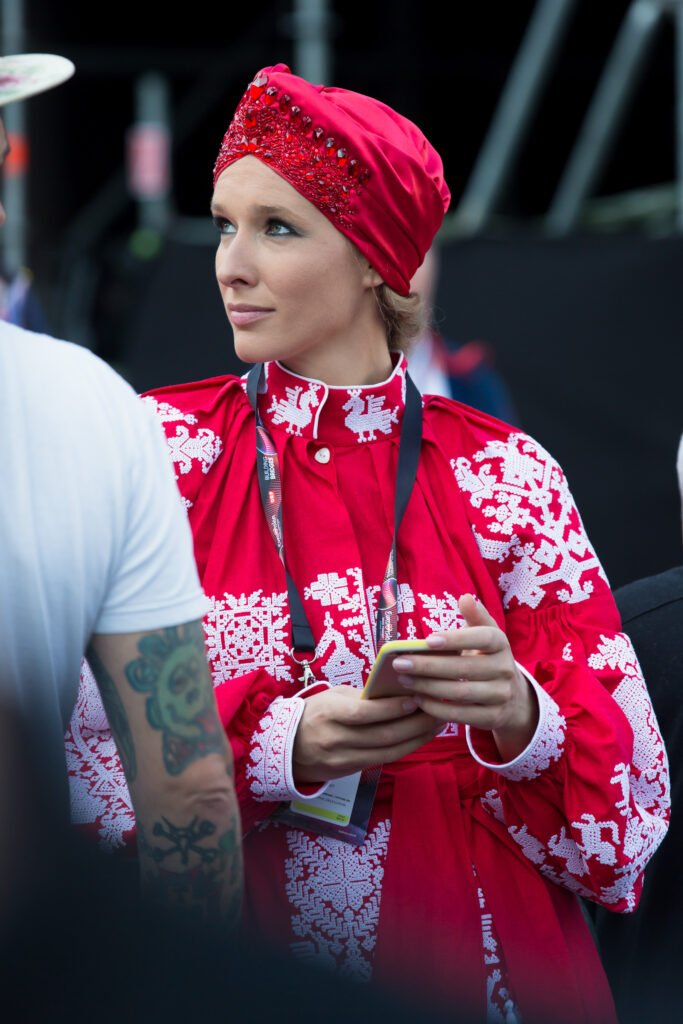
Kateryna Osadcha biography
TV and Reality Stars

Kateryna Osadcha: Holos Krainy Presenter and Her TV Career

Osadcha’s career began far from a television studio, on modelling runways and photo shoots abroad, and settled into one of the most recognisable presenting jobs in Ukraine. Born in Kyiv in 1983, Osadcha spent her teenage years working as a model in Japan and Western Europe, returned home at eighteen, retrained her voice and her professional direction, and then built a long television life around two very different kinds of programme: the society interview show Social Life and the singing competition Holos Krainy, known in English as The Voice of Ukraine. She is a presenter, not a coach or a judge on Holos Krainy. Coaches choose and mentor singers; Osadcha holds the live show together, introduces performers, speaks to coaches and contestants, and gives the audience a steady point of contact as the competition moves from auditions to the final. Alongside that flagship role, she has presented the children’s version of the format, served as a jury member on a modelling competition, co-hosted a major charity telethon, and put her name to foundation work aimed at helping teenagers think seriously about their future professions. Kateryna Osadcha Biography: Early Life in Kyiv Kateryna Osadcha was born on 12 September 1983 in Kyiv. Her father, Oleksandr Osadchyi, was the director of the Kyivprylad factory, and her mother was a homemaker. She also has a younger brother. The family background, as described in published biographical accounts, was comfortable and industrious rather than show-business connected, and her earliest public activities were not in front of a camera at all. At school she took music lessons and danced, becoming a member of the choreographic ensemble known as Little Falcons. That combination of music and movement would later look like an early rehearsal for a career spent on stages and in studios, but at the time it was simply the extracurricular life of a Kyiv schoolgirl with energy, discipline and an interest in performance. Her schooling itself was interrupted, and eventually reshaped, by work. Modelling arrived early and demanded travel, long days and time away from the classroom. Osadcha therefore completed her final school examinations externally, a practical solution that allowed her to keep working while still finishing her education. She did not drift into modelling as an adult after university; she entered it as a teenager and had to organise her education around it. The same practical approach shaped a later decision: when she returned to Ukraine and moved towards journalism, she studied in absentia at the Faculty of History of the University of Kyiv, fitting academic study around adult work and family life rather than following a conventional full-time student path. From Kyiv to Tokyo: The Modelling Years, Ages Thirteen to Eighteen Osadcha began her professional modelling career at thirteen, after graduating from the Bagira Agency’s modelling school in Kyiv. At fourteen, having just finished ninth grade, she travelled to Tokyo for three months of filming and photo work. Later assignments took her to Germany, England and France. She was not working only in one market or one fashion capital, but moving between countries, languages and production teams while still a teenager. That experience gave her a working familiarity with cameras, directors, styling and the pace of a shoot, and it also gave her an early lesson in adaptability: a model on location must understand instructions quickly, present herself consistently, and remain composed under pressure. By eighteen, however, she had decided that modelling would not be her adult career. She finished her modelling work and returned to live in Ukraine. The decision is often presented as a clean break, but in practice the skills carried over. A presenter, like a model, works to camera, understands framing and timing, and must be comfortable being looked at while doing a job. What changed was the substance of the work. Instead of embodying someone else’s visual idea for a shoot, she would have to ask questions, listen to answers, hold a conversation and carry information to an audience. That shift from image to language is the central turn in her biography, and the next phase of her life was spent making it possible. A New Voice: Language Training, Motherhood and a History Degree Osadcha’s return to Ukraine coincided with major personal change. Four months after the birth of her first child, she began working with a teacher to practise speech and diction, because her knowledge of the Ukrainian language was, by her own account in biographical sources, not strong enough for the broadcasting career she wanted. That runs against a common assumption that a successful presenter must have started out fluent and confident in the broadcast language. In Osadcha’s case, fluency was built deliberately, through tuition, after she had already become a mother and after she had spent formative years working largely outside Ukraine. Her journalism education followed a similarly practical route. She graduated in absentia from the Faculty of History of the University of Kyiv, a background that gave her a general humanities education rather than a narrow vocational media degree. Her first experience of television journalism came as a freelance correspondent for the First National Channel, which was renamed UA:First in 2015. Freelance correspondence is unglamorous, foundational work: researching stories, making contacts, turning up, asking questions and filing material to a deadline. For a former model with a newly trained broadcast voice, it was the place where presenting stopped being an ambition and became a craft learned on assignment. Kateryna Osadcha Biography: The Social Life Years In 2005, Osadcha passed a casting and became host of the project Social Life on the Tonis channel. In 2007 she became host of the programme Social Life at the First National channel, and in August 2008 the programme began airing on 1+1, the channel with which her name would become most closely associated. The moves between channels are not mere administrative detail. They show a programme finding its audience and its home, and a presenter moving with it, carrying the format’s identity from one broadcaster to another […]

Kateryna Osadcha: Holos Krainy Presenter and Her TV Career Read Post »

Scroll to Top