Author name: Mughal Waleed

Mughal Waleed is the owner and author of EJOBARY, an entertainment information website about Ukrainian celebrities. He started EJOBARY to give English-language readers a clear guide to Ukrainian entertainment. From Pakistan, he writes biographical profiles and career summaries of Ukrainian actors, singers, TV stars, and influencers, covering their public work in film, television, music, and online media. His articles are built from named public sources, checked against more than one source, and reviewed by him before publication, as described in the Editorial Policy. He welcomes corrections and suggestions from readers. To get in touch, please use the Contact page.

Jerry Heil biography
Singers and Music Artists

Jerry Heil — Ukrainian Singer and Eurovision 2024 Star

Jerry Heil is a Ukrainian singer and songwriter who reached a European audience without leaving her own language behind. She first won attention on YouTube, then entered Ukraine’s national selection three times, and finished third at Eurovision in 2024 with alyona alyona. In 2026 she returned to Vidbir and finished third again. As of November 2026, this page follows that path, from a YouTube channel in 2012 to a Eurovision final, and points new listeners to the recordings that show her range best. Quick facts Name Yana Oleksandrivna Shemaieva, known as Jerry Heil Born 21 October 1995, Vasylkiv, Kyiv Oblast Known for Eurovision 2024, “Teresa & Maria”, Vidbir 2026 Main works Ya yana, Mandaryny i oleni, Arkhetypy, Teresa & Maria A singer from Vasylkiv Yana Oleksandrivna Shemaieva was born on 21 October 1995 in Vasylkiv, in Kyiv Oblast, Ukraine. Vasylkiv is a city outside Kyiv, and her early years were therefore close to the capital without being in it. She studied at the R. Glier Kyiv Institute of Music and the Kyiv Conservatory, and that training gave her a vocal control that shows in her later work: a voice that can move from a quiet folk line to a full pop chorus without strain. The stage name Jerry Heil is a product of her online years. She built her first audience on the internet, not on television, and the name travelled with her as she moved from covers to original songs. A name chosen online is a small thing, and it also says something about how her career was built: from the audience up, rather than from a label down. YouTube beginnings in 2012 Heil launched her YouTube channel in 2012, publishing vlogs and musical covers. The covers included Ukrainian and international songs, and they gave her a direct relationship with listeners: a comment, a request, a new cover the next week. YouTube shaped her audience in a way television alone rarely does, because the audience could talk back. YouTube alone does not explain her career. Many singers build followings online and never make the leap to a professional stage. Heil did, because she kept writing, kept recording, and kept entering competitions that tested her in front of judges and a live audience. Professional debut and the 2019 breakthrough Heil began her professional music career in 2017, releasing her debut extended play, De mii dim, on the Vidlik Records label. The following year she auditioned for X-Factor Ukraine, in 2018. A television audition is a different test from a YouTube cover: the singer is judged in one take, by professionals, with cameras close. Heil did not win X-Factor, and the audition still mattered, because it put her in front of a national audience for the first time. In 2019, Heil released the single “Okhrana otmiena”, written in Ukrainian as Okhrana, Otmena, which became her breakthrough. Her debut studio album, Ya yana, translated as I’m Yana, followed in October 2019. The album’s title is a statement of identity: a singer who had built an audience online was now presenting herself in her own name, in Ukrainian, with songs she had written. Editor’s take: the 2019 album is the most useful place to start with Heil, more useful than any single. An album called I’m Yana, released by a singer whose stage name is Jerry Heil, is a singer telling the listener who she is when the performance stops. The breakthrough single got her noticed. The album is where she explained herself. Vidbir attempts: Vegan, When God Shut the Door, and a catalogue Heil first took part in Vidbir, Ukraine’s national selection for the Eurovision Song Contest, in 2020, with the song “Vegan”, finishing sixth. She returned for the Eurovision 2023 cycle, taking part in December 2022 with “When God Shut the Door”, and finished third in that selection. Sixth, then third: each entry was a different song, a different sound, and a different result. Between those attempts, Heil kept releasing music. Her second studio album, Mandaryny i oleni, came out in 2021. In 2022 she released the joint EP Dai Boh with alyona alyona. That collaboration predates their Eurovision partnership by two years, and it matters: the two singers had already worked together, and knew each other’s voices, before they ever stood on a Eurovision stage together. The partnership with alyona alyona The partnership between Jerry Heil and rapper alyona alyona, whose real name is Aliona Olehivna Savranenko, works because the two voices do different things. Heil brings melody, vocal range and a pop sensibility. Alyona alyona brings rap, rhythm and a direct, spoken delivery. Put together, they cover more ground than either could alone. That pairing also shows a different kind of ambition from solo stardom alone. A solo artist who shares a stage, a song and a result with another artist is choosing collaboration over control, and the result, in this case, was the biggest stage of both their careers. Teresa and Maria, and third place in Malmö “Teresa and Maria” was released on 11 January 2024 through Enko Music, and it represented Ukraine at Eurovision 2024 in Malmö, Sweden. The title refers to Mother Teresa and the Virgin Mary, but the performers have repeatedly explained that the song is about the strength of women more broadly, not only about two figures. It was performed in Ukrainian and English. Heil and alyona alyona won Vidbir 2024, and at Eurovision they qualified from the first semi-final on 7 May 2024. In the grand final they finished third. Compared with Jamala, who won in 2016 with a song about history, and Ruslana, who won in 2004 with energy and drumming, the duo’s third place sits in the middle of Ukraine’s Eurovision story: a strong result for a song in Ukrainian, performed by a duo that had built its partnership over two years. Heil’s recognition also includes the Public Choice award at the Music Moves Europe Awards in 2023, which honours emerging European artists. The award came before Eurovision, and it […]

Jerry Heil — Ukrainian Singer and Eurovision 2024 Star Read Post »
Vera Farmiga biography
Actresses

Vera Farmiga — Ukrainian-American Actress, from Bates Motel to The Conjuring

Vera Farmiga is an American actress whose first language was Ukrainian. Born in Clifton, New Jersey, in 1973 to Ukrainian parents, she grew up speaking Ukrainian at home and did not learn English until kindergarten. That upbringing shaped an actor known for accents, discipline and quiet intensity. Her best-known roles span an Academy Award-nominated turn in Up in the Air, the horror franchise The Conjuring as Lorraine Warren, and five seasons as Norma Bates in Bates Motel. As of November 2026, this page follows her career in order, from a Ukrainian-American childhood through the stage, the breakthrough films, a directing debut and her most recent work, and points new viewers to three performances that show her range best. Quick facts Name Vera Ann Farmiga Born 6 August 1973, Clifton, New Jersey, USA Known for Lorraine Warren in The Conjuring films; Norma Bates in Bates Motel; Alex Goran in Up in the Air Main works Down to the Bone (2004); The Departed (2006); Up in the Air (2009); Higher Ground (2011); The Conjuring (2013–2025); Bates Motel (2013–2017) A Ukrainian childhood in New Jersey Vera Ann Farmiga was born on 6 August 1973 in Clifton, New Jersey, the second of seven children of Ukrainian parents. Her father, Mykhailo Farmiga, worked as a systems analyst and later as a landscaper. Her mother, Lubomyra Spas, was a schoolteacher. The family lived first in Irvington, New Jersey, in a close Ukrainian-American community where Ukrainian was the language of home, church and school. Farmiga did not speak English until kindergarten, at six. She attended St. John the Baptist Ukrainian Catholic School in Newark and toured with the Ukrainian folk-dance ensemble Syzokryli. Her maternal grandparents, Nadia and Theodor Spas, had met in a displaced persons camp in Karlsfeld, Germany, during the Second World War. When she was twelve, the family moved to Whitehouse Station, New Jersey. The move took her out of the Ukrainian enclave and into a wider American world, but the first language stayed with her. Farmiga has said the upbringing gave her two things: discipline, from a household where hard work was not optional, and an ear. A child who learns a second language at six listens to sound in a way other actors have to be taught. That ear shows in her accents, in her timing, and in the way she can hold a long scene without raising her voice. Stage first, then the screen Farmiga found acting by accident. At Hunterdon Central Regional High School, an injury sidelined her from varsity soccer, and a teacher suggested she try the school play. She took the part of Lady Margaret in the musical The Vampire and stayed. She graduated in 1991 and studied theatre at Syracuse University, graduating in 1995. In her final year, she played Nina Zarechnaya in The Seagull at the Kennedy Center American College Theater Festival and took the top prize, with a drama professor crediting her fourth-act performance. Her first professional work was on stage: an understudy role in the original Broadway production of Taking Sides in 1996, then Miranda in The Tempest at the American Conservatory Theater and Second-Hand Smoke off-Broadway in 1997. Television came in the same years — a supporting part in the CBS film Rose Hill (1997) and the Fox adventure series Roar (1997), opposite a young Heath Ledger. The early film roles were supporting parts, too: Return to Paradise (1998), The Opportunists (2000), Autumn in New York (2000), 15 Minutes (2001) and the Macedonian film Dust (2001). Compare her start with Milla Jovovich’s. Jovovich entered the camera’s eye at eleven, through fashion, and built a film career on big swings. Farmiga entered through the stage, at twenty-three, with a degree and a festival prize. The difference shows in their acting: Jovovich performs with her body, Farmiga with stillness and voice. Breakthrough: Down to the Bone, The Departed and Up in the Air The turning point came in 2004 with Down to the Bone, a small independent drama in which she played Irene, a working mother fighting a drug habit. The role earned her Best Actress awards from the Los Angeles Film Critics Association and the Sundance and Marrakech film festivals. Critics called the performance the year’s discovery. The same year she played Jocelyne Jordan in the political thriller The Manchurian Candidate. Two years later came The Departed (2006), Martin Scorsese’s crime drama, in which she played Madolyn Madden, a police psychiatrist caught between two men living double lives. She was the film’s only substantial female role, in a cast of men shouting and lying for a living, and she held the centre without shouting at all. Joshua (2007), Orphan (2009) and The Boy in the Striped Pyjamas (2008) followed, the last earning her Best Actress at the British Independent Film Awards. Her most widely recognised film performance came in 2009, in Up in the Air, Jason Reitman’s comedy-drama about a man who fires people for a living. Farmiga played Alex Goran, a frequent flyer who matches George Clooney’s Ryan Bingham mile for mile and refuses to be his happy ending. The performance brought an Academy Award nomination for Best Supporting Actress, plus BAFTA, Golden Globe and Screen Actors Guild nominations. She matches Clooney’s cool without copying it. The film works because she never lets Alex become a fantasy. Higher Ground: stepping behind the camera In 2011 Farmiga made her directorial debut with Higher Ground, in which she also starred as Corinne Walker, a woman whose Christian faith frays as her life changes. She adapted the film with Tim Metcalfe from Carolyn S. Briggs’s 2002 memoir This Dark World: A Memoir of Salvation Found and Lost. The film premiered at the Sundance Film Festival in January 2011, was nominated for the Grand Jury Prize, and was released in the United States in August 2011 by Sony Pictures Classics. Higher Ground is a family film in the literal sense. Her younger sister Taissa played Corinne as a teenager, and her husband, musician and actor Renn Hawley, […]

Vera Farmiga — Ukrainian-American Actress, from Bates Motel to The Conjuring Read Post »

Valentyn Vasyanovych For Victory film
Actors

Valentyn Vasyanovych: Director-Actor Behind For Victory!

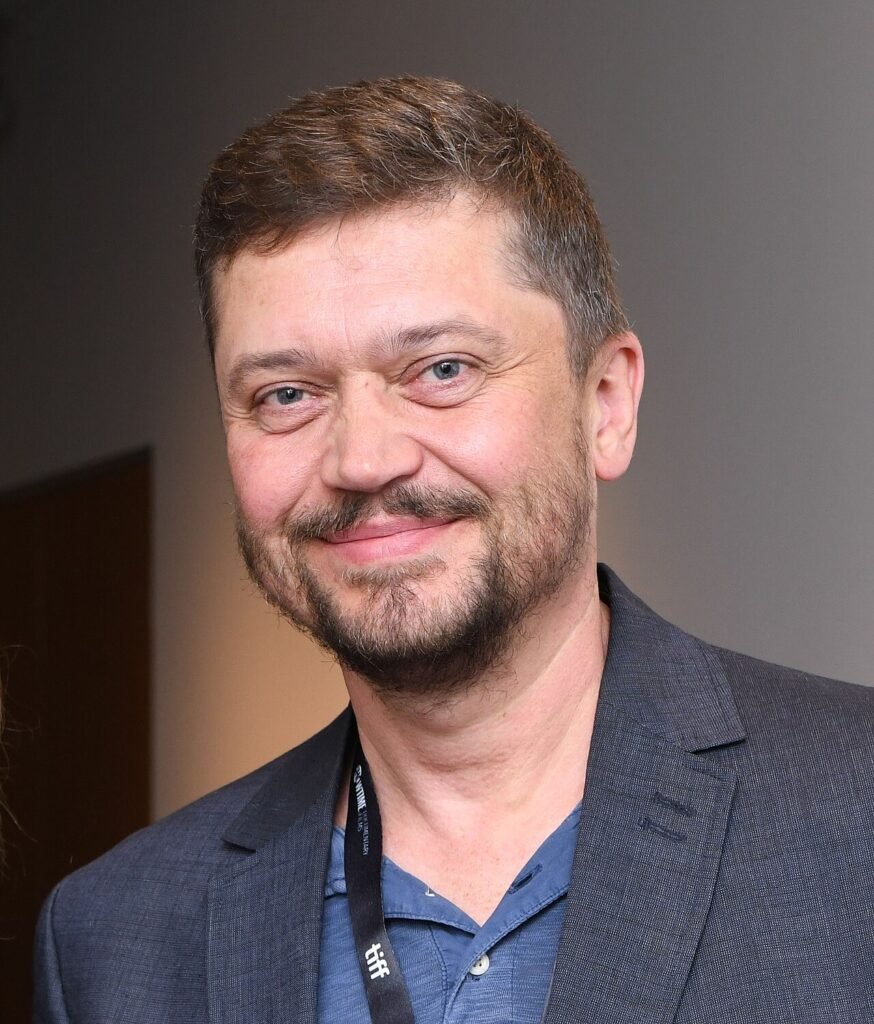
Valentyn Vasyanovych For Victory film work marks a turning point in a career built behind the camera. For years, Vasyanovych was known first as a cinematographer and director whose fixed camera watched war and its aftermath without rushing to explain them. In To the Victory! — released and discussed in English under titles including For Victory! — he steps into the centre of the frame himself, playing a filmmaker who stays in Kyiv while his wife and daughter build a new life in Vienna. The film is not a conventional war drama. It imagines a time after the fighting has formally ended and asks a quieter, harder question: what happens to families, friendships and art when the war is over on paper but not in people’s lives? That question has shaped Vasyanovych’s films for more than a decade. His best-known works before this one, Atlantis (2019) and Reflection (2021), followed a former soldier and then a surgeon trying to live after violence. For Victory! completes that arc from a different angle. Its central figure is not a soldier returning home, but an artist who never left and now finds that staying has its own cost. The film won the Platform Prize at the 2025 Toronto International Film Festival. That fact alone explains why the film has drawn attention beyond festival circles, but it does not explain its tone. Reviewers have described a work that is melancholy and funny at once, personal without claiming to be a straight autobiography, and formally disciplined in the way Vasyanovych’s cinema always is: long, static shots, conversations held in full, and silences left intact. From Zhytomyr to Kyiv: Training as a Cameraman and Documentary Maker Valentyn Mykolayovych Vasyanovych was born on 21 July 1971 in Zhytomyr, Ukraine. His training explains much of his later style. He studied cinematography and documentary filmmaking at the Karpenko-Kary National University of Theatre, Cinema and Television in Kyiv, an institution also listed in English sources as the Kyiv National University of Theatre, Cinema and Television. He then studied at the Andrzej Wajda Master School of Film Directing in Poland in 2006–2007, graduating from that programme in 2007. Festival biographies list diplomas in both camerawork and documentary direction, and that double training has stayed visible throughout his work: he thinks like a person who frames a shot and like a person who waits for real life to enter it. Documentary came first. His early short Keepsake (1998) was a documentary focused on his own family, made while he was living and working with other artists in Kyiv. Against the Sun (2004) brought him wider recognition as a filmmaker and won several awards, according to festival biographies. Those early works established a pattern that would recur: small-scale production, close observation, and a willingness to let a scene run longer than a conventional drama would allow. They also established his habit of working across roles. On his own films he has repeatedly served as director, writer, cinematographer and editor, and often as producer as well. That is not a vanity credit. In a cinema built on a fixed frame and precise duration, the person who decides where the camera sits, how long it stays there and where the cut falls is making the central artistic decisions, and Vasyanovych has kept those decisions in his own hands. The Tribe and the Education of a Visual Storyteller Before his own features reached major festivals, Vasyanovych made a decisive contribution to another director’s film. He was cinematographer and producer on Myroslav Slaboshpytskyi’s The Tribe (2014), a drama set in a school for deaf students and performed in sign language without spoken dialogue or subtitles. The film won the Grand Prize at Cannes Critics’ Week and was described in festival biographies as the most successful Ukrainian film in recent history at that time. For Vasyanovych, the experience mattered for craft as much as reputation. The Tribe demanded long, choreographed takes in which the camera had to follow complex action without cutting away from it, and it proved that an audience would stay with a film that refused conventional explanation. His own debut feature, Business as Usual (2012), had already shown that he was moving from documentary toward fiction. Festival filmographies also list Kredens (2013) and Crepuscule (2013, documentary) among his works from this period. The period shows a filmmaker learning to carry documentary patience into invented stories. He did not abandon observation when he began directing actors. He brought the same attention to rooms, workplaces and routines, and he began to use performers — including non-professional actors whose appearance and experience resembled their characters — as part of that observation rather than as decoration around a plot. Black Level: A Dialogue-Free Portrait of Midlife Crisis Black Level (2017) was the film in which Vasyanovych’s own directorial language became unmistakable to international audiences. It is a dialogue-free film about a wedding photographer in a midlife crisis, a man whose professional life consists of staging other people’s happiest days while his own life comes apart. The film follows him after the loss of his sick father and the breakdown of a relationship, and it does so largely without words, relying on gesture, routine and the camera’s steady gaze. It was awarded the FIPRESCI Prize at the Odesa International Film Festival, and it was selected as Ukraine’s entry for Best Foreign Language Film at the 90th Academy Awards, although it did not reach the December shortlist. The importance of Black Level goes beyond its festival record. It proved that Vasyanovych’s static camera was not only a way to film war. It could also film ordinary disappointment, loneliness and the small rituals by which a person tries to keep going. The wedding photographer photographs celebrations for a living, yet the film refuses to treat his crisis as a single dramatic event. Instead it accumulates mornings, jobs, phone calls and empty rooms until the audience understands his state without being told it. That method — accumulation rather than exposition — would […]

Valentyn Vasyanovych: Director-Actor Behind For Victory! Read Post »

Stanislav Boklan biography
Actors

Stanislav Boklan — Ukrainian Actor, from The Guide to Servant of the People

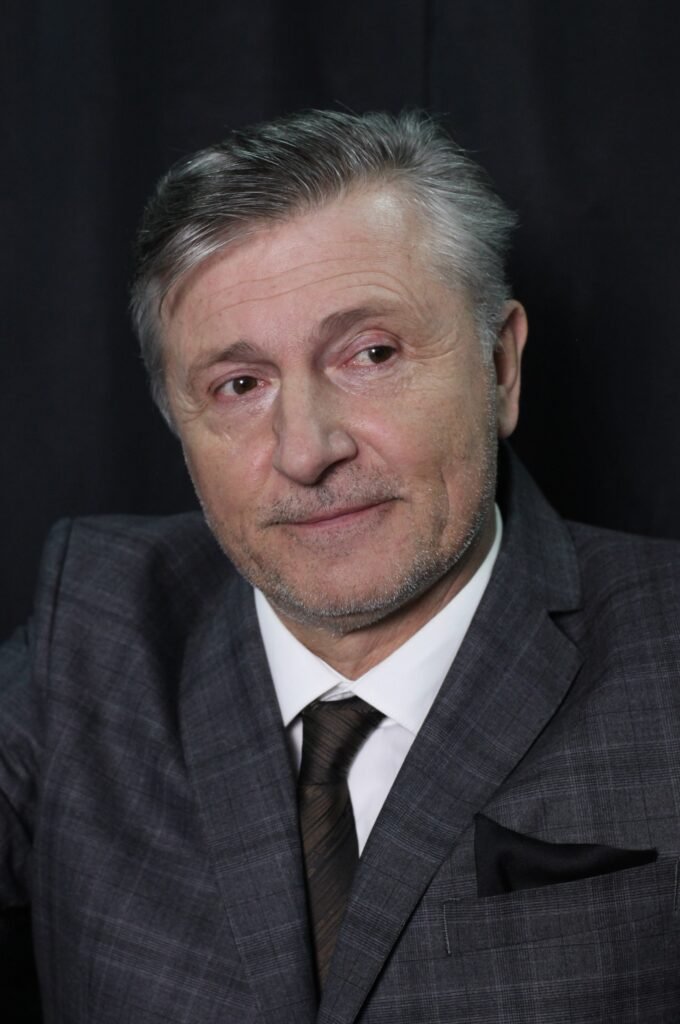
Stanislav Boklan spent a decade on stage in Mariupol and twenty-six years at the Kyiv Young Theatre before a film role in his fifties carried his name beyond Ukraine. International viewers know him as Yuriy Ivanovych Chuiko, the prime minister in Servant of the People, and Ukrainian cinema audiences remember him first as Ivan Kocherga, the blind kobzar in Oles Sanin’s The Guide (2014). Born on 12 January 1960 in Brusyliv, in the Zhytomyr region, he became a People’s Artist of Ukraine in 2016. As of November 2026, this page follows his career in order, from the stage in Mariupol and Kyiv through the film roles that made him famous, and points new viewers to the three performances that show his range best. Quick facts Name Stanislav Volodymyrovych Boklan Born 12 January 1960, Brusyliv, Zhytomyr region, Ukrainian SSR Known for Ivan Kocherga in The Guide; Yuriy Chuiko in Servant of the People; Ded in Papik Main works The Guide (2014); Servant of the People (2015–2019); Papik (2019–2021); Pulse (2021) Early life and training Stanislav Volodymyrovych Boklan was born on 12 January 1960 in Brusyliv, in the Zhytomyr region. His family moved to Kyiv, and he spent most of his childhood there. Before acting, he worked at Kyiv’s Kristall plant, measuring electrical parameters — a far cry from the stage, and a reminder that his route to theatre was not the usual one. When he first applied to the Kyiv National I. K. Karpenko-Kary Theatre, Cinema and Television University, he failed the entrance exams. He was told to return the following year, and when he did, he was admitted to the course of People’s Artist of Ukraine Boris Stavitsky. He graduated from the acting faculty in 1984. His student stage debut came in Orpheus Descends into Hell. The failure and the return are part of the story: Boklan’s career is a long build, not a lucky break. A decade in Mariupol After graduating in 1984, Boklan moved to Mariupol and joined the Donetsk Regional Russian Drama Theatre. He stayed for ten years, until 1994. Regional theatre is where actors learn to work: a company, a repertoire, an audience that comes back week after week. His roles in Mariupol included Arthur in Sławomir Mrożek’s Tango, Treplev in Chekhov’s The Seagull and Vincent in Ciao. The theatre was Russian-language, in a city that is now a symbol of the war. That is the setting of the first decade of his career, and it explains why his later, Ukrainian-language work carried weight. A decade in one company does something to an actor. It teaches ensemble playing, the habit of a new role every few months, and the discipline of a repertoire theatre. Boklan carried all three to Kyiv. Twenty-six years at the Kyiv Young Theatre In 1994 Boklan joined the Kyiv Academic Young Theatre, known in English as the Kyiv Young Theatre, and he stayed for twenty-six years, until early 2020. His roles there spanned the canon: Hamlet, Uncle Vanya, Don Juan, Hedda Gabler and Chasing Two Hares, alongside The Bus, Zoyka’s Apartment, Woyzeck, Lift, Steel Will, Athenian Evenings, Satisfaction, Torchalov, Round Dance of Love and The Fourth Sister. Two awards marked the period: the Kyiv Pectoral award for best male performance in 2002, for the Count in The Round Dance of Love, and an award at the Slavic Meetings festival in Chernihiv in 2004, for Tesman in Hedda Gabler. He left the Young Theatre in early 2020; the reason for the departure is not established in the sources. His return to the stage after that came as a guest rather than as a company member. In December 2024 the National Academic Drama Theatre named after Lesya Ukrainka invited him to take one of the leading roles in the premiere production of The Ferryman. The long stay at one theatre, and a guest return four years later, are the shape of a stage career built on patience rather than on headlines. The long road to the screen, and The Guide Boklan’s screen career began modestly and built slowly — one reason his later breakthroughs carry feeling. His earliest listed screen work dates to 1995, in small parts. Recognition on screen came in the early 2000s: Nikolai Nikolaenko in Alexander Muratov’s Provincial Novel, General Dubelt in Brotherhood, the plastic surgeon Ilya in Women’s Intuition 2, Antonov-Ovseenko in The Nine Lives of Nestor Makhno, the investigator Petrov in Blood Sisters (2005) and Pavel Barazi in Match (2012), the film about a football match in Kyiv during the Nazi occupation in 1942. The turning point was The Guide (2014), directed by Oles Sanin. Boklan played Ivan Kocherga, a blind kobzar — a travelling musician — in Soviet Ukraine in the early 1930s. An American engineer, Michael Shamrock, arrives in Kharkiv with his ten-year-old son Peter; when the father is killed, Peter escapes with Ivan, who guides him. The film’s cast included Jeff Burrell as Shamrock, Anton Sviatoslav Greene as Peter, and the singer Jamala as Olga. The relationship at the centre reverses the usual idea of who leads and who follows: the blind man guides the seeing boy. The Guide was selected as Ukraine’s entry for Best Foreign Language Film at the 87th Academy Awards, though it was not nominated. Boklan won the Golden Duke for Best Actor at the Odesa International Film Festival in 2014, and the main prize for best male role at the Universe Multicultural Film Festival in 2015. By March 2022 the film had screened across 600 cinemas in the United States. The Guide gave Boklan something no stage role could: a screen part in which his stillness does the work. Chuiko in Servant of the People If The Guide gave Boklan critical recognition, Servant of the People gave him a household name. In the political satire series, which ran from 2015 to 2019 in three seasons on 1+1, he played Yuriy Ivanovych Chuiko, the prime minister of Ukraine, opposite Volodymyr Zelenskyy as Vasyl Petrovych Holoborodko, the schoolteacher who becomes president. Chuiko […]

Stanislav Boklan — Ukrainian Actor, from The Guide to Servant of the People Read Post »

Tanya Parfiliyeva influencer biography
Influencers

Tanya Parfiliyeva: Ukrainian Fashion Influencer’s Style and Story

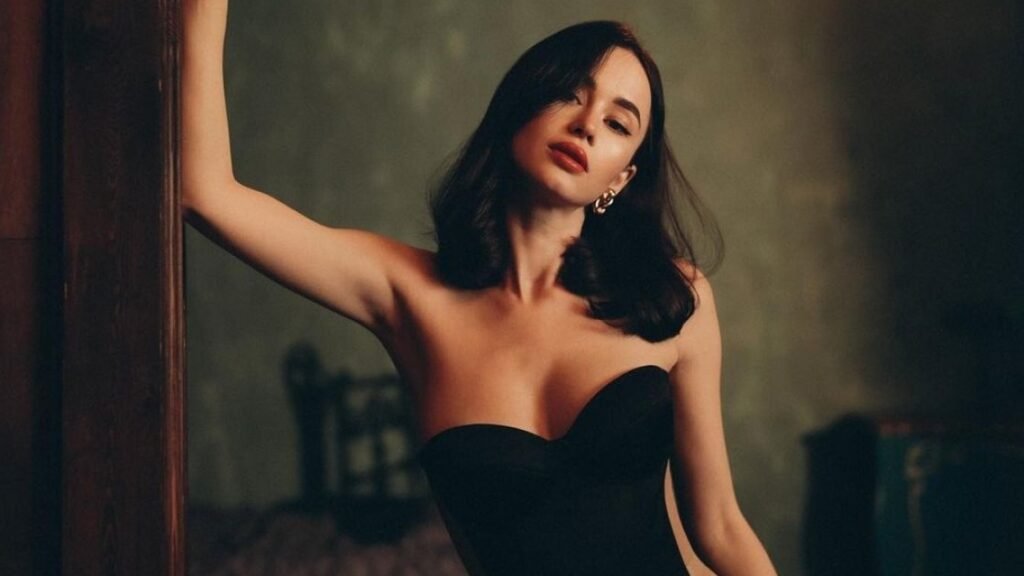
Tanya Parfiliyeva influencer profile is a Ukrainian fashion blogger whose public profile is built on a simple, recognisable combination: fashion, travel and family life, presented in a restrained visual language. She is listed in Ukrainian influencer rankings under the handle @tanyparfiliyeva, and described as a fashion blogger known for minimalist style and travel content. That short description matters, because it separates her from louder, trend-chasing accounts. Her appeal is not built on shock, novelty or constant reinvention. It is built on consistency: a clear aesthetic, a steady rhythm of posting, and a personal brand that has lasted long enough for her to describe herself in interview as probably one of the first bloggers in Ukraine. Public sources are thinner than for film stars or singers: a birth date, a hometown biography, a list of businesses and a precise audience figure are not confirmed by the reliable sources checked. What can be said with confidence is narrower, and more interesting: how she is categorised, how she describes her own work, what her style signals, and how one unexpected film appearance fits a career she has not tried to turn into acting. Note: The images in this article are AI-generated illustrations, labelled as such. Source: Wikipedia records The Last Mercenary as a 2021 French action comedy film directed by David Charhon, starring Jean-Claude Van Damme and released on Netflix on 30 July 2021. How she is listed: fashion blogger, not general celebrity In ranking lists of Ukrainian influencers, Parfiliyeva appears in the lifestyle and fashion section rather than music, TV or film. That tells a new reader what kind of account to expect before a single photograph is opened: clothes, looks, places and everyday luxury, rather than a performance career documented on stage or screen. The same rankings describe her style as minimalist. Minimalism here is not a claim about how much she owns or how little she spends. It is a description of presentation: clean lines, uncluttered images, outfits that read as composed rather than crowded. For a fashion audience that is practical: a minimalist feed is easier to scan, remember and borrow from, because the eye is not forced to choose between ten competing details in one frame. A reader can take away a silhouette, a colour balance, a way of layering, rather than a single branded item. Travel content is the second half of the ranking description, and it changes how the fashion should be read. Travel photographs test style in a way studio photographs do not. Clothes must work while walking, sitting, waiting and moving between places. A look that only works standing still in one room is less useful than a look that survives a day out. Pairing fashion with travel therefore suggests a wardrobe logic based on wearability, not only appearance: pieces that are repeatable, combinable, and carried without losing their shape. Longevity: one of the first bloggers in Ukraine In a Daily Scanner interview, she was introduced as one of the most recognisable and popular bloggers in Ukraine, and answered in her own words. She said she is probably one of the first bloggers in Ukraine, that there is no special secret to her success, that she loves what she does, and that she has been doing it for many years. She added that her blog is a full-fledged part of her life, that she does not treat it as a job, and that she simply does her favourite thing. That self-description explains a quality that is hard to fake: endurance. Many accounts grow quickly and fade when the novelty wears off or the work becomes a burden. An account lasting years usually survives because the person behind it still wants to make it when no one is watching the numbers. Her framing — a blog as part of life rather than a job — may sound casual, but it is also a working method. When content grows out of daily life, there is always something to show. When content depends only on campaigns, shoots and events, there are gaps. Longevity also changes the relationship with an audience. Early followers grow up alongside the blogger. They learn her taste, routines and standards, and notice when something feels off. A long-running personal brand is both stronger and more fragile than a new one: it carries trust, and also expectations. A sudden change of tone, a product that does not fit, or a claim that sounds borrowed can stand out immediately to people who have watched for years. It is important not to overstate what the interview proves. Saying she is probably one of the first bloggers is her own assessment, not a dated history of Ukrainian blogging, and it should not be read as a founding date or a ranking position. The verifiable point is simpler: she presents herself as an early, long-term blogger, and her continued presence in current influencer lists is consistent with that self-description. Reading minimalist style Minimalist fashion is often misunderstood as the absence of style. In practice it is a discipline. When colour, pattern and decoration are reduced, everything remaining has to work harder: the cut of a coat, the proportion of a trouser, the quality of a fabric, the balance between a fitted piece and a looser one. A minimalist outfit therefore reveals judgement more clearly than a maximalist one, where a striking print can carry an otherwise ordinary shape. For readers wanting to learn from the approach rather than copy a single look, the useful lessons are structural. First, repetition is a feature, not a failure. Wearing similar silhouettes in different colours, or the same coat with different layers underneath, builds a recognisable personal style and reduces decision fatigue. Second, fit matters more than novelty. A well-fitting simple piece photographs better and lasts longer in a wardrobe than a complicated piece that only works once. Third, restraint creates room for personality. When clothes are quiet, the person’s posture, expression and setting become more visible, which is exactly what […]

Tanya Parfiliyeva: Ukrainian Fashion Influencer’s Style and Story Read Post »

Mariya Kvitka Holos Krainy biography
TV and Reality Stars

Mariya Kvitka: Holos Krainy Season 12 Winner’s Journey

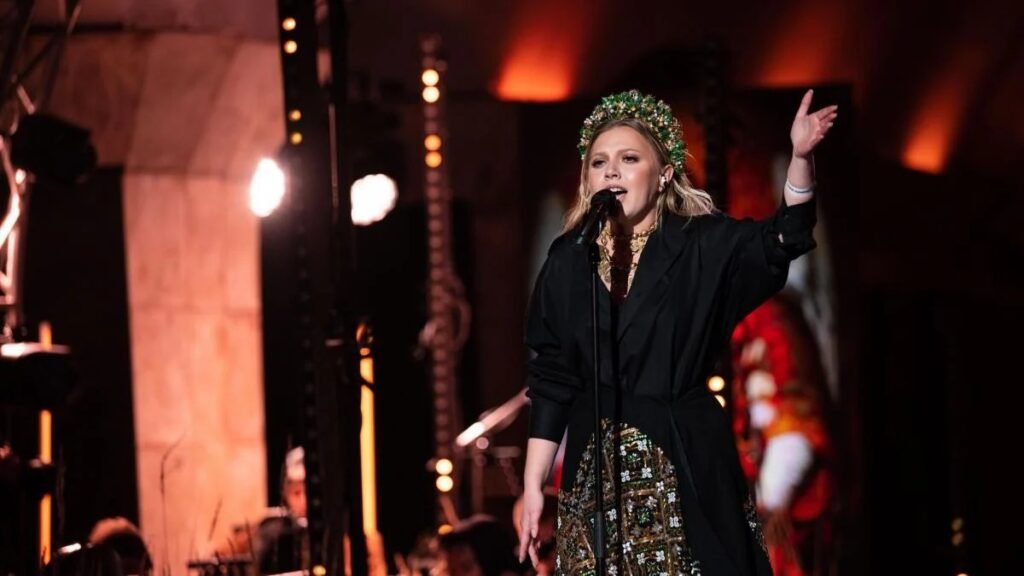
Mariya Kvitka Holos Krainy winner did not win Season 12 in the way most winners win. She won after the season itself had been broken in half, after the show had changed channels, after episodes recorded before a war had to be reworked for broadcast, and after she had reached the final through a route that had never before produced a winner. Holos Krainy is the Ukrainian version of The Voice. Its twelfth season began on 23 January 2022 on 1+1, on Sundays at 21:00. By the end of the year, the season was remembered less for a conventional contest arc than for the circumstances in which it finished. Kvitka was named winner by the public on 20 November 2022. The result also gave coaches Oleksandra Zaritska and Andriy Matsola their first win as coaches. Note: The images in this article are AI-generated illustrations, labelled as such. Source: Wikipedia records that Holos Krainy season 12 premiered on 23 January 2022, was suspended after six episodes, returned on 2 October 2022 on TET, and ended on 20 November 2022 with Mariya Kvitka winning through the Second Chance route. The season started normally, then stopped The first part looked like a standard refresh. From the previous season only Nadya Dorofeeva returned as a coach. Potap returned after a two-season absence, Svyatoslav Vakarchuk after a five-season absence, joined by first-time coach Olya Polyakova. The show was presented by Kateryna Osadcha and Yuriy Horbunov. Six episodes were broadcast before the season was suspended following Russia’s full-scale invasion in February 2022. This was not a season redesigned from the start to be about war — the season had already begun, performances had already been recorded, and it then had to find a way to continue in a country at war. It returned on 2 October 2022 on a different channel, TET, because 1+1 was broadcasting emergency news. Episodes seven to eleven had initially been recorded before 24 February 2022. For broadcast, Russian-language dialogue was replaced with a voiceover translation in Ukrainian. The show also added material in which contestants spoke about empowering and inspiring people through music, and remembered soldiers at the frontline. A viewer returning in October was not simply picking up where they had left off in February: the broadcast language had changed, the channel had changed, and the framing had changed. The contest was still a contest, but it was shown in a national context transformed between its first and second halves. The Second Chance route Season 12 introduced the Comeback Stage, in Ukrainian “Druhyy shans” (“Second Chance”), shown exclusively on the 1+1 video platform. It was a separate route back into the competition for artists who had not secured a place on a main team. After the blind auditions, coaches chose the best performers from the Comeback Stage participants to form the Second Chance team. A performer on that team could then reach the live final — and the win — without ever having been picked in the standard blind-audition process. The team is also called the Second Chance Team. In Ukrinform’s English-language reporting, its Polish spelling is rendered as Maskysa Kvitka, while the form used in this article — Mariya Kvitka — follows 1+1’s own English reporting. Spelling varies — Maskisa is also rendered Maskysa — and the form used here follows the season table. A folklorist before she was a TV winner Contemporary finale reporting described Kvitka as a keeper of Ukrainian culture and a folklorist by profession, and folk singer Kateryna Pavlenko praised the win during the final. The record also reports that, as of the final broadcast, Kvitka knew about 2,000 folk songs, saying she had collected them since childhood from old women, including her grandmothers in Polissia. The word “about” matters: no published season source fixes the number exactly, so it should be read as an estimate, not a precise count. Polissia, grandmothers and how a song survives Polissia is a historic and geographic region spanning northern Ukraine and neighbouring lands, known for woodland, marshland and a strong folk song and ritual tradition. When a singer says she learned songs from grandmothers in Polissia, she is describing a particular musical education: not a classroom conservatory, but learning by listening, repeating, and living alongside people who sang the songs in everyday and ritual contexts. That method is fragile: a song existing only in memory, only in the voice of an older generation, can disappear when that generation passes, unless a younger person learns it well enough to sing it again. “Recording” here does not necessarily mean releasing a record: it can mean a field recording, writing down the words and melody, or committing a song to memory through repeated singing with the person who knows it. The reporting uses the language of recording forgotten songs, which fits this preservation model. “Forgotten” does not usually mean that no one on earth knew the song; it means it had fallen out of common circulation, was no longer widely sung, or was known only in a small community or family. Bringing such a song back to a TV audience does not restore its original context, nor make a TV performance the same as a village performance. It gives a wider audience a chance to hear a form they might otherwise never encounter, and gives the singer a chance to argue, through performance, that the music still belongs in the present. Folk songs accompany work, weddings, seasonal rituals, mourning and celebration; they carry language, humour, grief and social rules. A singer who collected such songs was not only collecting tunes — she was collecting evidence of how people lived, spoke and marked important moments. When such a singer enters a competition built around contemporary popular performance, the tension is real: will the songs be heard on their own terms, or reshaped until they sound like everything else? The final: an underground stage, four finalists and a public vote The season 12 final was live from Kyiv’s underground — described as […]

Mariya Kvitka: Holos Krainy Season 12 Winner’s Journey Read Post »

Mykhailo Panchyshyn Holos Krainy biography
TV and Reality Stars

Mykhailo Panchyshyn: Holos Krainy Season 13 Winner’s Story

On 29 October 2023, Mykhailo Panchyshyn was named winner of Holos Krainy season 13, the Ukrainian version of The Voice. The result was decided by the public and gave coach Artem Pyvovarov his first win as a coach. Panchyshyn, performing as Ptashkin, did not arrive as a newcomer: he had already won another major Ukrainian TV singing contest, had served in the Armed Forces of Ukraine, and had written the original song that carried him through the blind audition and the final. The images in this article are AI-generated illustrations, labelled as such. Source: Wikipedia records that Holos Krainy season 13 ran from 3 September to 29 October 2023, was called the European Season, and ended with Mykhailo Panchyshyn (Ptashkin) winning as coach Artem Pyvovarov’s artist. Result at a glance Season 13 ran from 3 September to 29 October 2023 on 1+1 Ukraine. The hosts were Yuriy Horbunov and Kateryna Osadcha. The four coaches were Ivan Klymenko, Nadya Dorofeeva, Artem Pyvovarov and Julia Sanina. The winner was Mykhailo Panchyshyn, and the winning coach was Pyvovarov. The runner-up was Yuriy Horodets’kyy, from Dorofeeva’s team. Anastasiya Chaban and Khrystyna Starykova finished third, in the final-round structure described below. The season was also called the European Season. Panchyshyn was listed as 25 at his blind audition, performed as Ptashkin, and auditioned with his own original song, “Nevidomyi Heroi” (“Unknown Hero”). All four coaches turned. He joined Pyvovarov’s team and closed the final by singing the same song again — an original song at the start and at the end. Why season 13 was called the European Season It was the first season in the entire The Voice franchise to be held across Europe, per the published overview. The reason was Russia’s invasion of Ukraine. Production moved to the set of The Voice of Poland, and a custom-designed train was introduced to take the show to Poland. The setting changed while the coaches, contestants, language and audience vote remained Ukrainian. In a format change, the “Second Chance” coaches from the previous season were dropped. From the previous season only Nadya Dorofeeva returned as a coach, joined by debuting Julia Sanina, Artem Pyvovarov and Ivan Klymenko. Each coach recruited ten artists, forty contestants in total. A smaller team size means every choice carries more weight. Blind audition The second episode was broadcast on 10 September 2023. Panchyshyn was introduced as Mykhailo Panchyshyn, known as Ptashkin, aged 25, and sang “Nevidomyi Heroi” as an original song. All four coaches turned: Klymenko, Dorofeeva, Pyvovarov and Sanina. When more than one coach turns, the singer chooses; Panchyshyn chose Pyvovarov. An original song is not the safest option: a familiar cover gives an immediate reference point, while an original removes it, and the coaches must judge voice, melody and writing together. A four-chair turn for an original is a stronger signal than for a well-known cover. From his first appearance, his identity as a songwriter was part of his contestant identity. The title “Unknown Hero” set a theme that returned at the end. What is documented is that the song was written by Panchyshyn, performed at the blind audition and the final, and the final audience response was described as deeply emotional. The song is a piece of music; his service record is a separate fact; the show brought them together. Team Pyvovarov and a first coaching win Pyvovarov was a debuting coach, and by the end he was the winning coach; the published overview describes this explicitly as his first win as a coach. He was not an established winning coach adding a trophy — he was a first-time coach whose team produced the winner in his first season. What is documented is the structure: Pyvovarov recruited ten artists, Panchyshyn was one of them, and he survived the later rounds to the final. The coaching relationship was successful in competitive terms, ending with a public-vote win rather than a coach decision alone. The other finalists were strong: Dorofeeva’s Horodets’kyy was runner-up, and Klymenko’s Chaban and Sanina’s Starykova reached the second round of the final and finished third. A final with all four coaches represented in its later rounds makes the public vote a more meaningful contest, not a formality. Final night: three rounds The finale, episode nine, on 29 October 2023, had three rounds, each survived on the public vote, and each asked something different. Round one: eight finalists performed. Panchyshyn, for Pyvovarov, sang “The Show Must Go On” and advanced. The others advancing were Chaban, Starykova and Horodets’kyy. Eliminated were Mairamik Avoian, Halyna Pechenizhs’ka, Vlad Pelykh and Roman Panchenko. Round two: four remained. Panchyshyn sang “Manifest” and advanced. Horodets’kyy sang “Dumy” and advanced. Chaban sang “Pid krylom” and Starykova sang “Melodiya”; both finished third. Round three: the last two performed the songs with which they had first made an impression. Horodets’kyy sang “Kyieve mii” and was runner-up. Panchyshyn sang “Nevidomyi Heroi” and was named winner. Returning to the blind audition song lets viewers compare the singer at the end with the singer first heard, and it is especially direct here because the song was his own writing. As a setlist, the three final songs show range: a well-known rock anthem, a song titled “Manifest”, and an original Ukrainian song about an unknown hero — different pacing, emotional registers and audience relationships. Advancing after each is documented evidence for versatility. The service story behind the stage name This must be told carefully, without turning service into a contest narrative. Per an OBOZ.UA profile of 14 November 2023, Panchyshyn is an artist from Lviv who in younger years had already served in the territorial defence and a special unit of the Armed Forces of Ukraine, and had considerable concert experience before the full-scale invasion. War affected his family as early as 2014, when his brother Petro served in Donbas, and Panchyshyn himself did not hesitate when he decided to defend Ukraine. After the full-scale invasion, the profile reports that he first joined the Kyiv Theatre of the Resistance, […]

Mykhailo Panchyshyn: Holos Krainy Season 13 Winner’s Story Read Post »

Zlata Ognevich biography
Singers and Music Artists

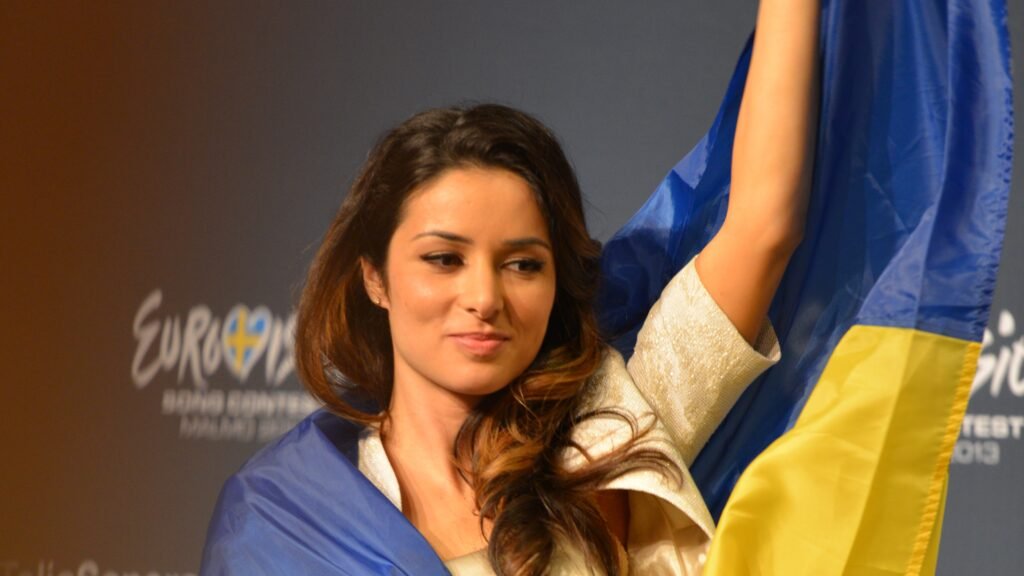
Zlata Ognevich — Ukrainian Singer and Eurovision 2013 Star

Zlata Ognevich finished third at Eurovision in 2013, and she has kept working in Ukrainian music, television and public life ever since. People search for her because her career does not fit one label: a trained jazz vocalist who entered three national selections, a presenter of Junior Eurovision, a short-lived member of parliament, and a singer who returned to the Vidbir stage in 2026 as a judge. As of November 2026, this page follows that full path, and points new listeners to the recordings that show her range best. Quick facts Name Inna Leonidivna Bordiuh, known as Zlata Ognevich Born 12 January 1986, Murmansk Known for Eurovision 2013, “Gravity”, third place in Malmö Main works Gravity, Grani, Tiny Island, Vidbir 2026 jury Name, voice and a move to Kyiv Born Inna Leonidivna Bordiuh on 12 January 1986 in Murmansk, she performs as Zlata Leonidivna Ognevich. The family moved to Sudak, in Crimea, when she was young, and she grew up there before moving to Kyiv to study music. She trained as a jazz vocalist, and that training shaped the way she sings: a clear, controlled voice that can move from a quiet verse to a full chorus without forcing it. A jazz background is useful for a pop singer, and it is also a risk. Jazz teaches a singer to phrase, to leave space, and to listen to the band. Pop, especially contest pop, rewards singers who fill every second with sound. Ognevich learned to do both, and the balance between them is the most distinctive part of her singing. Three attempts at national selection Her first attempt at Ukraine’s Eurovision national selection was in 2010, with “Tiny Island”, also called “Ostrov lyubvi”, which finished fifth. A fifth place in a national final is not a failure, but it is also not a ticket to Europe. Most singers would have moved on. Ognevich stayed, and she tried again. She returned to the selection in later years, and her persistence paid off. Trying three times is unusual in Eurovision, where most singers get one chance and then disappear. The repeated attempts show a singer who wanted the contest itself, not just a single result, and who was willing to be judged again in public. Editor’s take: the three attempts are the most honest part of her story, and the part that gets lost when only the 2013 result is quoted. A singer who keeps entering a contest she has already lost is telling the listener something about her own standards. The win, when it came, was the third try, not the first. Malmö 2013: how “Gravity” finished third Ukraine was drawn into the first semi-final on 14 May 2013 in Malmö, Sweden. She qualified, placing third in that semi-final, and went on to the grand final. In the final, “Gravity” finished third, with 214 points, behind Denmark and Azerbaijan. “Gravity” is a big ballad, built for a voice that can carry a chorus without a band behind it. The staging was simple: a single singer, a strong light, and a song that rises steadily. There was no folk costume, no dancers, no gimmick. The performance worked because the voice did the work, and the third place was a fair result for a straightforward ballad in a year when the winner, Denmark’s Emmelie de Forest, offered a similarly unadorned performance. Compared with Ruslana, who won in 2004 with energy and drumming, and Jamala, who won in 2016 with a song about history, Ognevich’s third place sits in the middle of Ukraine’s Eurovision story: not a win, not a failure, and a result that kept her name in the contest’s history. Third place in a field of 26 finalists is a serious result, and it is the result she is still asked about. Presenting Junior Eurovision and a short period in parliament Later in 2013 she co-hosted the Junior Eurovision Song Contest in Kyiv on 30 November 2013, alongside Timur Miroshnychenko. Hosting a children’s contest is a different job from singing in one: the host has to keep the show moving, speak to young performers who are nervous, and hold a television audience at the same time. Ognevich did it in the same year as her own Eurovision result, which made 2013 the busiest year of her career. In 2014 she was elected to the Verkhovna Rada, Ukraine’s parliament, for the Radical Party, listed fourth on the party list. Her time there was short, and she resigned in 2015. A short period in parliament says more about the singer than about politics: a pop star who had just finished third at Eurovision was willing to try a completely different public role, and then willing to leave it when it did not work. Albums, television and a Ukrainian catalogue Her debut album “Grani” was released in December 2018, with eight songs, among them the folk song “Kupala”. The album’s title means Edges, or Facets, and the record was built around that idea: a singer who had spent years performing other people’s contest songs was now recording a set that tried to show different sides of her own voice. It was not a quick follow-up to Eurovision. It came five years later, and the delay is part of the point. She was the lead of the second season of the Ukrainian “The Bachelorette”, a dating show in which one woman chooses among a group of suitors. Reality television is a different kind of work from singing: the performer is the show, rather than the voice, and the audience judges personality as much as performance. Ognevich’s turn on the show showed a public who knew her mainly from Eurovision a different side, and it kept her on television in a year when she was not releasing a new album. In 2018 she also took part in film voice work, lending her voice to animated characters. That work is easy to overlook, and it matters because it uses the same skill as her singing: a voice […]

Zlata Ognevich — Ukrainian Singer and Eurovision 2013 Star Read Post »

Ruslana biography
Singers and Music Artists

Ruslana — Ukrainian Singer and First Eurovision Winner

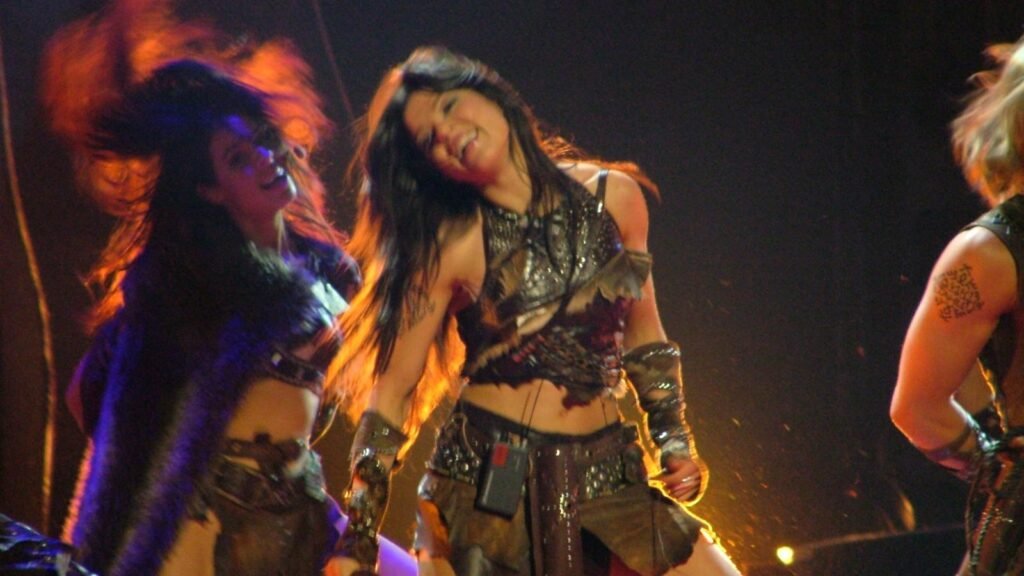
Ruslana won the Eurovision Song Contest in 2004, and Ukraine has never forgotten it. She was the country’s first Eurovision winner, and her song “Wild Dances” introduced Ukrainian folk music to a European audience of millions. People still search for her because that win was also a beginning: she went on to coach on The Voice, to serve in parliament, and to become a prominent voice on the Maidan in 2013–14. As of November 2026, this page follows that whole path, from a conservatory student in Lviv to a singer whose name is tied to a turning point in Ukrainian music. Quick facts Name Ruslana Stepanivna Lyzhychko Born 24 May 1973, Lviv Known for Winning Eurovision 2004 for Ukraine with “Wild Dances” Main works Dyki Tantsi, Wild Dances, Wild Energy, Amazonka Lviv childhood and conservatory training Ruslana was born on 24 May 1973 in Lviv, then in the Ukrainian SSR. She is the daughter of Stepan Lyzhychko. Music was part of her childhood in a practical, daily way, and she went on to study at the Lviv Conservatory, the Mykola Lysenko Lviv State Conservatory, where she trained as a conductor and pianist as well as a singer. That training matters more than it might seem. A singer who has conducted and played piano understands a song from the inside: how a melody sits over a rhythm, how a chorus needs a band behind it, and how a stage show is built. The Eurovision performance that made her famous was not an accident. It was a conservatory musician’s idea of a folk-pop show, built with care and rehearsed to the second. Festivals, Luxen Studio and a first break She won the Slavianski Bazaar festival in Vitebsk in 1996, a practical breakthrough beyond Ukraine. She worked with Oleksandr Ksenofontov, her husband and producer, and with the Luxen Studio they built together. A studio of their own gave them control over how her records sounded, and that control shows in the records that followed. Her 1999 Christmas musical, usually translated as “The Last Christmas of the 90’s”, won Ukrainian awards and raised her profile at home. It is easy to forget that part of the story, because the Eurovision win came five years later and overshadowed everything before it. The musical mattered, though: it showed that Ruslana could carry a large production, not just a single song. Dyki Tantsi, the album that made her “Dyki Tantsi”, released in 2003, is the concept album on which her reputation rests. It fuses traditional ethnic music with modern pop, drawing on Carpathian and Hutsul folk material, with drums, pipes and dance rhythms at the front of the sound. The idea was simple and hard to execute: take folk music that many Ukrainians knew only from festivals, and make it sound like a record a teenager would want to hear on the radio. The album’s title track, in its English version “Wild Dances”, became the song that won Eurovision. A listener who only knows the three-minute contest version misses the album’s wider point: Ruslana was not borrowing folk music for one song. She was building a career on it, and the album was the place where that idea was worked out in full. Editor’s take: Dyki Tantsi is the most useful place to start with Ruslana, more useful than any single or compilation. An album that commits to one idea, folk music made modern, tells a listener more about a singer than a greatest-hits set ever will. The Eurovision win was the advertisement. The album was the argument. Eurovision 2004 in Istanbul The Eurovision Song Contest 2004 was held in Istanbul, Turkey. Ruslana performed “Wild Dances”, the English version of the title track of Dyki Tantsi, and won with 280 points. That made her Ukraine’s first Eurovision winner, in only the country’s second year in the contest. The performance is remembered for its staging as much as for the song. Drumming, fast choreography, and costumes drawn from folk tradition turned a three-minute pop song into a piece of theatre. Compared with Jamala, who won twelve years later with a quiet song about history, Ruslana won with energy and movement. Both worked for Ukraine, and the contrast shows how wide the contest can be. The win changed Ukrainian pop. It proved that a Ukrainian act could win in Europe with material rooted in Ukrainian folk culture, rather than by copying a Western pop sound. That proof mattered to the singers who came after her, including Tina Karol in 2006 and Jamala in 2016, both of whom have spoken about the path Ruslana opened. Kyiv 2005, later albums and The Voice She returned to the Eurovision stage in Kyiv in 2005, when Ukraine hosted the contest, performing a new single with staging that again made full use of drums, fire and choreography. Hosting the contest a year after winning it was a rare honour, and it kept her at the centre of Ukrainian music in the years after the win. Later albums included Wild Energy, released in 2008, and Amazonka, released the same year, which kept the folk-pop sound while adding a more electronic production. The albums did not repeat the Eurovision result, and they did not need to. A singer whose biggest hit came in a single night needs new work to keep a career going, and Ruslana kept recording and touring rather than relying on the win alone. She also became a coach on Holos Krainy, The Voice of Ukraine, in its first season in 2011. A coach who had won Eurovision could judge new voices with authority, and her presence on the show linked the first generation of Ukrainian Eurovision success to the singers who followed. Public life: Orange Revolution, parliament and Euromaidan In 2004, the same year as her Eurovision win, during the disputed presidential election, Ruslana declared her support for the Orange Revolution, and she performed for crowds in Kyiv. That support was a public choice, not a private one, and it changed […]

Ruslana — Ukrainian Singer and First Eurovision Winner Read Post »

Milla Jovovich biography
Actresses

Milla Jovovich — Ukrainian-Born Actress from Kyiv to Resident Evil

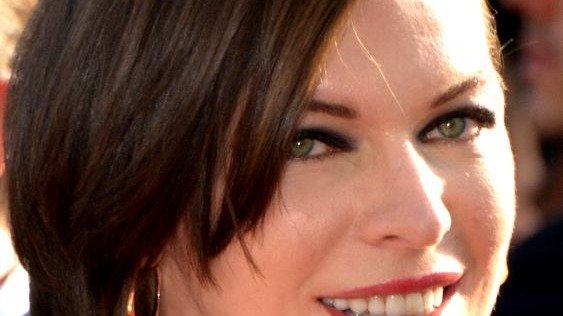
Milla Jovovich was born in Kyiv and grew into one of the most recognisable action stars of her generation. She started modelling at eleven, broke through as Leeloo in The Fifth Element (1997), and then carried the Resident Evil series as Alice across six films and fourteen years. People look her up because that run is rare: few actors hold a franchise that long, and fewer still cross from fashion to cult science fiction to video-game action without losing their audience. As of November 2026, this page follows her career in order, from a Kyiv childhood through modelling, music and a fashion label, and points new viewers to the roles that show her range best. Quick facts Name Milica Bogdanovna Jovovich, known as Milla Jovovich Born 17 December 1975, Kyiv, Ukrainian SSR Known for Leeloo in The Fifth Element; Alice in the Resident Evil series Main works The Fifth Element (1997); Resident Evil (2002–2016); Monster Hunter (2020); The Divine Comedy (1994, album) A Kyiv childhood, a new life in Los Angeles Milica Bogdanovna Jovovich was born in Kyiv on 17 December 1975. Her mother, actress Galina Loginova, and her father, doctor Bogdan Jovovich, raised her in a household where art and science shared the same table. The family left Kyiv in 1981, when she was five. They spent time in London and Sacramento before settling in Los Angeles. Starting over in a new country shaped her early years. She learned English on the fly, and school came with the sharp edges that immigrant children know well. At home, her mother’s acting work kept performance close at hand. The camera found her early. A modelling scout spotted her at eleven. Photographer Herb Ritts shot an early cover for her, and by twelve she had her first American magazine cover. Work came fast, and so did money, while she was still a child. That speed is easy to miss in a list of dates: she was earning a living before most children pick a favourite subject at school. It also explains something about the actor she became — she learned to treat a set as a workplace, not a mystery. From child model to film sets Jovovich’s screen debut came in 1988, in the television film The Night Train to Kathmandu, as Lily McLeod. The same year brought Two Moon Junction, a small part in a film built for adults. Her first leading role followed in 1991, in Return to the Blue Lagoon, where she played Lilli at fifteen. Small parts kept coming: a brief turn in Chaplin (1992) as Mildred Harris, and Michelle in the ensemble comedy Dazed and Confused (1993). The early films taught her a skill the later action work would need: how to hold a camera without dialogue. Blue Lagoon gave her long, quiet stretches on screen. Dazed gave her a crowded set where a small part still had to land. Compare her path with Mila Kunis, another Kyiv-born actor who found fame in Hollywood. Kunis built her career on a long-running sitcom, That ’70s Show, and steady television work. Jovovich built hers on one big swing after another, with gaps between the films that mattered. Both routes worked. The difference shows in their filmographies: Kunis has volume, Jovovich has peaks. By the mid-1990s she was a known face in fashion and a working actor looking for the part that would define her. It arrived in 1997. Leeloo and The Fifth Element Luc Besson’s The Fifth Element (1997) made Jovovich a star outside fashion circles. She played Leeloo, a supreme being who arrives on Earth speaking a language Besson invented for the film. She learned the lines phonetically, sound by sound, and the strangeness of her delivery is the point: Leeloo is new to the world, and the audience learns it with her. The role changed her direction. Before it, she was a model who acted. After it, directors hired her for physical parts with little dialogue and a lot of presence. The orange hair, the bandage costume and the invented language became a visual shorthand for nineties science fiction. It also changed her personal life for a time: she was married to Besson from 1997 to 1999. The marriage ended, and both moved on to other projects. What lasted was the work. Leeloo is still the role fans bring up first, and it is the reason a science-fiction audience knows her name at all. Seen today, the performance holds up. She plays Leeloo as confused and curious rather than as a weapon, and that choice keeps a loud, gaudy film human at its centre. Alice and the Resident Evil years In 2002 Jovovich took the part that would define the next fourteen years. Resident Evil, directed by Paul W. S. Anderson, cast her as Alice, a security officer who wakes with no memory in a laboratory under Raccoon City, fighting the Umbrella Corporation. The first film was a modest bet on a video-game adaptation. It paid off. Five sequels followed, the last in 2016, and the six films took in more than $1.2 billion worldwide. That made the series the highest-grossing video-game film series of its time. Alice stayed at the centre of every entry, and Jovovich became one of the few women to carry a film franchise on her own name for over a decade. The films are uneven, and honesty helps here: the first film and the 2010 Afterlife entry in 3D are the ones fans return to, while the middle entries lean hardest on spectacle. She never coasted through the physical work. She trained hard for the fights and the stunts, and a stunt double was seriously injured during filming of The Final Chapter in 2015 — a reminder that the danger on these sets was real. Anderson became her long-term collaborator and her husband: they married in 2009 and have three children. He directed the Resident Evil films, and their partnership carried into later projects. Outside the series, the same years brought […]

Milla Jovovich — Ukrainian-Born Actress from Kyiv to Resident Evil Read Post »

Scroll to Top