Mariya Kvitka Holos Krainy winner did not win Season 12 in the way most winners win. She won after the season itself had been broken in half, after the show had changed channels, after episodes recorded before a war had to be reworked for broadcast, and after she had reached the final through a route that had never before produced a winner. Holos Krainy is the Ukrainian version of The Voice. Its twelfth season began on 23 January 2022 on 1+1, on Sundays at 21:00. By the end of the year, the season was remembered less for a conventional contest arc than for the circumstances in which it finished. Kvitka was named winner by the public on 20 November 2022. The result also gave coaches Oleksandra Zaritska and Andriy Matsola their first win as coaches. Note: The images in this article are AI-generated illustrations, labelled as such. Source: Wikipedia records that Holos Krainy season 12 premiered on 23 January 2022, was suspended after six episodes, returned on 2 October 2022 on TET, and ended on 20 November 2022 with Mariya Kvitka winning through the Second Chance route.
The season started normally, then stopped
The first part looked like a standard refresh. From the previous season only Nadya Dorofeeva returned as a coach. Potap returned after a two-season absence, Svyatoslav Vakarchuk after a five-season absence, joined by first-time coach Olya Polyakova. The show was presented by Kateryna Osadcha and Yuriy Horbunov. Six episodes were broadcast before the season was suspended following Russia’s full-scale invasion in February 2022. This was not a season redesigned from the start to be about war — the season had already begun, performances had already been recorded, and it then had to find a way to continue in a country at war. It returned on 2 October 2022 on a different channel, TET, because 1+1 was broadcasting emergency news. Episodes seven to eleven had initially been recorded before 24 February 2022. For broadcast, Russian-language dialogue was replaced with a voiceover translation in Ukrainian. The show also added material in which contestants spoke about empowering and inspiring people through music, and remembered soldiers at the frontline. A viewer returning in October was not simply picking up where they had left off in February: the broadcast language had changed, the channel had changed, and the framing had changed. The contest was still a contest, but it was shown in a national context transformed between its first and second halves.
The Second Chance route
Season 12 introduced the Comeback Stage, in Ukrainian “Druhyy shans” (“Second Chance”), shown exclusively on the 1+1 video platform. It was a separate route back into the competition for artists who had not secured a place on a main team. After the blind auditions, coaches chose the best performers from the Comeback Stage participants to form the Second Chance team. A performer on that team could then reach the live final — and the win — without ever having been picked in the standard blind-audition process. The team is also called the Second Chance Team. In Ukrinform’s English-language reporting, its Polish spelling is rendered as Maskysa Kvitka, while the form used in this article — Mariya Kvitka — follows 1+1’s own English reporting. Spelling varies — Maskisa is also rendered Maskysa — and the form used here follows the season table.
A folklorist before she was a TV winner
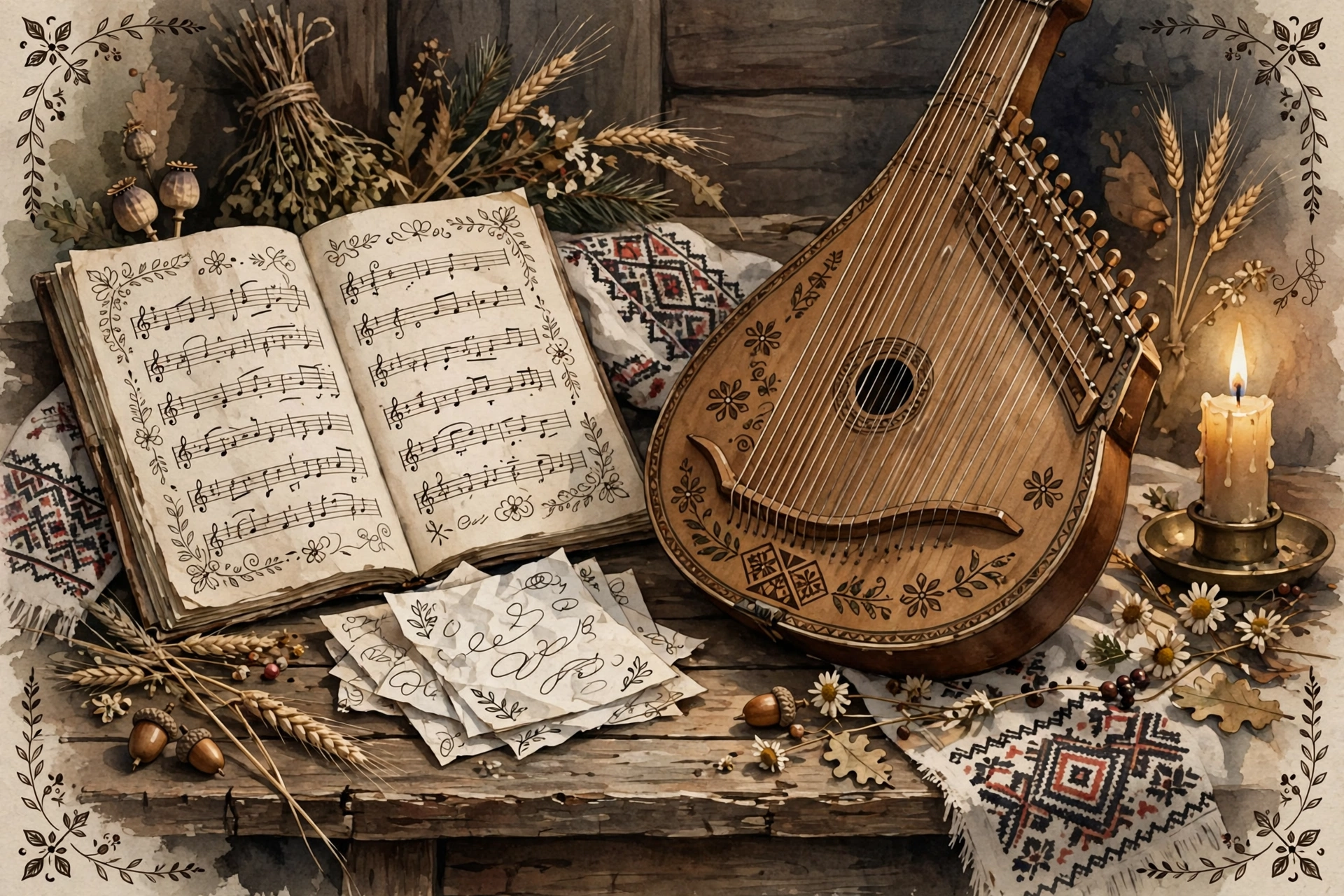
Contemporary finale reporting described Kvitka as a keeper of Ukrainian culture and a folklorist by profession, and folk singer Kateryna Pavlenko praised the win during the final. The record also reports that, as of the final broadcast, Kvitka knew about 2,000 folk songs, saying she had collected them since childhood from old women, including her grandmothers in Polissia. The word “about” matters: no published season source fixes the number exactly, so it should be read as an estimate, not a precise count.
Polissia, grandmothers and how a song survives
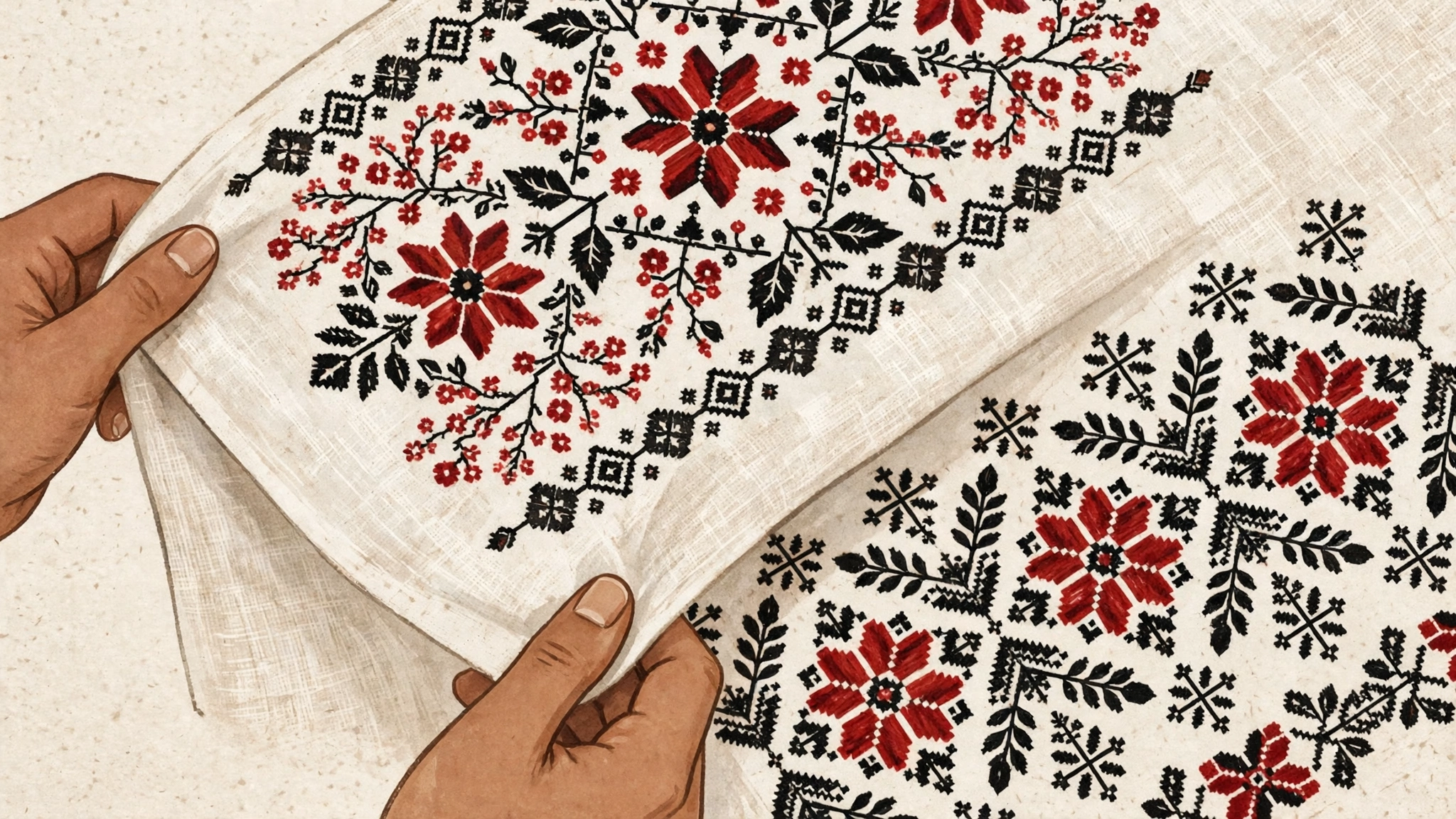
Polissia is a historic and geographic region spanning northern Ukraine and neighbouring lands, known for woodland, marshland and a strong folk song and ritual tradition. When a singer says she learned songs from grandmothers in Polissia, she is describing a particular musical education: not a classroom conservatory, but learning by listening, repeating, and living alongside people who sang the songs in everyday and ritual contexts. That method is fragile: a song existing only in memory, only in the voice of an older generation, can disappear when that generation passes, unless a younger person learns it well enough to sing it again. “Recording” here does not necessarily mean releasing a record: it can mean a field recording, writing down the words and melody, or committing a song to memory through repeated singing with the person who knows it. The reporting uses the language of recording forgotten songs, which fits this preservation model. “Forgotten” does not usually mean that no one on earth knew the song; it means it had fallen out of common circulation, was no longer widely sung, or was known only in a small community or family. Bringing such a song back to a TV audience does not restore its original context, nor make a TV performance the same as a village performance. It gives a wider audience a chance to hear a form they might otherwise never encounter, and gives the singer a chance to argue, through performance, that the music still belongs in the present. Folk songs accompany work, weddings, seasonal rituals, mourning and celebration; they carry language, humour, grief and social rules. A singer who collected such songs was not only collecting tunes — she was collecting evidence of how people lived, spoke and marked important moments. When such a singer enters a competition built around contemporary popular performance, the tension is real: will the songs be heard on their own terms, or reshaped until they sound like everything else?
The final: an underground stage, four finalists and a public vote
The season 12 final was live from Kyiv’s underground — described as a metro station and bomb shelter — on 20 November 2022. From there, viewers on YouTube and in the hall saw four finalists compete: Davyd Maskisa, whose performances gave the Second Chance team its official finalist, Pavlo Yalynskyi, Olexander Sviridenko and Mariya Kvitka. Kvitka performed “Oi u luzi chervona kalyna”, a folk song that had become widely associated with Ukrainian resistance after February 2022. She also sang a duet with coach Oleksandra Zaritska. Kvitka then appeared in a second-round performance before the public vote closed. The public named Kvitka the winner. Voting reasons are not recorded.
The coaches’ win
Oleksandra Zaritska and Andriy Matsola won as coaches for the first time with Kvitka’s victory. Zaritska was herself a contestant on Holos Krainy season 4 in 2014 as a member of Svyatoslav Vakarchuk’s team, before she went on to sing lead vocals in KAZKA and, in season 12, to coach alongside Andriy Matsola. That should not be over-read: a former contestant does not automatically make a better coach, and there is no evidence that Zaritska’s experience was the decisive factor. Her route to the coach’s chair shows she understood the contest from both sides, but understanding a show is not the same as controlling its result.
Reading the result without overstating it
It is tempting, after a wartime final, to turn the winner into a symbol and then treat the symbol as the whole story. That should be resisted, not because the win lacked meaning, but because overstating it obscures what happened. First, a public vote in a single final does not prove that folk music suddenly became the dominant taste, nor that every viewer preferred folk to pop, rock or other styles. It proves that on that night, under those conditions, Kvitka received public support. Voting may have been influenced by performance order, song choice, personal story and mood, none of which can be separated after the fact. Second, a win on a TV show does not by itself establish a later career. The sources do not provide a verified detailed account of recordings, concerts or projects after Season 12. A reader wanting later work should look for current primary sources — official announcements, verified artist pages, reputable reporting — rather than assuming that the 2022 win automatically produced a particular discography or tour. Third, the Second Chance win should not be rewritten as the main competition having “failed” Kvitka and the Second Chance team having “rescued” her. The format itself created the second route, and the main competition and the Second Chance stage were parts of the same season. It is more accurate to say that the season contained two paths to the final, and in this season the second path produced the winner. That is unusual enough without a narrative of rescue or injustice that the sources do not support. Finally, the wartime setting should not suggest that the result was decided for non-musical reasons alone. The final was underground because of safety, not as a symbolic backdrop that was wanted. The audience was a wartime audience, and the context inevitably shaped the evening, but there is no evidence that voters ignored singing quality. The safest summary is also the simplest: Kvitka sang, the public voted, and she won, in a final whose setting and surrounding performances reflected the war.
Where Season 12 sits
Season 11 (2021) ended with Serhiy Lazanovskyy as winner, coached by DOROFEEVA. Season 13 (2023) ended with Mykhailo Panchyshyn as winner, coached by Artem Pyvovarov. Neither was interrupted like Season 12, and neither produced a Second Chance winner. That placement helps explain why Season 12 is singled out: not for the largest audience, the most famous coaches, or the most commercially successful winner. It is singled out because the format’s own rules produced an unprecedented outcome, and the show had to adapt to war mid-run. In the longer history, Holos Krainy premiered on 22 May 2011 on 1+1, as the Ukrainian adaptation of The Voice format created by John de Mol in the Netherlands. By Season 12 the show had run for more than a decade, with winners from Ivan Hanzera in Season 1 through a long list across pop, folk and other styles. The show accumulates conventions: familiar coaches, stages and patterns. Season 12 broke several at once, making it a useful case of how a TV format behaves under pressure. The current season, Season 14, began on 25 October 2026 and is listed as running to 1 January 2027.
How to watch and verify
A reader wanting to check this should start with the season record itself, rather than social media summaries. The Season 12 page and the main Holos Krainy overview list the premiere, the final, the winner, the other finalists and the winning coaches. Contemporary finale reporting, such as the Senal News account of the underground final, adds the presenters, the Ptashka performance, the folk background and the closing “Chervona Ruta”. Pay attention to name spellings: Ukrainian names appear in several transliterations. “Mariya” and “Maria” are the same person, and “Kvitka” is the surname in the season record. Similarly, “Holos Krainy” and “The Voice of the Country” are the same show. A search finding nothing under one spelling may succeed under another — a transliteration issue, not evidence that a person or show does not exist. Be cautious about pages that claim a specific audition song, voting share, prize or detailed post-win biography: check the primary source. If there is none, treat it as unverified, even if it is polished. The same caution applies to fan wikis and aggregators copying each other. A detail repeated on many pages is not necessarily verified; it may simply have been copied many times.
Frequently asked questions
Is the name Mariya or Maria? Both appear in English coverage of the same winner, as a transliteration difference. The season record uses “Mariya Kvitka”, and some finale reporting uses “Maria Kvitka”. They are not two singers. This article uses “Mariya Kvitka” throughout, except when noting the variation. Was she on a main coach team at the start? The verified point defining her journey is that she won as an artist on the Second Chance team, coached by Zaritska and Matsola. That team was specifically for contestants who had performed in the main competition and failed to advance. A reader should not assume the same team path as a singer who stayed on a main coach team from audition to final; the season record places the win in the Second Chance category. Did the war cancel Season 12? No. It was suspended after six episodes, returned on 2 October 2022 on TET, and concluded with the final on 20 November 2022. Suspension and cancellation are different; confusing them misrepresents the season. The season finished under changed conditions: a new channel, translated dialogue for pre-war recordings, and an underground final venue. Does a Second Chance win count the same as any other win? In the season record, yes. The winner is listed without qualification, and the winning coaches are listed as Oleksandra and Andriy. The Second Chance route was part of the season’s official format, not an unofficial side contest. What is distinctive is its novelty within the show’s history, not doubt about its validity. Why is much personal biography left out? Because no reliable primary source was found for them. A profile filling gaps with plausible details — hometown, school, family, career timeline — is easier to read but risks being wrong. Omitting an unverified detail is not the same as saying it does not exist. A reader wanting those details should look for a reliable primary source. Can I find her folk songs online? That depends on what has officially been released or published by the artist or reputable outlets. A general search may surface performances and interviews, but distinguish an official release, a TV performance and a fan upload, and do not assume that every video labelled with her name is an authorised recording.
Kvitka’s Season 12 journey is best remembered as the convergence of three things that do not usually meet: a folk repertoire built from family and regional tradition, a TV format that had just invented a second route to the final, and a season interrupted by war and finished underground. Any one alone would be an interesting story. Together they explain why the win is still discussed — not as a generic talent-show victory, but as a specific moment in Ukrainian TV and cultural history. A folk singer’s story above all deserves to be told with the same care that goes into preserving a song: accurately, without adding verses that were never there.
Pingback: Mykhailo Panchyshyn: Holos Krainy Season 13 Winner