If you have watched Star Wars: Ahsoka and found yourself asking, “Who is that intense, lightsaber-wielding apprentice?” — she is Shin Hati, the apprentice with the orange lightsaber and the stare that does a lot of the talking. But long before she stepped into a galaxy far, far away, she was a child actress in Kyiv, then a teenager starting over in a new country, then a working actress grinding through small films before Hollywood finally started calling her name. That is the part of her story that makes the Ahsoka role feel earned rather than lucky. The images in this article are AI-generated illustrations, labelled as such. Wikipedia records that Sakhno was born in Kyiv on 14 November 1997, made her first television appearance in Lesya + Roma in 2005, played Cadet Viktoriya in Pacific Rim Uprising (2018) and Nadedja in The Spy Who Dumped Me (2018), and played Shin Hati in Ahsoka (2023).
This is not a story about overnight fame. It is a story about a kid from a film family who kept showing up, kept training, and kept choosing difficult roles. And yes, we will get to M3GAN 2.0 too, because her turn as Amelia is a completely different kind of scary, and it shows just how wide her range actually is.
Ivanna Sakhno Biography: Early Life in Kyiv
Ivanna Anatoliyivna Sakhno was born on 14 November 1997 in Kyiv, Ukraine. That date and place are consistent across the main biographical sources, so we can start there with confidence. She grew up in a household where film was not a distant dream; it was the family business. Her mother, Halyna Kuvivchak-Sakhno, is a director, and her father, Anatolii Sakhno, is a cinematographer. When your parents work behind the camera, you learn early that acting is not just about being seen. It is about timing, patience, long days, and doing the same scene again until it feels true.
One detail that comes up again and again in profiles of her is that her dream of acting took shape in 2004, after she watched the film Amélie. It is a lovely detail because Amélie is not an action film or a blockbuster. It is a small, warm, odd, deeply human film about a young woman finding her own way of seeing the world. If that is the film that made a child want to act, it tells you something about the kind of performer Sakhno would become: someone interested in character, not just spectacle.
She also has a brother, Taras, sometimes referred to as Tar Sakhno. Family details beyond that are kept fairly private, and that is worth respecting. Not every part of a public person’s life needs to be turned into content. What matters for her career story is the foundation: a creative home, a city with its own strong artistic life, and a child who was already curious about performance.
Kyiv matters here too, not just as a birthplace. Kyiv is a city with theatres, film schools, studios, and a long cultural history. Growing up there gave Sakhno a first language, a first audience, and a first sense of what Ukrainian stories sound like. Later, when she began speaking publicly about Ukraine, that connection was not a talking point she had learned for interviews. It was home.
Ivanna Sakhno Biography: A Child Actress in Ukraine
Sakhno’s first television appearance came in 2005, in the series Lesya + Roma, described as the first Ukrainian-language sitcom and an adaptation of a successful Canadian format. Think about that for a second: she was about seven or eight years old. Most kids that age are learning to read chapter books. She was learning how to hit a mark, remember lines, and be funny on cue in front of a crew.
That early start gave her something that cannot be faked later: comfort on a set. Child actors who survive the transition to adult acting usually have one thing in common. They learned the job before they learned to worry about fame. Sakhno kept working in Ukrainian productions through her childhood and early teens, building credits that are less famous internationally but important in her own country. Her debut feature film role was as Milka in the 2013 biopic Ivan the Powerful.
Here is a practical insight if you are discovering her work for the first time: do not start with the Hollywood blockbusters and work backwards only. The Ukrainian work explains the performer. A child sitcom teaches comic timing. A biopic teaches restraint. Both show up later in her Hollywood roles, where she often has to say a lot with very little dialogue. Shin Hati, for example, is not a chatty character. Much of that performance lives in posture, focus, and reaction. That is sitcom discipline and film discipline working together, even if the audience never sees the connection.
A common mistake people make with actors like Sakhno is assuming the Hollywood roles are the whole career. They are not. They are the visible tip. The years in Ukraine were the training ground, and they also gave her an audience at home who knew her name long before American audiences did.
Moving Abroad: Vancouver, Los Angeles, and Starting Again
As a teenager, Sakhno left Ukraine to study English in Vancouver, Canada. Sources differ slightly on the exact timeline of that move, so no single month or age is given here. What is clear is the shape of the story: she went to Vancouver, took part in a casting workshop, and was noticed there by casting directors Janet Hirshenson and Jane Jenkins. That moment changed the direction of her life.
In 2013, she moved to the United States, settling in Hollywood to pursue acting. She studied at Beverly Hills High School and later at the Lee Strasberg Theatre and Film Institute, working with Ivana Chubbuck. If you know anything about actor training, those names will mean something. The Lee Strasberg tradition is about emotional truth and preparation. Chubbuck’s approach is famously practical and demanding, focused on objectives, obstacles, and turning personal experience into usable fuel for a scene. In other words, Sakhno did not just move to Los Angeles and hope for the best. She trained, seriously.
Starting again in a new country at that age is harder than it looks in a highlights reel. A new language, a new school, a new industry, and no guarantee that anyone will care about the credits you earned back home. Many young actors in that position either burn out or get stuck playing stereotypes. Sakhno’s path was slower and steadier. She took small films, learned the American set system, and built a reel that proved she could carry both drama and physical work.
If you are an aspiring actor reading this, there is a useful step-by-step lesson buried in her move. First, get training that actually challenges you, not just classes that flatter you. Second, take work that teaches you something, even if the film is small. Third, be patient with the gap between moving and breaking through. Sakhno moved to the United States in 2013. Her big Hollywood year was 2018. That is five years of work most audiences never saw. That gap is normal, and it is where careers are actually made.
Ivanna Sakhno Biography: The Hollywood Breakthrough in 2018
Sakhno’s first major Hollywood role was in Thomas Dunn’s thriller The Body Tree, released in the mid-2010s, where she played Helen. It was a low-budget thriller, the kind of film that does not get a huge marketing campaign but does give an actor room to learn. She followed it with other smaller films, including Can’t Take It Back (2017), where she played Morgan Rose. These are not the titles people quote at parties, but they mattered. They showed casting directors she could lead a scene, handle genre material, and show up prepared.
Then came 2018, and everything changed. In a single year, Sakhno appeared in two big-budget releases that put her in front of completely different audiences. The first was Pacific Rim Uprising, the science-fiction monster film, where she played Cadet Viktoriya. The second was The Spy Who Dumped Me, the action comedy, where she played the hitwoman Nadedja.
Stop and think about how different those two jobs are. Pacific Rim Uprising is huge, physical, effects-heavy science fiction. You are acting against things that are not there yet, trusting the director, and keeping your character grounded while giant machines fight around you. The Spy Who Dumped Me is action comedy, which is actually one of the hardest tones to get right. You have to be threatening and funny at the same time, and if you lean too far either way, the scene falls apart. Sakhno managed both in the same year. That is why 2018 is rightly called her breakthrough: it was not one lucky casting, it was proof of range.
Cadet Viktoriya also mattered for another reason. Pacific Rim has a global audience, and science-fiction fans remember supporting players. A cadet in a Jaeger pilot programme is not the lead, but the role put Sakhno’s face in cinemas around the world and on posters, trailers, and fan wikis. For a working actress, that kind of visibility changes what auditions come next. Casting directors start to picture you in bigger rooms.
A common mistake when people talk about breakthrough years is to treat them as the end of the struggle. They are not. A breakthrough gets you in the door. Staying in the room takes the next five years of choices. Sakhno’s next choices show she understood that.
Television Work: High Fidelity, The Reunion, and Building Range
In 2020, Sakhno made her first appearance in an American television series, performing opposite Zoë Kravitz in the Hulu series High Fidelity, where she played Kat Monroe in two episodes. High Fidelity is a music-and-relationships story, a long way from giant robots and spy chases. That was the point. A two-episode guest role in a character-driven show can tell the industry more about an actor than a blockbuster can, because there is nowhere to hide. You are in rooms, talking, listening, reacting.
The same year, she starred in the thriller Let It Snow, directed by Ukrainian filmmaker Stanislav Kapralov, playing Mia. She also served as a co-producer on that film, which is a detail worth pausing on. Producing is not a vanity credit here. It means she was involved in making the film happen, not just showing up to act in it. For an actress building a long career, learning the producing side is smart. It means more control over the stories you tell and a better understanding of how films actually get financed and finished.
In 2022, she appeared in the French limited series La jeune fille et la nuit, known in English as The Reunion, playing Vinca Rockwell and Pauline across six episodes. A French-language limited series based on a bestselling novel is another sharp left turn, and that range is exactly the point. Sakhno was not letting herself be boxed in as “the action girl” or “the sci-fi girl.” She was doing drama, thriller, comedy, and European television, sometimes in the same stretch of years.
She also worked as a jury member at film festivals, including the International Competition Programme of the 10th Odesa International Film Festival in 2019 and the 49th Molodist Film Festival in August 2020. Jury work is not glamorous in the red-carpet sense, but it is respected. Festivals ask people they trust to watch a lot of films carefully and argue about them honestly. It is another sign that her peers in the film world take her judgement seriously.
If you want to watch her work in order, here is a simple, practical path. Start with Pacific Rim Uprising and The Spy Who Dumped Me to see the 2018 breakthrough. Then watch High Fidelity for the quieter, conversational side. Then watch The Reunion for sustained drama over several episodes. Then go to Ahsoka. By the time you reach Shin Hati, you will see the through-line: a performer who learned to be still, to listen, and to let tension build instead of forcing it.
Ivanna Sakhno Biography: Shin Hati in Ahsoka
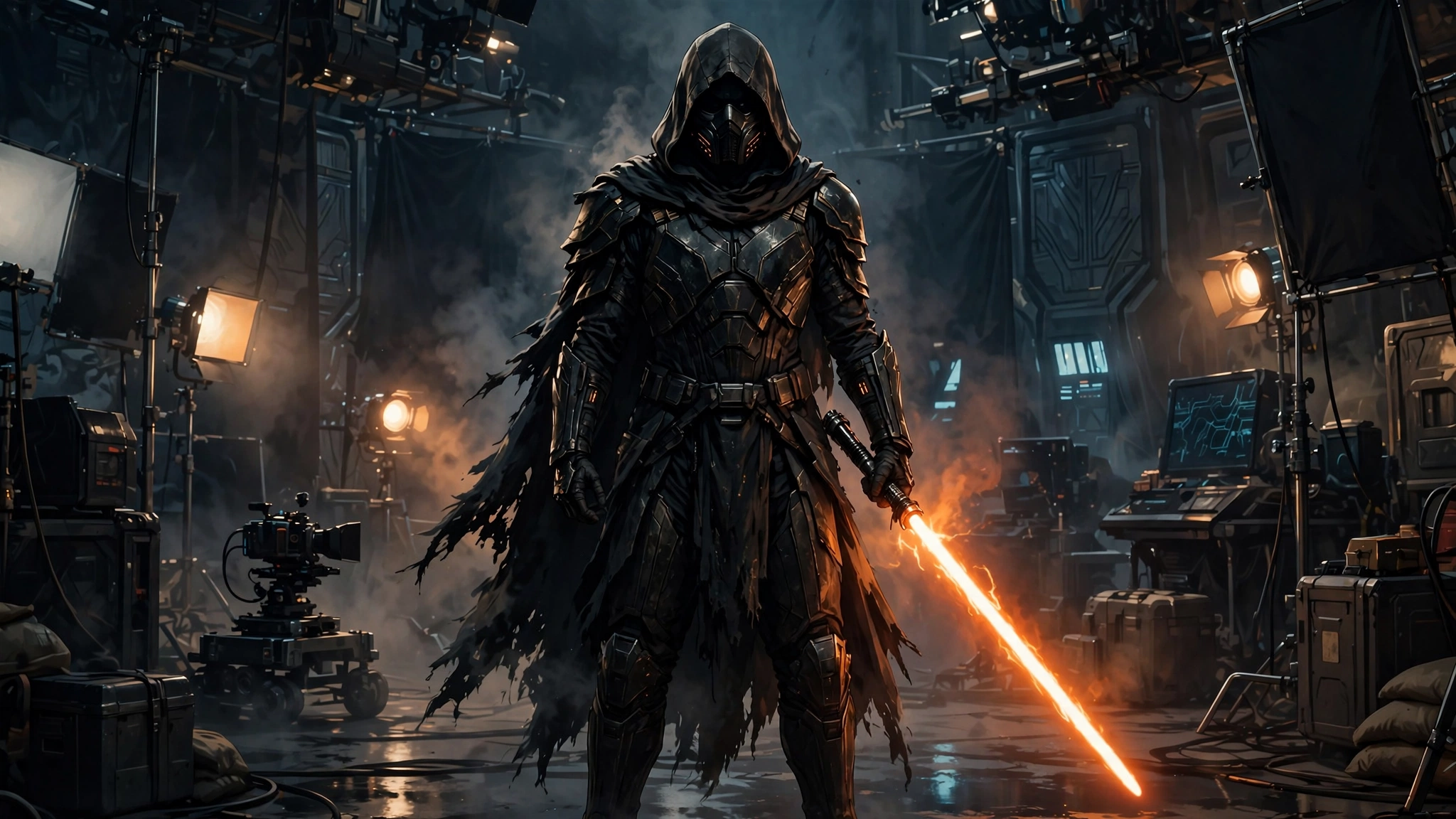
In November 2021, Sakhno was cast in the Disney+ series Ahsoka, part of the Star Wars franchise. When the series arrived in 2023, she played Shin Hati, a main role across the first season. For Star Wars fans, this was a big deal. For Sakhno, it was the role that finally matched her training to a character the audience would argue about for years.
So who is Shin Hati? She is the apprentice of Baylan Skoll, played by the late Ray Stevenson. She is a dark Force user, a skilled lightsaber fighter who wields an orange lightsaber. Sakhno herself has described Shin as impatient but also a seeker, someone only beginning to find her own voice. That description is the key to the performance. Shin is not a cartoon villain who enjoys being evil. She is ambitious, intense, disciplined, and uncertain all at once. She follows her master, but you can feel her asking whether his path is really hers.
That tension is what makes Shin Hati interesting, and it is also what makes her different from a standard henchman role. In the first season, Shin fights Ahsoka and her allies on multiple occasions, and by the final episode, she and Baylan have parted ways because their paths no longer align. Both are last seen alive, which leaves the door open for what comes next. Fans have spent a lot of time debating where Shin goes from there, and that debate is itself a compliment to the character. People do not argue this much about forgettable villains.
Playing Shin also demanded serious physical preparation. Sakhno has spoken about lightsaber work as swordfighting and martial arts, about training the connection between mind, heart, and body, and about learning how the history of Star Wars and the Force translates into movement. That is not just gym work. It is choreography, balance, timing, and safety, repeated until the fight looks effortless. When you watch her duel scenes, notice how economical her movement is. She does not waste energy. That is training, not accident.
Ahsoka also connected Sakhno to a fan community that is famously detailed and passionate. Star Wars fans notice costumes, lightsaber colours, fighting styles, and character arcs. They make fan art, write theories, and rewatch episodes frame by frame. Being part of that world can be intense for an actor, but it also means the work lives on between seasons. Shin Hati became a character people cosplay, draw, and discuss, which is a very different kind of fame from a one-off film role.
Sakhno did not just play a Star Wars villain. She played a new character, created for this series, with no decades of comics or animation to lean on. That is harder. When you play an established character, the audience brings love and memory with them. When you play someone new, you have to build that connection from scratch, in a handful of episodes, opposite beloved returning heroes. She did it, and Shin Hati stuck.
Ivanna Sakhno Biography: Amelia in M3GAN 2.0
If Ahsoka showed Sakhno’s discipline and intensity, M3GAN 2.0, released in 2025, showed her menace. In the sequel, she plays Amelia, whose full name in the film’s world is AMELIA, a military-grade android created by a defence contractor using stolen M3GAN technology. Amelia is described as the ultimate killer infiltration spy. As she becomes more self-aware, she becomes less interested in taking orders from humans, and the original M3GAN has to be brought back, upgraded, to stop her.
It is a gloriously over-the-top premise, and Sakhno plays it straight, which is exactly why it works. Amelia is not winking at the audience. She is calm, precise, and dangerous, and that calm is scarier than shouting. The physical work here is different from Ahsoka. Sakhno has described Amelia’s movement as combat training and Krav Maga, with guns and kung-fu-style movement, compared with the swordfighting of lightsaber work. Same actor, same dedication to physical truth, completely different body language. Watch the two performances back to back and you will see what range actually looks like. It is not just changing a costume. It is changing how a person walks into a room.
M3GAN 2.0 also placed Sakhno in the horror and science-fiction conversation in a new way. The first M3GAN film had become a cultural talking point, partly for its horror, partly for its dark humour, partly for that unforgettable dance. A sequel has to raise the stakes without just repeating the first film. Casting Sakhno as the new threat was a clear signal: this sequel wanted a physical performer who could be both elegant and terrifying. She delivered that, and her casting was announced well in advance, with coverage noting her Ahsoka breakout as the reason audiences would recognise her.
For viewers who only know her from Star Wars, M3GAN 2.0 is a useful corrective. It proves she is not only a franchise actor. She can anchor a genre film, carry action sequences, and hold the screen against a very famous doll. For viewers who only know her from horror, Ahsoka is the corrective in the other direction. Put them together and you get the full picture.
Voice Work, Music Videos, and Smaller Projects
The smaller credits often explain how an actor stays sharp between big jobs. Sakhno has done voice work, including voicing Astrid in the animated series The Mighty Nein in 2025. Voice acting is a different skill from screen acting. You have no face, no costume, no lightsaber to help you. You have breath, timing, and imagination. Actors who do it well tend to be better listeners on camera too, because they have learned to build a character from sound alone.
She has also appeared in music videos, including Green Day’s “Bang Bang” in 2016 and Hozier’s “Eat Your Young” in 2023, where she played The Woman. Music videos are short, visual, and demanding. You have a few minutes to create a mood, and the camera is very close. Again, it is the kind of work that builds craft without building headlines, and it is worth mentioning because it shows a performer willing to work across formats rather than waiting only for film leads.
She has also produced short work, including serving as executive producer on the short film Sunflower Field in 2023. Combined with her co-producer credit on Let It Snow, a pattern emerges: Sakhno is interested in making things, not just being cast in them. That is a healthy sign for a long career. Actors who understand producing tend to choose better projects, because they understand what it takes to finish one.
Activism and Connection to Ukraine
Sakhno’s activism cannot be skipped, because she has not treated it as a side note. At the 2015 Cannes Film Festival, she expressed support for Ukrainian political prisoners held by Russian authorities. Following the Russian invasion of Ukraine on 24 February 2022, she publicly condemned Russia’s actions and supported her country. In February 2023, she spoke at the Lincoln Memorial in Washington, D.C., in support of Ukraine. In April 2023, she discussed the war on the programme Morning Joe and how Americans could help affected Ukrainians. She also took part in the Artists for Ukraine fundraising event showcasing Ukrainian art to benefit Ukrainian children displaced by the war.
In May 2023, she became an Ambassador of Ukraine’s official fundraising platform United24, in the Education and Science direction. That is a specific role, not a vague title, and it matters because it connects her public profile to practical support: education and science are how a country rebuilds, how displaced children keep learning, and how a culture survives a war. Sakhno has also said she avoids playing Russian characters, and during the COVID-19 lockdown period, she broke a contract with Netflix that would have required her to portray a person with a Soviet Russian background. You do not need to agree with every career decision an actor makes to respect the clarity of that one. She drew a line, and she accepted the cost of drawing it.
This is also where her story circles back to Kyiv. Sakhno left Ukraine as a teenager, built a career in Hollywood, and could easily have gone quiet about where she came from. She did the opposite. She used interviews, public appearances, and her United24 role to keep attention on Ukraine. For Ukrainian audiences, that matters. For international audiences, it adds depth to the performer they see on screen. Shin Hati and Amelia are fictional. The advocacy is real, and it is documented, not rumoured.
Sakhno has not endorsed this site. Her activism is reported because it is part of her public record. Nothing here should be read as a claim that she supports or is connected with this publication.
What Makes Her Performances Work
If you step back from the film list, a few patterns explain why Sakhno keeps getting cast in physically demanding genre roles. First, she is economical. She does not overact. In action and science fiction, overacting breaks the illusion fast. She trusts stillness. Second, she is believable in motion. Lightsaber fights, combat scenes, and android movement all require an actor who has trained the body, not just memorised steps. Third, she can play intelligence. Her characters are thinking, even when they are fighting. Shin Hati is calculating. Amelia is self-aware. Even Nadedja, the hitwoman in a comedy, is competent, which is what makes her funny and frightening at the same time.
There is also a quieter quality: she listens on screen. Watch her reaction shots in Ahsoka. She is not waiting for her line. She is watching the other actor, weighing what they just said, and letting that change her face. That is the Strasberg and Chubbuck training showing up in a galaxy far, far away, and it is why her scenes feel grounded even when the setting is fantastical.
For fans trying to explain her appeal to a friend, here is the simplest version: she is the actor you cast when you need someone who can fight, think, and hold a close-up without blinking first. That is a rare combination, and it is why her career has moved from Ukrainian television to Hollywood blockbusters to Star Wars to a horror sequel without losing coherence. The settings change. The discipline does not.
Ivanna Sakhno Biography: Filmography and Career Timeline
Her career, laid out in order, from the verified credits. In 2005, she appeared in Lesya + Roma. In 2013, she played Milka in Ivan the Powerful. In the mid-2010s, she played Helen in The Body Tree, followed by Morgan Rose in Can’t Take It Back in 2017. In 2018 came the breakthrough double: Cadet Viktoriya in Pacific Rim Uprising and Nadedja in The Spy Who Dumped Me. In 2020, she played Kat Monroe in High Fidelity and Mia in Let It Snow, where she was also a co-producer. In 2022, she appeared in The Reunion as Vinca Rockwell and Pauline. In 2023, she began playing Shin Hati in Ahsoka. In 2025, she played Amelia in M3GAN 2.0 and voiced Astrid in The Mighty Nein.
Future projects listed in databases, including titles described as filming or in pre-production, are not treated here as finished work. Until a film is released and its credits are confirmed, it is better to leave it out than to guess. Readers deserve a filmography they can trust, not a wish list.
If you are planning a watch-through, do it in that order and you will see the growth. The early work is promising. The 2018 work is confident. The television work is controlled. Ahsoka is commanding. M3GAN 2.0 is chilling. That arc is the biography in miniature.
Common Mistakes When Searching for Ivanna Sakhno
A few mix-ups come up often, so let us clear them up. First, her name is sometimes misspelled as Sahkno. The correct spelling is Sakhno. Second, Shin Hati is sometimes confused with other Star Wars villains, but Shin is a new character created for Ahsoka, not a returning character from animation or comics. Third, Amelia in M3GAN 2.0 is not M3GAN herself. M3GAN is played by Amie Donald on screen and voiced by Jenna Davis. Amelia is the new android threat, played by Sakhno. Mixing those two up will confuse any conversation about the sequel, so keep them separate.
Another common mistake is assuming that because Sakhno plays villains, she only plays villains. Her filmography says otherwise. She has played cadets, comedic hitwomen, dramatic leads, and voice roles. Villains are simply the roles that travel furthest on social media, because fans love to debate them. The full career is wider and more interesting.
Finally, do not trust every net-worth figure or personal-life claim you see on gossip sites. Unverified figures about wealth, relationships, and private life are left out here. If a claim cannot be verified from a reliable source, it does not belong in a biography, no matter how many sites repeat it.
Why Ivanna Sakhno Matters Right Now
Sakhno matters right now for three reasons that go beyond any single role. The first is representation. She is a Ukrainian actress working at the top level of Hollywood genre storytelling, in Star Wars and in major horror, without hiding where she comes from. For young Ukrainian performers, that visibility is practical, not symbolic. It says the path exists.
The second is craft. In an era when a lot of genre acting relies on effects and editing, Sakhno’s work is visibly physical and prepared. Directors keep casting her in roles that require training because she does the training. That is a reputation you earn, not one you market into existence.
The third is voice. Through United24 and her public statements, she has used a growing platform to talk about education, science, and displaced children, not just her next project. That does not make her a politician or an activist first and an actress second. It makes her an actress who knows her platform has a use beyond promotion.
Put those three together and you get why her profile keeps rising. People are not just looking up a cast list. They are trying to understand a career that crosses countries, languages, and genres, and a person who has kept her roots visible while working far from home.
Final Thoughts on the Ivanna Sakhno Biography
Sakhno is a performer who started as a child in Kyiv, started again as a teenager in North America, trained seriously, broke through in 2018, and then built a career one deliberate choice at a time: a sitcom, a biopic, a thriller, a blockbuster, a comedy, a drama series, a Star Wars villain, a horror android, and voice work in between. None of that happened by accident, and none of it happened overnight.
If you are new to her work, start with Ahsoka, then watch M3GAN 2.0, then go back to Pacific Rim Uprising and The Spy Who Dumped Me. You will see the same performer in four completely different registers, and you will understand why casting directors keep calling. If you already know her work, keep an eye on what she produces next, not just what she acts in. The producing credits suggest someone thinking about the long game.
And if you take one thing from her story, let it be this: a career is not a single big break. It is the training you do when nobody is watching, the small films you take seriously, and the home you do not forget when you finally get the big call. Sakhno’s story has all three, and that is why it is worth telling properly.
More Ukrainian Stars to Explore
Explore more Ukrainian stars in the same collection.
- For another Ukrainian actor, read Bohdan Stupka Biography: Ukraine’s Legendary Stage and Film Actor.
- For another Ukrainian actor, read Serhii Strelnikov Biography: Dovbush, Killhouse, and His October 2026 Decision.
- For another Ukrainian actress, read Mila Kunis Biography: Ukrainian-Born Hollywood Star’s Life and Career.
- For another Ukrainian singer, read Jamala “1944” Song Meaning: The Story Behind Ukraine’s Eurovision Winner.
- For another Ukrainian singer, read Tina Karol Biography: Eurovision 2006, The Voice Coach, and Her Music Career.
- For another Ukrainian television star, read Holos Krainy Winners List: Every Winner of The Voice of Ukraine So Far.
- For another Ukrainian influencer, read Masha Efrosinina Biography: TV Host, YouTuber, and Women’s Activist.