Introduction: The Voice You Have Probably Heard Without Knowing the Story
Imagine a singer who has been on Ukrainian television for twenty years, who represented her country at Eurovision before many of today’s viewers were even following the contest, and who later became the coach everyone wanted on The Voice. That is Tina Karol in a nutshell — not a one-song Eurovision act, but a long-career pop singer, television presenter, actress, and charity founder whose work keeps coming back to the same strengths: a strong, controlled voice, dramatic ballads, and a stage presence that feels theatrical without feeling forced.
If you only know her name from Eurovision 2006, the rest of her story covers where she grew up, how she trained, how she got to Athens in 2006, what happened after that with albums and television, why her coaching on The Voice matters so much, and what her charity work actually focuses on. Everything here sticks to facts that can be checked in public biographical sources. Where a detail is uncertain, it is left out rather than dressed up as a certainty. The images in this article are AI-generated illustrations, labelled as such. Wikipedia records her birth on 25 January 1985, her Eurovision 2006 entry “Show Me Your Love” (7th place) and her coaching on The Voice of Ukraine.
Tina Karol Biography: Early Life and a Childhood on the Move
Tina Karol was born Tetiana Hryhorivna Liberman on 25 January 1985 in Orotukan, in Magadan Oblast in the Russian Far East, then part of the Soviet Union. Her mother is Ukrainian and her father is Ukrainian Jewish, and the family background shaped her early musical life in a very direct way.
When she was six years old, the family moved to Ivano-Frankivsk in Ukraine. That move matters, because it is where she grew up, went to school, and began serious musical training. As a teenager, under her real name Tetyana Liberman, she performed for four years with the dancing ensemble at the Kyiv branch of the Jewish Agency, and her repertoire included songs in Hebrew and in Yiddish. In 2000, she travelled to the United States with that ensemble, where the group’s appearances raised money for Jewish Agency for Israel programmes in Ukraine.
She has spoken, in interviews reported in biographical sources, about feeling discriminated against at school because of her Jewish last name. That is not a small detail to skip over, because it helps explain a later decision that changed her career: the choice of a stage name. It also helps explain why her early repertoire was so varied. She was not only singing pop songs as a child. She was singing in different languages, in an ensemble setting, and learning how to perform for different audiences.
At home and at school, music was not a hobby on the side. She went to music school, where she studied piano, and she later studied at the Gliere Music College in Kyiv, where she focused on pop vocal performance in the Faculty of Singing. In her fourth year there, she was awarded a scholarship by the Verkhovna Rada, Ukraine’s parliament. In other words, by the time most people first heard of her, she had already spent years in formal training, competitions, musicals, and theatrical shows.
Training, the Armed Forces Ensemble, and Learning to Perform
After music college, Karol became a soloist with the Ensemble of Song and Dance of the Ukrainian Armed Forces. That might sound like an unusual step for a future pop star, but in Ukraine it was a serious professional platform: regular performance, discipline, large stages, and a repertoire that demanded vocal control.
Think about what that kind of training gives a singer. You learn to project without shouting, to hold a long note without wobbling, to stay in tune while moving on stage, and to perform the same material night after night without it going flat. Those are exactly the skills you hear in Karol’s later ballads and in her Eurovision performance. She does not rely on studio tricks or on a single catchy hook. She relies on a voice that can carry a song from a quiet opening to a big finish.
She also took part in numerous youth, regional, international, and Jewish singing contests, as well as musicals and theatrical shows. Biographical sources credit her with more than 25 Grand Prix and first prizes at various international music competitions and festivals, and describe her voice range as more than four octaves. Those competition wins are worth mentioning, but they should not be read as a list to memorise. The useful point is simpler: Karol arrived at her breakthrough not as a newcomer discovered overnight, but as a trained, competition-tested singer who had already proved herself in many different settings.
The New Wave Breakthrough in 2005
The turning point before Eurovision was the New Wave competition in Jurmala, Latvia, in 2005. Karol finished in second place there, and she also received a special award from Alla Pugacheva, one of the most famous figures in Russian-language pop. That combination — second place overall, plus a special prize from a legend — put her name on the map across the post-Soviet pop world.
It was around this time, in 2005, that she took the stage name Tina Karol, after producers of New Wave suggested a less Jewish-sounding stage name. Karol later commented, in a remark reported in biographical sources, that this was part of her agreement with the producers, but that she was glad she changed her name because she felt her previous name had hindered her in life. That is a sensitive part of her story, and it is best stated plainly, without speculation: a professional decision, made in a specific industry context, that she herself later described in positive terms.
For listeners, the practical lesson from New Wave is this: if you want to understand Karol’s Eurovision performance a year later, start here. New Wave proved she could handle a major international competition stage, sing under pressure, and impress both juries and established stars. Eurovision did not create her confidence. It tested it on a bigger stage.
Tina Karol Biography: Eurovision 2006 in Athens
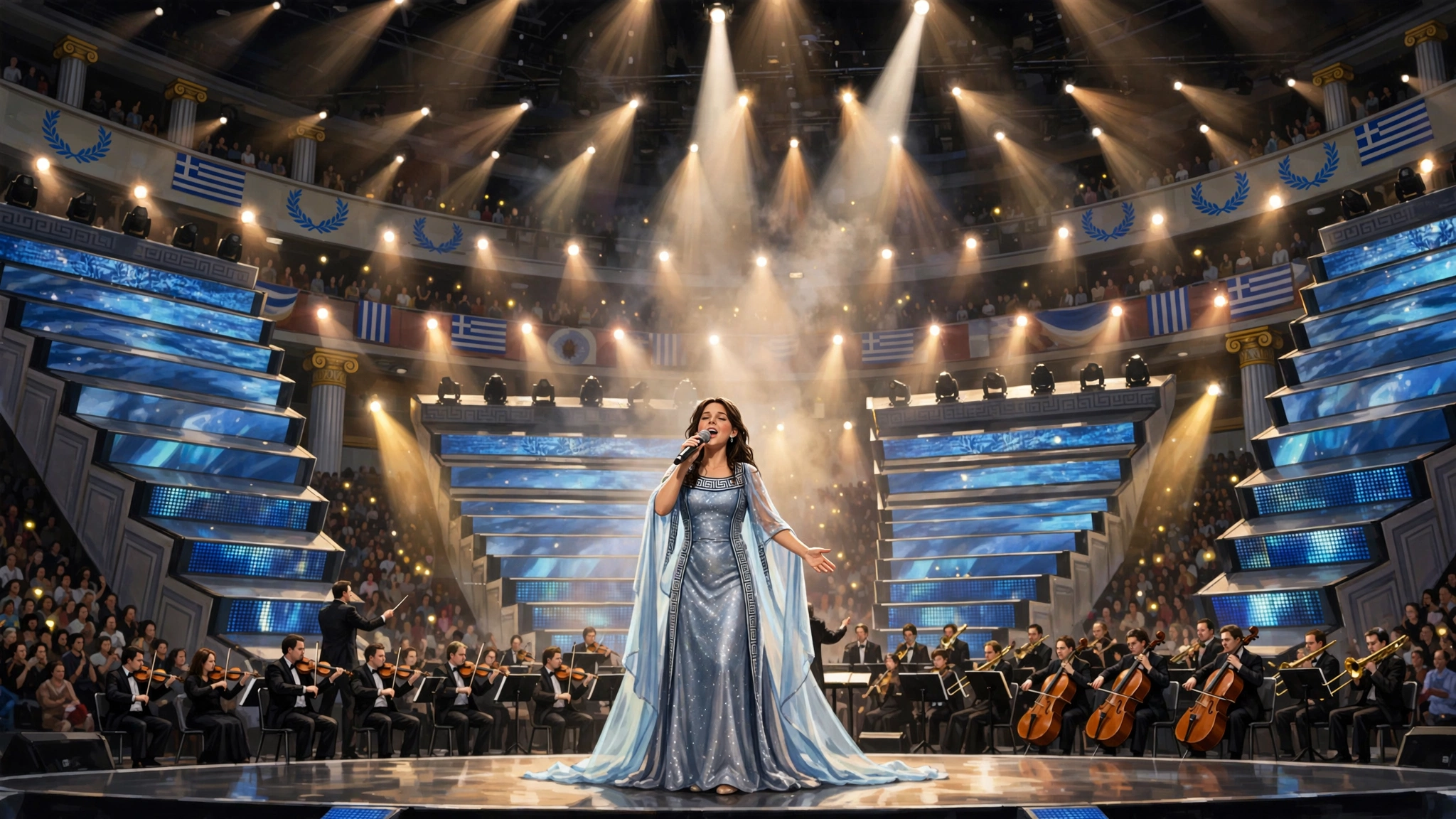
In 2006, Karol won the Ukrainian selection for the Eurovision Song Contest. The selection process, called Ty-Zirka, was the Ukrainian version of the Irish show “You’re A Star”, and its final took place on 11 March 2006. She won with a song originally titled “I Am Your Queen”. For Eurovision itself, the song was reworked and performed as “Show Me Your Love”, an up-tempo pop song written and composed by Karol herself.
The Eurovision Song Contest 2006 was held in Athens, Greece. Karol qualified from the semi-final, finishing seventh there, and she finished seventh again in the grand final, with 145 points in the final. The semi-final total is reported as 146 points in some sources, and the final total as 145 points — a small difference that is worth noting, because online summaries sometimes mix the two rounds up. The headline result, which is consistent across sources, is clear: seventh place in the final, out of 24 finalists.
Seventh place might not sound dramatic if you only follow Eurovision winners, but context helps. Ukraine had won the contest only two years earlier, in 2004, with Ruslana, so expectations were high. A seventh-place finish, with a song Karol had written herself, established her as an international name and gave her a debut album with a ready-made audience. It also set a pattern for her career: she would be associated with Eurovision for years afterwards, not just as a former contestant, but as a coach, a judge, and a mentor for later Ukrainian entries.
If you watch the Athens performance today, what stands out is how straightforward it is. There is no complicated staging trick. It is a confident pop performance by a 21-year-old singer who already knew how to work a large stage. That directness became a trademark. Karol rarely hides behind spectacle. She puts the voice first, and the staging serves the song.
After Athens: The Debut Album and Early Pop Years
In the same year as Eurovision, 2006, Karol released her debut album, Show Me Your Love, named after her Eurovision song. The album marked her move into English-language pop alongside her Ukrainian-language work, and it gave her a catalogue beyond a single contest entry.
Her early albums after that included work in Ukrainian and Russian as well as English, and her sound in those years blended pop, dance-pop, soul, and ballads. Biographical discography summaries list albums such as Nochenka in 2007 and Polius Prityazheniya in 2009, under varying transliterations, alongside later albums discussed below. Rather than getting lost in transliteration differences — Ukrainian and Russian titles are rendered into English in several ways — the useful thread is the direction of travel: from up-tempo Eurovision pop, towards more dramatic, confessional ballads, with stronger lyrics and more cinematic arrangements.
That shift is what long-term fans often point to when they explain why Karol lasted while many Eurovision contestants faded. A contest song is designed for three minutes and one night. A career needs songs that people return to, sing along with, and associate with moments in their own lives. Karol’s move towards ballads gave her that kind of catalogue. Her concerts are often described as staged like theatrical shows, with a strong emotional arc, rather than as a simple run-through of hits. That theatrical instinct goes back to her early work in musicals and ensemble performance.
A helpful way to think about her early years is in three steps: training and competitions first, New Wave second, Eurovision third. Each step widened the audience, but none of them replaced the training. That is why, even in her poppiest early songs, you can hear a singer who is technically in control, not just a performer relying on energy alone.
The Middle Career: Albums That Defined Her Sound

Two albums from the 2010s are especially useful for understanding Karol’s mature sound. Pomnyu, released in 2013, is described in discography summaries as a chamber, confessional work in which the dramatic ballad became the main form of expression. In plain language, that means quieter arrangements, more space for the voice, and lyrics that feel personal rather than generic.
The following year, 9 Zhizney (in English, “9 Lives”), released in 2014, is described as auteur pop with a strengthened lyrical line and cinematic arrangements. Again, in plain language: Karol was writing and shaping her own material, with songs that sounded like they belonged in a film scene, not just on a radio playlist. Later, Intonatsii, released in 2017, moved towards contemporary pop and R&B, with more emphasis on rhythm, synthetic textures, and vocal inflections in a modern mainstream style.
You do not need to like every phase equally to appreciate the pattern. Karol did not stay frozen in her 2006 sound. She updated her production, changed her arrangements, and let her voice adapt, while keeping the same core identity: a pop singer who can sing a ballad convincingly. That is harder than it sounds. Many pop singers can do up-tempo songs or ballads, but not both at a high level across twenty years.
Her listed genres reflect that range: pop, soul, R&B, pop rock, and dance-pop. Her labels over the years have included Lavina, Astra Records, Bentley Records, and, from 2021, House of Culture. Those label changes are normal for a long career, and they are less important than the continuity in her work: regular releases, regular concerts, and a steady presence on Ukrainian television.
Tina Karol Biography: The Voice Coach Years

If Eurovision introduced Karol to Europe, The Voice made her a household coach in Ukraine. She became a mentor on The Voice of Ukraine (Holos Krainy) in 2013, and she coached in the years 2015 to 2021, with biographical sources also noting a return in 2026. She was also a star coach on The Voice Kids (Holos Dity) in 2012, 2015, and 2016.
What does a coach actually do on The Voice, and why did Karol suit the role? In the blind auditions, coaches choose singers based on voice alone. In later rounds, they help contestants choose songs, shape arrangements, manage nerves, and develop stage presence. Karol’s background — formal vocal training, competition experience, ensemble work, and a long pop career — maps directly onto those tasks. She could talk about breath control and song choice from experience, not just from opinion.
Her teams on The Voice Kids are reported to have won three times, according to discography and career summaries. Whether you follow the win counts closely or not, the broader point stands: Karol became known as a coach who took young singers seriously and who invested in their development. For many younger Ukrainian viewers, that coaching role is now as central to her image as her own singing. They first met her as the coach on the red chair, and only later discovered her Eurovision past.
That coaching work also connects to her later Eurovision role. In 2020, she was a judge on Vidbir, Ukraine’s national selection for Eurovision, and biographical sources note that she later replaced Jamala as a jury member in that context and was named music director of Vidbir 2025. In other words, Karol moved from being chosen by a national selection, to choosing the next generation through a national selection. That full circle is a neat way to remember her Eurovision story: contestant in 2006, judge and music director almost twenty years later.
Television Beyond The Voice: Dancing with the Stars and Hosting
Karol’s television career is wider than The Voice alone. She hosted the shows “I Want to be a Star” and “Tantsi z Zirkamy” (Dancing with the Stars) on the 1+1 channel, with hosting runs reported for 2005 to 2007 and again for 2017 to 2019. She also hosted events including Crimea Music Fest in 2012, Miss Ukraine in 2021, and Ukrainian Song of the Year in 2022, according to career summaries.
Hosting and coaching require different skills, and Karol has done both. Hosting needs timing, warmth, and the ability to keep a live show moving. Coaching needs listening, patience, and technical advice. Doing both well, over many years, explains why she became such a familiar television face in Ukraine, rather than a singer who appeared on television only to promote a new single.
She has also worked as an actress, with roles in musical films and productions, and she has appeared in children’s books and photo books, including a children’s book in 2008 and another in 2016, and a photo book in 2017. Those projects are side notes compared with her music and television work, but they show the same pattern: a performer who works across formats, rather than staying in one lane.
For a new fan, the television timeline can be confusing, because the same show names return in different years with different roles. A simple rule helps: if Karol is sitting in a coach’s chair, she is mentoring singers; if she is standing on stage with a microphone and introducing acts, she is hosting. Both roles draw on the same stage experience, but they are not the same job.
Awards, Titles, and Public Recognition
Karol’s awards record is extensive, and it is best summarised by type rather than listed in full. She was awarded the title of Merited Artist of Ukraine, and later, in 2017, the title of People’s Artist of Ukraine, one of the highest honours for a Ukrainian performer. She also received the Order of Princess Olga, 3rd class, a state award for women for outstanding services to the state and philanthropic work.
In music awards, she was named Singer of the Year at the YUNA Music Awards in 2014, 2015, and 2018, and Singer of the Year at the M1 Music Awards in 2015, 2017, and 2018. She was also named “The Most Beautiful Woman of Ukraine” by VIVA! magazine’s “Most Beautiful People” award in 2008, 2009, and 2017. In 2013, she was described as “The Most Popular Woman in Ukraine” according to Google and Yandex ratings, and in 2021 she entered the Ukrainian national rating of the “Top 100 Most Influential Women in Ukraine” according to Focus magazine.
Those honours tell a consistent story, but they should be read carefully. “Singer of the Year” awards reflect a particular year and a particular voting system. “Most Beautiful Woman” is a magazine readers’ award, not a musical judgement. State titles reflect official recognition of a career, not a single song. Taken together, though, they show a performer who was recognised across different systems — industry awards, public votes, magazine polls, and state honours — over more than a decade. That breadth is rarer than a single big win.
She has also appeared on the covers of Ukrainian editions of magazines including Vogue, Elle, Cosmopolitan, and Harper’s Bazaar, according to career profiles. Again, that is not a musical award, but it shows how her public image extended beyond music into fashion and mainstream celebrity culture in Ukraine.
Charity Work: The Tina Karol Foundation
In 2014, Karol established the Tina Karol charitable foundation. According to career summaries, its focus is assisting children’s oncology departments in Ukrainian hospitals. That focus is specific, and it is worth stating specifically, rather than describing her charity work in vague terms like “helping children”.
Charity work by celebrities is often described in glowing, unverifiable language, so it helps to keep this section factual and modest. The foundation exists, it was established in 2014, and its reported focus is children’s oncology departments. That is the verified core. Detailed claims about amounts raised, numbers of hospitals helped, or specific equipment donated would need a separate, source-by-source check, and they are not included here for that reason. If you want to support or learn more about that work, the sensible step is to look for the foundation’s own official information, rather than relying on a biography article alone.
The timing also matters. 2014 was a difficult year in Ukraine, and also a personally difficult period in Karol’s life, as noted below. Founding a children’s charity in that year suggests a decision to channel public attention into a concrete cause, rather than only into new releases. That is a fair, restrained reading of the public record, without inventing motives or private feelings.
Personal Life, Stated Briefly and Respectfully
Karol married Yevhen Ohir in 2008, and he died in 2013. They had one child together. That is the extent of personal detail included here, deliberately. A biography of a singer should focus on her work, and personal loss should not be turned into entertainment or speculation.
What can be said, factually, is that the years after 2013 included some of her most confessional work, including the Pomnyu period, and that she continued to perform, coach, and release music through that time. Readers sometimes connect those two facts, and that connection is understandable, but this article does not claim a direct, proven link between any single song and any private event unless a reliable source states it. Keeping that boundary is part of writing a responsible celebrity biography: respect the person, report the work, and do not fill gaps with invented stories.
Common Mistakes People Make About Tina Karol
A few misunderstandings come up again and again, so let us clear them up in plain language.
First, people sometimes think Karol is only an Eurovision singer, or that her career ended after Athens. In fact, Eurovision was an early chapter, not the whole book. Her Voice coaching, her later albums, her hosting, and her charity work all came after 2006, and they are arguably more important to her long-term reputation in Ukraine than the seventh-place finish itself.
Second, people sometimes mix up her Eurovision song titles. She won the Ukrainian selection with “I Am Your Queen”, but she performed “Show Me Your Love” at Eurovision itself, after the song was reworked. If you search for “I Am Your Queen” expecting the Athens performance, you will be confused. Search for “Show Me Your Love” for the Eurovision version.
Third, people sometimes assume her stage name was always Tina Karol. It was not. She was born Tetiana Liberman, and she performed under that name in her early ensemble years. The name Tina Karol dates from around 2005, in connection with New Wave. Knowing that helps if you are looking up early performances or competition records.
Fourth, people sometimes confuse semi-final and final points from 2006. The final result was seventh place with 145 points. The semi-final total is reported as 146 points in some sources. Both rounds ended in seventh place, which is probably why the numbers get mixed up, but they are not the same round.
Avoiding those four mistakes will save you a lot of confusion, especially if you are comparing different websites that summarise her career in different ways.
How to Explore Her Music, Step by Step
If you are new to Karol and you want a practical way in, try this simple order. It is not a ranking, just a listening path that follows her career.
Step one: start with “Show Me Your Love”. Listen for the up-tempo pop sound, the confident vocal, and the straightforward Eurovision staging. That is your baseline for 2006.
Step two: move to a ballad from the 2010s, from the Pomnyu or 9 Zhizney period. Listen for the change: quieter arrangements, more space, and a voice that is doing more with less. Notice how the same singer sounds different when the song slows down and the lyrics take centre stage.
Step three: listen to something from Intonatsii (2017) or later work. Listen for modern pop and R&B production, rhythm, and vocal inflections. Ask yourself what stayed the same — the control, the clarity, the dramatic delivery — and what changed — the sound around the voice.
Step four: watch a Voice performance, either as a coach or as a guest performer, if you can find an official clip. Watching her coach is different from listening to a studio recording. You see how she talks about song choice, breathing, and stage presence, and that tells you a lot about how she thinks about singing as a craft, not just as a performance.
That four-step path takes less than an hour, and it gives you a much better sense of her range than listening to a single hit on repeat. It also mirrors the structure of this biography: training, breakthrough, Eurovision, mature albums, and coaching.
Why Tina Karol Still Matters in Ukrainian Pop

So why does Karol still matter, twenty years after Eurovision? There are a few honest answers, without hype.
First, longevity. Very few Eurovision contestants from 2006 are still coaching on major television shows, judging national selections, and releasing new material twenty years later. Karol is. That staying power is itself a story, and it comes from training, adaptability, and a willingness to work in television as well as in music.
Second, range. She has sung in Ukrainian, Russian, and English, across pop, soul, R&B, and dance-pop, and she has worked as a singer, actress, presenter, host, coach, and judge. That range means different audiences know her in different ways, and it makes her hard to reduce to a single label.
Third, mentorship. Through The Voice and Vidbir, Karol has influenced younger Ukrainian singers directly, not just through her records. When a coach helps a young singer choose a song, manage nerves, or find their own sound, that influence continues in that singer’s career. That is a quieter kind of legacy than a hit single, but it lasts longer.
Fourth, public recognition across different worlds — music awards, television, magazines, state honours, and charity work — shows a career that was recognised in many places at once. That breadth is a useful test for any long career: if only one award system recognised you, that might be luck or timing. If many did, over many years, that suggests something more durable.
None of that means every song will suit every listener, and none of it is a promise that you will love her music. Taste is personal. The point of a biography like this is to give you enough context to listen with understanding, and then to decide for yourself.
Where to Go From Here
If you want to keep exploring, start with the official sources: Karol’s official website and official music channels, and the official Eurovision archive for the 2006 Athens performance. Those are the safest places to hear the original recordings and to check dates and credits, rather than relying on re-uploads or summaries alone.
Then, if you are curious about Ukrainian pop more broadly, look at the other Ukrainian Eurovision artists around her era — Ruslana, who won in 2004, and Jamala, who won in 2016 with “1944” — and notice how different their sounds and stories are. Karol sits between those two wins in time, but her style is her own: less folk spectacle than Ruslana, less historical memorial than Jamala, and more focused on pop craft, ballads, and television mentorship.
And that is a good place to leave her story: not with a grand claim, but with a clear picture. A girl born Tetiana Liberman in the Russian Far East, raised in Ivano-Frankivsk, trained in music school and in an Armed Forces ensemble, second at New Wave in 2005, seventh at Eurovision in 2006 with a song she wrote herself, and then — for the next twenty years — a singer, coach, host, judge, and charity founder who kept working, kept adapting, and kept putting the voice first. If you listen to her music now, with that story in mind, you will hear it differently.
—
More Ukrainian Stars to Explore
Explore more Ukrainian stars in the same collection.
- For another Ukrainian actor, read Bohdan Stupka Biography: Ukraine’s Legendary Stage and Film Actor.
- For another Ukrainian actor, read Serhii Strelnikov Biography: Dovbush, Killhouse, and His October 2026 Decision.
- For another Ukrainian actress, read Ivanna Sakhno Biography: From Kyiv to Hollywood, Ahsoka and M3GAN 2.0.
- For another Ukrainian actress, read Mila Kunis Biography: Ukrainian-Born Hollywood Star’s Life and Career.
- For another Ukrainian singer, read Jamala “1944” Song Meaning: The Story Behind Ukraine’s Eurovision Winner.
- For another Ukrainian television star, read Holos Krainy Winners List: Every Winner of The Voice of Ukraine So Far.
- For another Ukrainian influencer, read Masha Efrosinina Biography: TV Host, YouTuber, and Women’s Activist.
Pingback: Mykhailo Panchyshyn: Holos Krainy Season 13 Winner
Pingback: Ruslana Biography: Ukraine's First Eurovision Winner
Pingback: Zlata Ognevich Biography: Eurovision 2013 Star